

Introduction
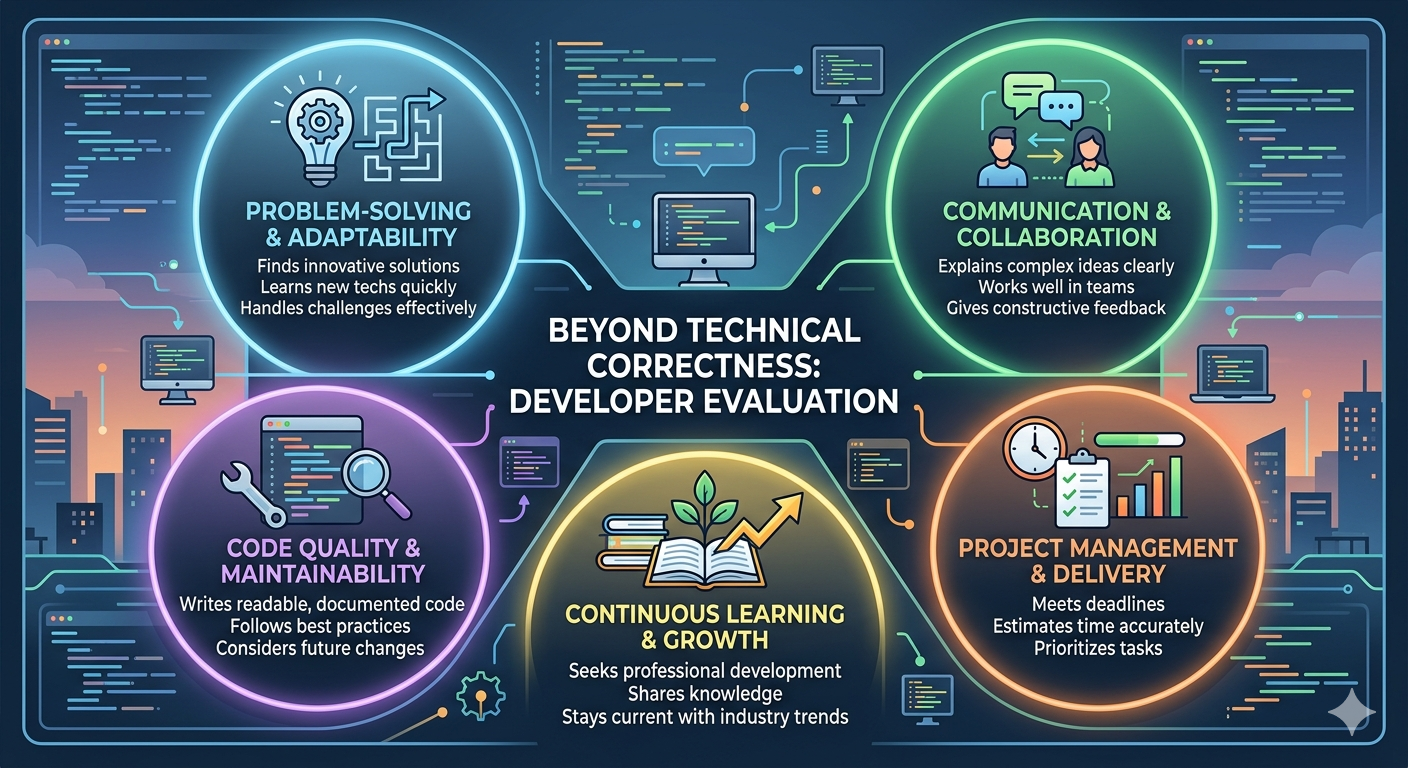
Many developers believe that writing correct code is enough to succeed in interviews and on the job. While technical correctness remains important, modern hiring goes far beyond checking whether code works. Companies want developers who can think clearly, communicate effectively, and contribute to team success. This shift explains exactly how developers are evaluated beyond technical correctness in today’s hiring processes.
Employers assess how developers approach problems, explain solutions, and consider real-world constraints. They look for professionals who can build maintainable systems and collaborate across teams.
Problem-solving approach matters more than final answer
First, interviewers focus on how candidates approach a problem. A correct answer alone does not guarantee a strong evaluation.
Candidates who break down problems into smaller steps, explore different options, and explain their reasoning clearly perform better. Even if the solution is not perfect, a structured approach shows strong thinking.
Logical problem-solving reflects real-world capability.
Code readability and structure are essential
Developers must write code that others can understand and maintain. Therefore, interviewers evaluate code clarity, naming conventions, and structure.
Clean, readable code shows discipline and professionalism. It also makes collaboration easier in team environments.
Readable code matters as much as functional code.
Communication skills influence evaluation
Developers must explain their ideas to teammates, managers, and sometimes non-technical stakeholders. During interviews, communication becomes a key factor.
Candidates who describe their thought process clearly and answer questions confidently create a strong impression. Clear communication shows that the developer can work effectively within a team.
Communication bridges technical and business understanding.
Handling feedback shows adaptability
Interviewers often provide hints or feedback during coding rounds. They observe how candidates respond to suggestions.
Strong candidates listen carefully, adjust their approach, and improve their solution. This behavior demonstrates adaptability and willingness to learn.
Flexibility is essential in dynamic work environments.
System design and scalability thinking
For mid-level and senior roles, interviewers evaluate how candidates think about system design. They want to know whether developers consider scalability, performance, and maintainability.
Candidates who discuss trade-offs, data flow, and architecture demonstrate deeper technical understanding. This thinking goes beyond writing code for a single task.
Design thinking reflects long-term impact.
Debugging and error-handling mindset
Real-world development involves fixing issues and handling unexpected scenarios. Therefore, interviewers assess debugging skills and error-handling approaches.
Candidates who explain how they would identify issues, test solutions, and prevent future errors demonstrate practical experience.
Debugging ability strengthens technical reliability.
Collaboration and teamwork awareness
Modern development requires working with designers, product managers, QA teams, and operations teams. Interviewers evaluate how candidates collaborate in such environments.
Candidates who mention teamwork, shared responsibilities, and communication with other teams show readiness for real projects.
Collaboration skills improve overall team performance.
Understanding of business impact
Developers do not work in isolation from business goals. Their work affects user experience, performance, and company outcomes.
Interviewers look for candidates who understand how their code impacts users and business objectives. Candidates who connect technical decisions with business value stand out.
Business awareness enhances professional value.
Consistency across interview rounds
Hiring processes often include multiple rounds such as coding, system design, and behavioral interviews. Employers evaluate consistency across all stages.
Candidates who maintain clear thinking, communication, and structured problem-solving throughout the process perform better.
Consistency signals reliability and readiness.
Conclusion
Technical correctness is only one part of a developer’s evaluation. That is precisely how developers are evaluated beyond technical correctness in modern hiring processes.
Employers look for professionals who combine coding skills with clear thinking, communication, collaboration, and system design awareness. Developers who demonstrate these qualities stand out in interviews and build stronger long-term careers in the tech industry.
Find Your Dream Job Today – Explore Endless Career Opportunities and Secure Your Next Role with Best Job Tool.






Comments
Be the first to leave a comment.