

Introduction
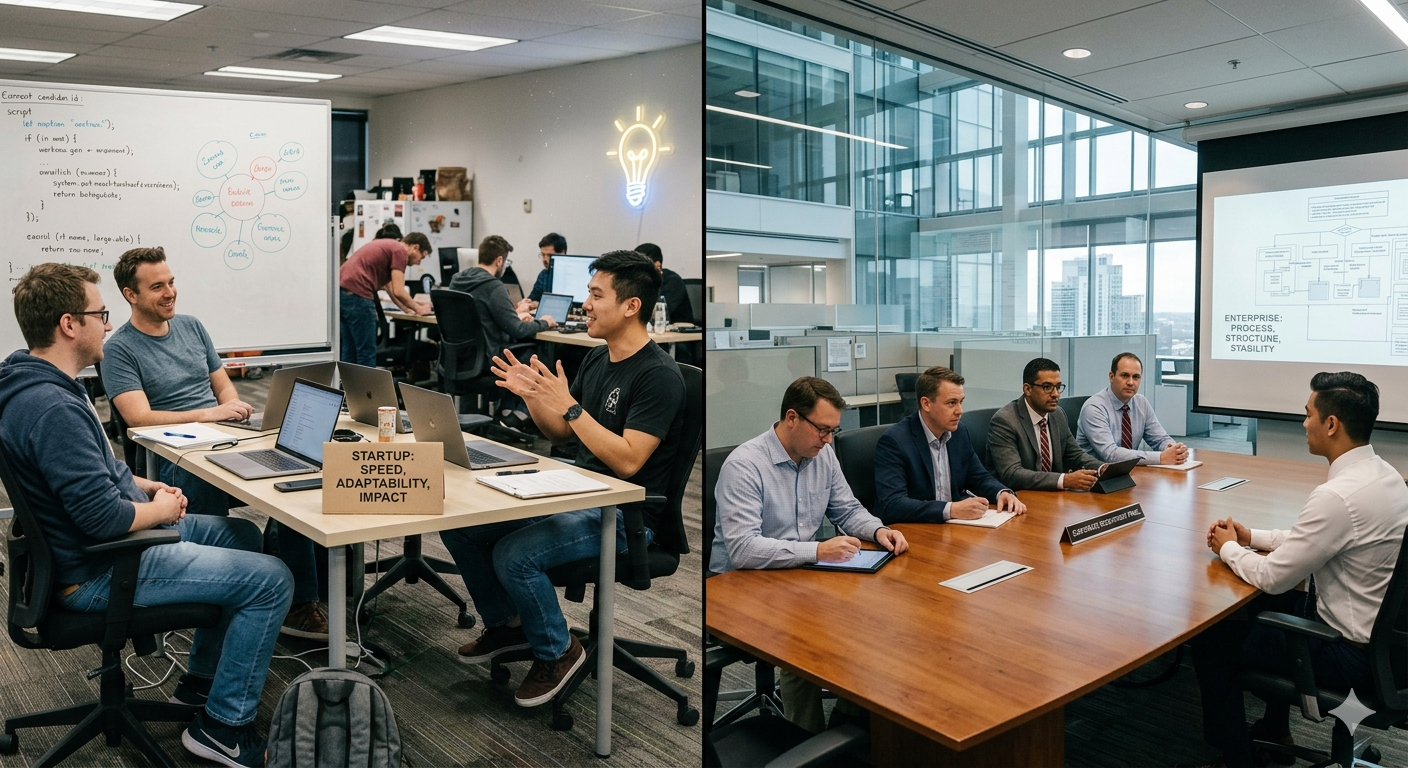
Engineering hiring does not follow a single universal pattern. The expectations, evaluation methods, and priorities vary significantly depending on the type of company. Startups and enterprises operate with different goals, resources, and structures. As a result, they look for different qualities in candidates. This explains exactly how engineering hiring differs between startups and enterprises in today’s job market.
Understanding these differences helps candidates prepare effectively and choose roles that align with their strengths, work style, and career goals.
Hiring speed and process structure
Startups usually move fast. They often have shorter hiring processes with fewer rounds because they need to fill roles quickly.
In contrast, enterprises follow structured and multi-stage hiring processes. These may include technical rounds, HR interviews, managerial discussions, and sometimes assessments.
Faster hiring in startups reflects urgency, while enterprise hiring focuses on consistency and risk reduction.
Skill depth versus skill breadth
Startups prefer engineers who can handle multiple responsibilities. Candidates are expected to work across different technologies, fix issues quickly, and adapt to changing priorities.
Enterprises, however, often look for specialists. Engineers may focus on specific roles such as backend development, frontend design, or infrastructure management.
Startups value versatility, while enterprises value specialization.
Problem-solving approach expectations
Startup interviews often focus on practical problem-solving. Candidates may be asked how they would build or fix real systems.
Enterprises frequently include structured coding rounds and algorithm-based questions. These tests evaluate technical fundamentals in a standardized way.
Startups emphasize real-world thinking, while enterprises emphasize theoretical strength alongside practical skills.
System design importance
System design plays a different role in both environments. Startups expect engineers to think about scalability and architecture early because they build products from scratch.
Enterprises also value system design, but they often focus on maintaining and optimizing existing large-scale systems.
Both require design skills, but the context differs significantly.
Cultural fit and mindset evaluation
Startups place strong emphasis on cultural fit. They look for candidates who are adaptable, proactive, and comfortable with uncertainty.
Enterprises evaluate cultural fit as well, but they often prioritize professionalism, stability, and alignment with organizational values.
Startup environments require flexibility, while enterprise environments require consistency.
Ownership and responsibility expectations
Engineers in startups often take full ownership of features or systems. They may handle development, deployment, and maintenance.
In enterprises, responsibilities are more divided across teams. Engineers focus on specific parts of a project rather than end-to-end ownership.
Startups demand ownership, while enterprises offer structured roles.
Risk tolerance in hiring decisions
Startups are more willing to take risks when hiring. They may prioritize potential and learning ability over extensive experience.
Enterprises usually follow strict hiring criteria. They prefer candidates with proven experience and predictable performance.
This difference reflects the risk tolerance of each organization.
Learning and growth opportunities
Startups provide exposure to multiple technologies and business functions. Engineers often learn quickly because they handle diverse challenges.
Enterprises offer structured learning paths, training programs, and clear career progression frameworks.
Both environments support growth, but the approach differs.
Work environment and expectations
Startup environments are dynamic and fast-changing. Engineers may work on multiple tasks and adjust priorities frequently.
Enterprise environments are more stable and process-driven. Engineers follow established workflows and guidelines.
Candidates must choose based on their preferred work style.
Career progression paths
Startups may offer faster growth due to smaller teams and high ownership. Engineers can quickly move into leadership roles.
Enterprises provide more defined career ladders with clear promotion criteria and role structures.
Career growth exists in both, but the path and pace differ.
Conclusion
Engineering hiring varies significantly based on organizational structure, goals, and work culture. That is precisely how engineering hiring differs between startups and enterprises in modern technology environments.
Startups focus on adaptability, ownership, and practical problem-solving, while enterprises prioritize specialization, structured processes, and consistency. By understanding these differences, candidates can prepare better for interviews and choose roles that align with their skills, preferences, and long-term career ambitions.
Find Your Dream Job Today – Explore Endless Career Opportunities and Secure Your Next Role with Best Job Tool.






Comments
Be the first to leave a comment.