

Introduction
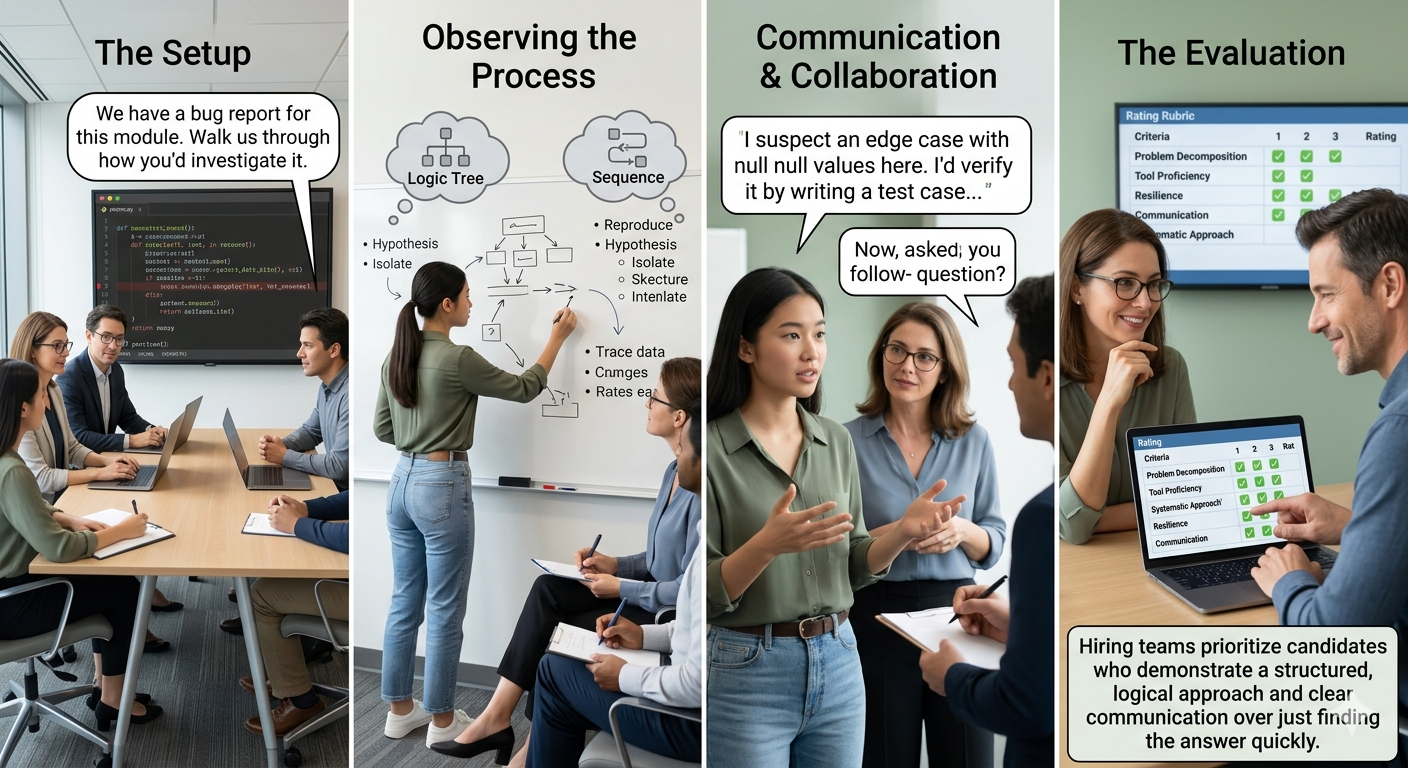
Technical roles demand more than writing code or building systems. In real work environments, professionals spend a significant amount of time identifying and fixing issues. Bugs, system failures, and unexpected errors are part of daily operations. Therefore, companies prioritize candidates who can approach problems logically and resolve them efficiently. This is exactly how hiring teams assess debugging mindset during technical interviews and evaluations.
A strong debugging mindset reflects patience, structured thinking, and the ability to identify root causes instead of applying quick fixes. Employers look for candidates who can handle complexity calmly and systematically.
Scenario-based problem-solving tests
First, hiring teams use scenario-based questions to evaluate debugging ability. They present situations such as a failing application, slow performance, or unexpected output.
Candidates must explain how they would approach the issue step by step. Strong candidates clarify the problem, gather information, and narrow down possible causes.
This structured approach demonstrates real debugging capability.
Step-by-step reasoning is closely observed
Interviewers pay attention to how candidates break down problems. Instead of jumping to conclusions, strong candidates analyze the issue carefully.
They check inputs, outputs, dependencies, and edge cases before suggesting solutions. This logical progression shows discipline and technical maturity.
Step-by-step reasoning reflects a strong debugging mindset.
Focus on root cause analysis
Fixing symptoms is not enough in technical roles. Employers want professionals who identify the actual cause of a problem.
During interviews, candidates who explain how they would trace the issue to its origin stand out. They may mention checking logs, reproducing errors, or isolating components.
Root cause analysis prevents recurring issues and improves system reliability.
Use of debugging tools and techniques
Hiring managers also evaluate familiarity with debugging tools and methods. Candidates may discuss using logs, breakpoints, monitoring tools, or error tracking systems.
However, tools alone are not enough. Interviewers focus on how candidates use these tools logically to investigate problems.
Effective tool usage supports structured debugging.
Handling incomplete or unclear information
In real-world scenarios, problems often appear with limited information. Candidates must work with partial data and gradually uncover details.
Interviewers assess how candidates handle uncertainty. Strong candidates ask clarifying questions and make reasonable assumptions while continuing their analysis.
This ability reflects adaptability and practical experience.
Communication during debugging
Debugging often involves collaboration with team members. Therefore, communication plays an important role.
Candidates must explain their thought process clearly during interviews. They should describe what they are checking, why they are checking it, and what they expect to find.
Clear communication builds confidence in their approach.
Patience and composure under pressure
Debugging can be time-consuming and frustrating. Systems may behave unpredictably, and solutions may not appear immediately.
Employers value candidates who remain calm and patient during problem-solving. Interviewers observe whether candidates stay focused instead of rushing or guessing.
Composure improves problem-solving quality.
Testing and validation of solutions
After identifying a potential fix, candidates must verify whether the solution works correctly. Interviewers evaluate whether candidates consider testing and validation.
Strong candidates explain how they would test edge cases, confirm fixes, and ensure that no new issues are introduced.
Validation ensures long-term solution effectiveness.
Learning from debugging experiences
Experienced candidates often share past debugging experiences during interviews. They describe challenges, solutions, and lessons learned.
These examples demonstrate growth and continuous improvement. Hiring managers appreciate candidates who learn from mistakes and refine their approach.
Experience strengthens debugging confidence.
Conclusion
Technical expertise alone does not guarantee success in real-world environments. The ability to identify, analyze, and resolve issues efficiently is equally important. That is precisely how hiring teams assess debugging mindset during interviews and evaluations.
Employers seek candidates who demonstrate structured thinking, root cause analysis, patience, and clear communication. By developing a strong debugging mindset, professionals improve their problem-solving ability, increase their hiring potential, and build long-term success in technical careers.
Find Your Dream Job Today – Explore Endless Career Opportunities and Secure Your Next Role with Best Job Tool.






Comments
Be the first to leave a comment.