

Introduction
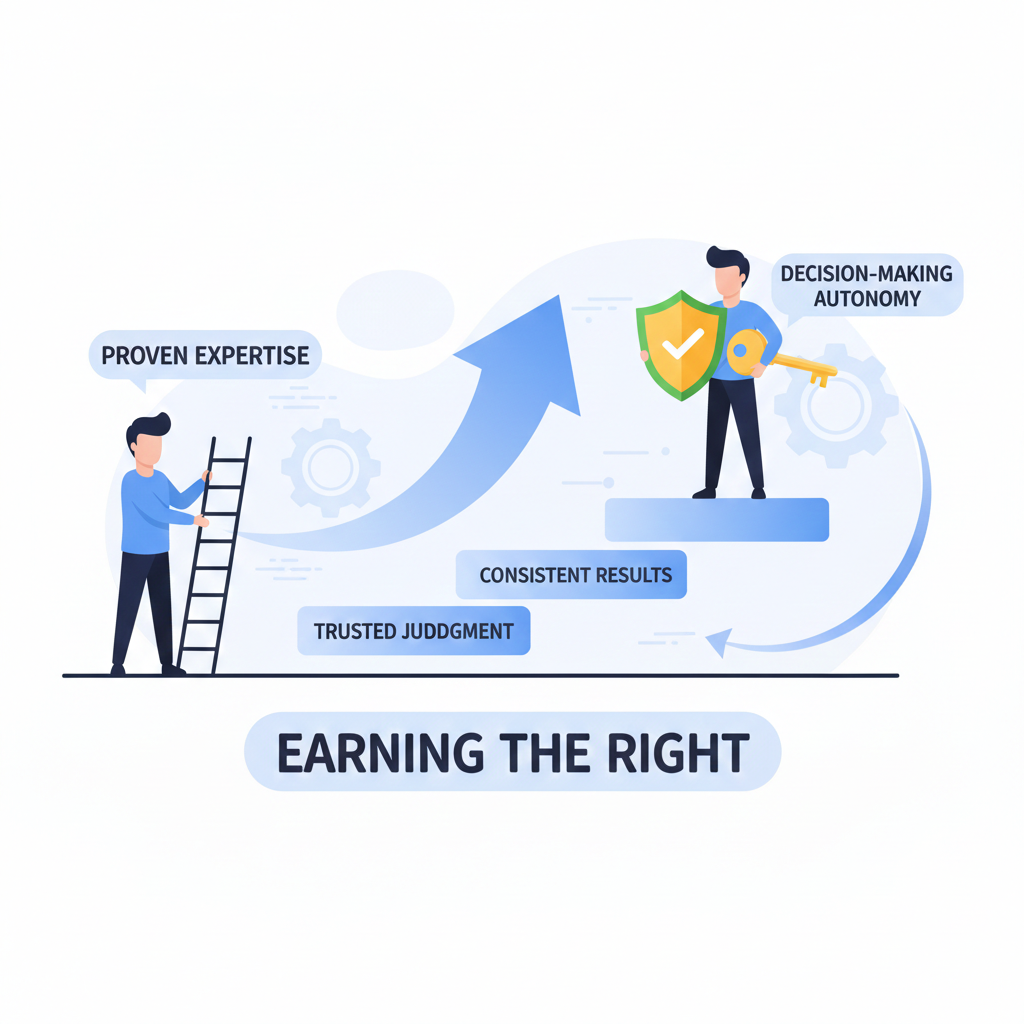
Trust is the foundation of autonomy. Without trust, every small choice needs approval. However, when trust becomes predictable, people relax. They stop checking every detail. As a result, you get more space to operate.
Predictable trust comes from consistent behavior. You deliver work on time. You communicate clearly. You don’t disappear during pressure. Therefore, leaders feel safe giving you more control.
This is also why trust is not built through one success. It is built through repeated proof. Over time, that proof becomes your reputation.
Strong judgment makes people comfortable giving you control
Managers don’t give autonomy to the smartest person. They give autonomy to the safest person. Safety, in this context, means good judgment. It means you can handle situations without creating new problems.
Good judgment shows up in small choices. For example, you ask questions before assuming. You clarify goals before executing. You avoid rushed decisions when the impact is high. Therefore, people trust your thinking process.
In addition, judgment improves when you learn from mistakes. You don’t hide errors. You fix them and move forward. That maturity builds confidence around you.
This is a key part of how professionals earn decision-making autonomy in real workplaces.
Ownership turns you into a problem-solver, not a task-doer
Task-doers wait for instructions. Problem-solvers move with purpose. Ownership is what separates them. When you take ownership, you stop saying, “Tell me what to do.” Instead, you say, “Here’s what I recommend.”
That shift changes how others see you. They stop treating you like support. They start treating you like a decision-maker. Therefore, you gain more authority without needing a promotion.
Ownership also reduces leadership workload. Managers love that. Because when you handle issues early, the team performs better.
Autonomy often goes to the person who makes the manager’s job easier.
How professionals earn decision-making autonomy through reliability
Reliability is not exciting, but it is powerful. People don’t trust inconsistent performers with important decisions. However, reliable professionals earn freedom faster.
Reliability means you follow through. It also means your quality stays stable. Even when the work is boring, you deliver strong results. Therefore, you become someone others can depend on.
Here are simple ways to build reliability daily:
- Share updates before someone has to ask
- Meet deadlines without last-minute excuses
- Keep your work organized and easy to track
- Finish what you start, even when it’s difficult
These habits reduce uncertainty. They also reduce risk. As a result, autonomy grows naturally.
That is a practical example of how professionals earn decision-making autonomy without demanding it.
Communication clarity reduces approval loops
Many professionals lose autonomy because of unclear communication. They confuse people. They leave gaps in information. Then managers feel forced to step in. However, clear communication reduces the need for control.
Clarity means you explain what you’re doing and why. It means you share progress and next steps. Therefore, your manager stays informed without hovering.
Also, clarity builds confidence during high-stakes work. When people understand your plan, they support it. When they don’t, they question it.
If you want autonomy, communicate early and communicate simply.
Smart risk management builds confidence in your decisions
Autonomy does not mean risk-taking without thought. It means taking smart risks with awareness. Professionals who earn autonomy know how to balance speed and safety.
Smart risk management includes checking the impact before acting. It also includes having a backup plan. Therefore, even if something goes wrong, the damage stays controlled.
Here are a few signs you manage risk well:
- You identify what could break before it breaks
- You test small before scaling big
- You document changes so others can follow
- You ask for input when the stakes are high
When managers see this behavior, they relax. They know you won’t create chaos. As a result, they give you more decision power.
This is another major part of how professionals earn decision-making autonomy.
Consistent results make your decisions easier to approve
Results speak louder than confidence. You can sound smart in meetings. However, if your output stays weak, autonomy won’t come. Consistent results make your decisions easier to trust.
When you deliver results, people stop questioning your process. They focus on the outcome. Therefore, your decision-making becomes smoother.
Consistent results also create leverage. You can suggest improvements, and people listen. You can change processes, and people accept it. That influence is a form of autonomy too.
In addition, results build your personal brand. You become known for performance, not promises.
Autonomy grows when you align with goals, not ego
Some professionals want autonomy to feel powerful. However, autonomy is earned through alignment. Leaders give you freedom when you focus on team goals, not personal ego.
Alignment means you understand the bigger picture. You prioritize what matters most. You don’t chase perfection on low-impact tasks. Therefore, you make decisions that support business outcomes.
When your decisions help the team win, you gain trust faster. You also get invited into more strategic conversations. Over time, your role expands naturally.
This is the long-term truth of how professionals earn decision-making autonomy. You earn it by proving you care about outcomes.
Conclusion: Autonomy is earned through trust, not demanded
Decision-making autonomy feels like freedom. But it comes from discipline. You build it through reliability, ownership, and strong judgment. You also build it through clear communication and smart risk control.
That is how professionals earn decision-making autonomy in any company, any role, and any industry. It’s not about being perfect. It’s about being dependable, thoughtful, and aligned.
If you want a workplace that values autonomy and growth, start applying to roles that reward responsibility. The best job tool can help you find the right opportunities faster. How professionals earn decision-making autonomy becomes easier when you work in a culture built on trust.
Find Your Dream Job Today – Explore Endless Career Opportunities and Secure Your Next Role with Best Job Tool.






Comments
Be the first to leave a comment.