

Introduction
Motivation is one of the most important qualities recruiters look for in candidates. Skills can be taught, and experience can be gained, but motivation comes from within. A motivated candidate is more likely to learn faster, stay committed, and perform well in the long run. That is why recruiters do not only judge what you know, but also why you want the job.
In this article, we will explore how recruiters judge motivation, what signals they look for, common mistakes candidates make, and how you can show genuine motivation during the hiring process.
What Is Motivation in Recruitment?
Motivation in recruitment means the inner drive that pushes a candidate to apply, prepare, and perform well in a role. Recruiters want to know:
- Why did you apply for this job?
- Why this company?
- Why this role at this stage of your career?
- What keeps you going when work becomes challenging?
Motivation is not about sounding excited only. It is about alignment between the candidate’s goals and the company’s needs.
Why Motivation Matters to Recruiters?
1. Performance and Productivity
Motivated employees usually work with more focus and energy. They take initiative and try to improve their work.
2. Long-Term Commitment
Recruiters prefer candidates who are likely to stay longer. High motivation often means lower chances of early resignation.
3. Learning and Growth
A motivated person is willing to learn new skills and adapt to changes, which is important in today’s fast-changing work environment.
4. Team Contribution
Motivation also reflects attitude. Positive and driven employees improve team morale and culture.
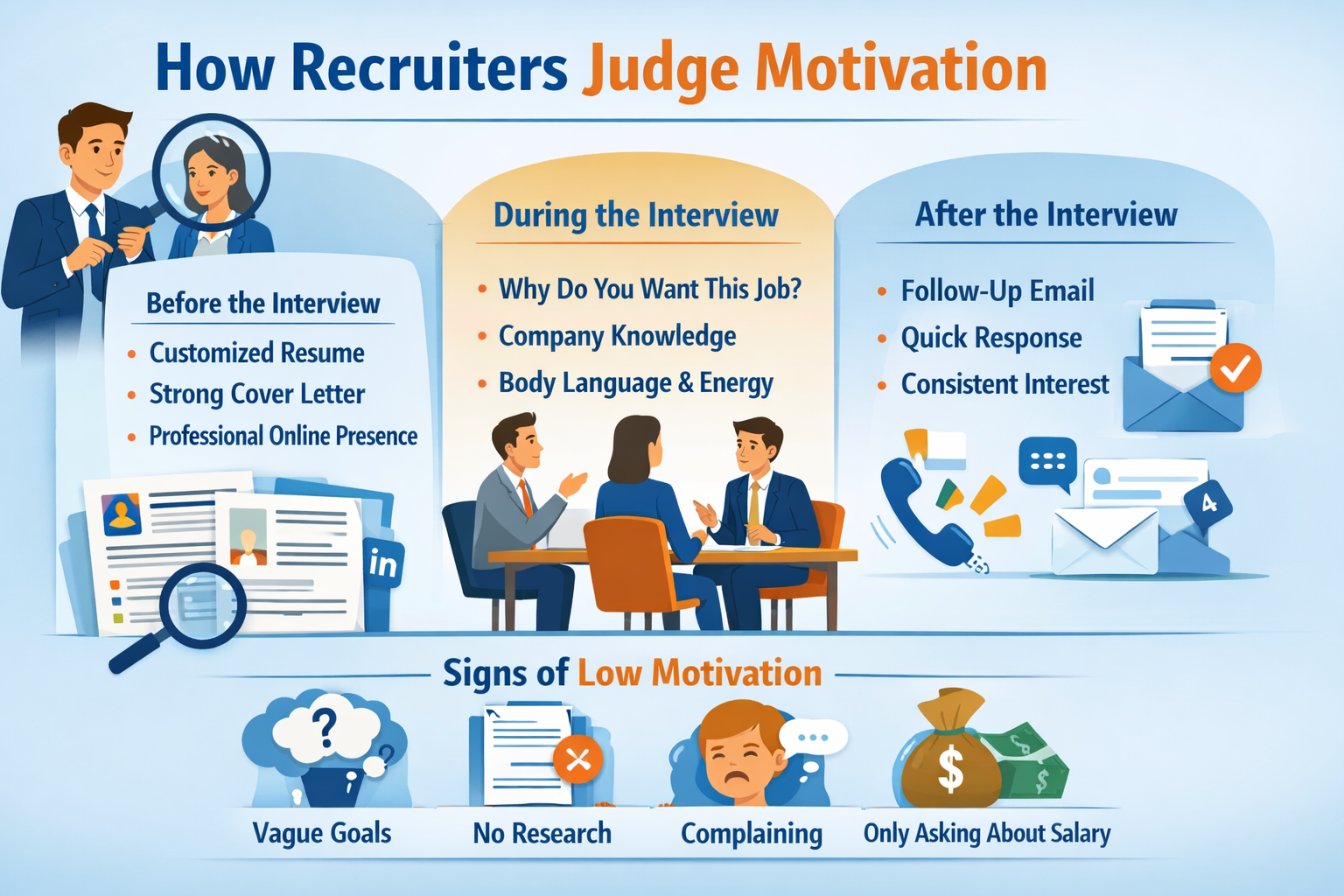
How Recruiters Judge Motivation Before the Interview?
1. Resume Quality and Customization
A generic resume shows low motivation. Recruiters notice whether you have:
- Tailored your resume to the role
- Highlighted relevant skills
- Used keywords from the job description
A customized resume shows effort and interest.
2. Cover Letter (If Provided)
A strong cover letter explains why you want the role, not just your skills. Recruiters look for:
- Clear reason for applying
- Understanding of the company
- Personal connection with the role
Copy-paste cover letters reduce motivation score.
3. Application Timing
Applying too late or randomly to many roles may signal desperation rather than motivation. Recruiters notice candidates who apply thoughtfully.
4. Online Presence (LinkedIn, Portfolio)
An updated LinkedIn profile, shared articles, or a portfolio shows passion. For example, if you write about your industry, recruiters see genuine interest.
How Recruiters Judge Motivation During the Interview?
1. Answer to “Why Do You Want This Job?”
This is the most direct motivation question.
Recruiters judge:
- Clarity of answer
- Honesty
- Connection between role and career goals
Weak answer:
“I just need a job”
Strong answer:
“This role matches my skills, and I want to grow in this field long-term.”
2. Knowledge About the Company
Motivated candidates research the company.
Recruiters check:
- Do you know what the company does?
- Do you understand its values or mission?
- Can you explain why you chose this company?
Basic research already creates a positive impression.
3. Body Language and Energy
Motivation is also judged through non-verbal signals:
- Eye contact
- Posture
- Facial expressions
- Tone of voice
Low energy or bored behavior suggests low interest, even if answers are correct.
4. Willingness to Learn
Recruiters often ask about weaknesses or skill gaps.
Motivated candidates:
- Accept their gaps
- Show willingness to learn
- Explain how they are improving
Unmotivated candidates either deny weaknesses or show no learning plan.
5. Questions You Ask
At the end of interviews, recruiters judge motivation based on your questions.
Good questions show interest, such as:
- Growth opportunities
- Team culture
- Learning and development
Bad sign:
- Only asking about salary and leaves on the first interview.
Behavioral Questions That Test Motivation
Recruiters use behavioral questions to see past motivation.
Examples:
- “Tell me about a time you faced a challenge at work.”
- “Describe a situation where you went beyond your role.”
- “How do you handle repetitive tasks?”
They judge:
- Effort level
- Persistence
- Problem-solving mindset
How Recruiters Judge Motivation After the Interview?
Judgment does not end with the interview.
1. Follow-Up Email or Message
A polite thank-you email shows professionalism and interest. It reminds recruiters that you value the opportunity.
2. Response Time
Slow replies or missed calls may indicate low seriousness. Recruiters expect timely communication.
3. Consistency
If your motivation drops after the interview, recruiters notice. Consistent interest matters.
Common Signs of Low Motivation Recruiters Notice
1. Vague Career Goals
If you cannot explain where you want to go, recruiters doubt your direction.
2. Complaining About Past Employers
Negative talk shows emotional baggage and poor attitude.
3. No Preparation
Not knowing basics about the role or company shows lack of effort.
4. Salary-Focused Too Early
Money is important, but discussing only salary in early rounds creates doubt.
5. Passive Attitude
Statements like “I will do whatever work you give” may sound flexible but actually show lack of passion.
How to Show Genuine Motivation?
1. Align Your Story
Connect your past, present, and future logically.
2. Prepare Personal Examples
Have 3–4 real stories that show effort, learning, and persistence.
3. Research Properly
Know the company, role, and industry basics.
4. Be Honest
Fake enthusiasm is easy to detect. Speak naturally.
5. Show Learning Habit
Mention books, courses, blogs, or skills you are working on.
Know how you can build long term motivation through our article.
Conclusion
Recruiters judge motivation at every stage of the hiring process — from resume screening to post-interview communication. It is not about dramatic excitement or big words. It is about clarity, effort, curiosity, and honesty.
If you truly understand why you want a role and communicate it clearly, recruiters will notice. Motivation builds trust, and trust leads to opportunities.
You can read more career related blogs with the Best Job Tool.






Comments
Be the first to leave a comment.