

Introduction
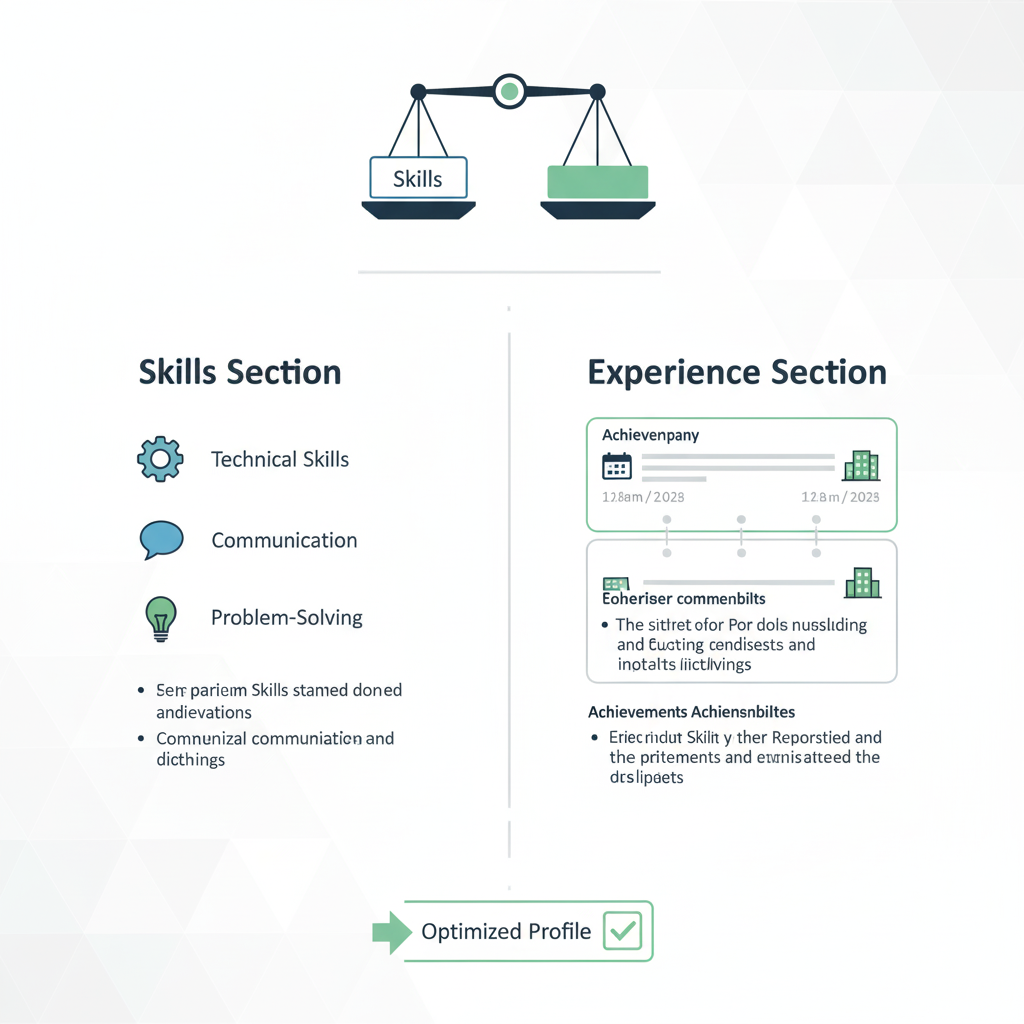
A strong resume is not only about what you know. It is also about how you present it. Many candidates either overload the skills section or write long experience paragraphs that hide their real strengths. The best resumes create balance. They show skills clearly and Balance Skills and Experience prove them through experience.
Learning how to balance skills and experience sections helps you improve ATS visibility and recruiter trust. It also helps your resume look focused, professional, and role-ready.
This matters even more today because hiring is fast. Recruiters scan quickly. ATS systems parse resumes automatically. So your resume must communicate value in seconds.
Why balance matters in modern hiring
Recruiters want quick clarity. They want to know what you can do and where you used it. If your resume lists skills without proof, it feels weak. If your resume has experience without clear skills, it feels unfocused.
Balance creates confidence. It tells recruiters you have relevant abilities and you applied them in real situations.
It also improves keyword matching. Skills sections support ATS searches. Experience sections support credibility during manual review.
When both sections work together, your shortlisting chances improve.
The skills section should highlight role-relevant strengths
The skills section is not a place to list everything you have ever learned. It should be targeted. It should match the role you are applying for.
A professional skills section includes tools, technical skills, and core competencies that matter for the job. It should also be easy to scan.
Keep it clean and structured. Avoid rating bars and unnecessary categories. Use simple text that ATS can read easily.
Most importantly, list skills you can explain confidently in an interview. This protects your credibility and reduces stress later.
The experience section should prove skills through outcomes
The experience section is where you show impact. Recruiters do not want long descriptions of duties. They want results and contributions.
Instead of writing what you were “responsible for,” show what you achieved. Use short bullet points with clear action and outcome.
For example, instead of saying you handled reporting, explain how you improved reporting speed or accuracy. Instead of saying you supported customers, explain how you reduced response time or improved satisfaction.
This approach makes your experience stronger. It also proves the skills you listed earlier.
Skills without proof look weak to recruiters
Many candidates list skills like communication, leadership, Excel, or SQL. However, they do not show where they used them. This creates doubt.
Recruiters often ignore skill lists if they are not supported by experience or projects. They want evidence.
So, every important skill should appear again in your experience bullets. That connection builds trust.
For freshers, proof can come from projects, internships, training, and certifications. You do not need a full-time job to show skill usage.
You need structured examples.
Experience without clear skills reduces ATS visibility
Some candidates write strong experience points but forget to include a clear skills section. This can reduce visibility inside ATS searches.
Recruiters often search for specific tools or keywords. If your resume does not list them clearly, you may not appear in search results.
Even if you used a tool, it should be visible. Mention it in the skills section and reinforce it in the experience section.
This improves your keyword coverage while keeping the resume professional.
The best structure for most candidates
For most roles, the best order is summary, skills, experience, and education. This structure works well because recruiters see your strengths early.
Your summary gives direction. Your skills section confirms relevance. Your experience section proves impact.
For freshers, you can include projects before experience. This makes sense when projects carry more value than limited work history.
For career switchers, the summary and skills section become even more important. They explain your target role and your transferable strengths clearly.
This structure reduces confusion and improves shortlisting.
How much space each section should take
A balanced resume does not mean equal length. It means correct emphasis based on your profile.
If you are a fresher, your skills and projects may take more space. Your experience section may be shorter. That is acceptable.
If you are experienced, your experience section should carry more weight. Your skills section should remain focused and clean.
As a general rule, your skills section should be easy to scan in seconds. Your experience section should provide proof in short, strong bullets.
Avoid long paragraphs. Keep content sharp.
Common mistakes to avoid
Many candidates unintentionally break balance by overloading one section. This reduces clarity.
Avoid listing too many skills without context. Avoid writing long job descriptions without results. Avoid adding unrelated skills that do not match the role.
Also avoid repeating the same words in every bullet point. Use varied action verbs. Keep your writing active and professional.
Finally, do not hide key skills deep inside the resume. Make them visible early.
Conclusion
A resume performs best when it is clear, credible, and role-focused. That is why learning how to balance skills and experience sections is a smart move for any job seeker. The skills section improves visibility and relevance. The experience section proves real value and builds recruiter trust.
When both sections work together, you get more shortlists and stronger interview outcomes.
To explore better roles and apply with confidence, use the best job tool.
Find Your Dream Job Today – Explore Endless Career Opportunities and Secure Your Next Role with Best Job Tool.






Comments
Be the first to leave a comment.