

Introduction
Many of us have done several side projects in addition to our main job. These side projects are very beneficial when it comes to getting a job. Having experience with side projects is definitely a good thing, but many people do not understand how to present them professionally on a resume in a way that impresses recruiters.
A lot of people either include side projects unevenly in their resume or do not include them at all, which reduces their chances of getting hired. However, including projects in a resume is very important—and presenting them correctly is actually quite easy.
In this article, we will understand what types of side projects there are and how they can be professionally presented on a resume.
What Counts as a Side Project?
Side projects are not just related with coding or tech. Side project can be any work which you have done apart from your job, studies, or daily responsibilities by taking initiative in which you showcase or explore your skills practically. Below are some common examples which come under projects.
1. Personal Projects
The work which you start with your own interest or curiosity, such as writing blog, creating portfolio website or researching on any topic, these projects show your creativity and self-motivation.
2. Freelance ya Volunteer Work
If you have worked for any client, whether it is paid or unpaid, or helps to any NGO, community, or startup, then it is also a strong side project, especially when it is related to your career field.
3. Learning-Based Projects
Any practical work which you have completed at the time of self-learning, certifications, or courses, such as sample designs, writing samples, case studies, or mini projects, come under side projects.
4. Content Creation Projects
If you are creating content regularly such as blogging on Medium, LinkedIn posts, YouTube channel, podcast, newsletter, or social media content, then it shows your communication as well as consistency.
5. College ya Academic Projects
Final year projects, group assignments, or research work, which are useful to develop skills, can also present as a side project professionally.
6. Passion Projects
The work you do just for your passion, such as poetry writing, photography, graphic design, or community building, can also be a valid side project if it shows the skills and discipline.
How to Present Side Projects Professionally?
1. Choosing the Right Side Projects to Showcase
Firstly, it is important to understand that every side project is not suitable for your resume or profile. You need to choose only those projects which are directly related to your target role or career goal. Relevance is more important than quantity.
Select those projects which shows your skills, problem-solving ability, and learning mindset. If you have started any project for just experiment and leaves it incomplete, then avoid that project writing in your resume. Strong side projects are those which represent your capabilities in a professional way, whether it is small or big.
2. Where to Present Side Projects
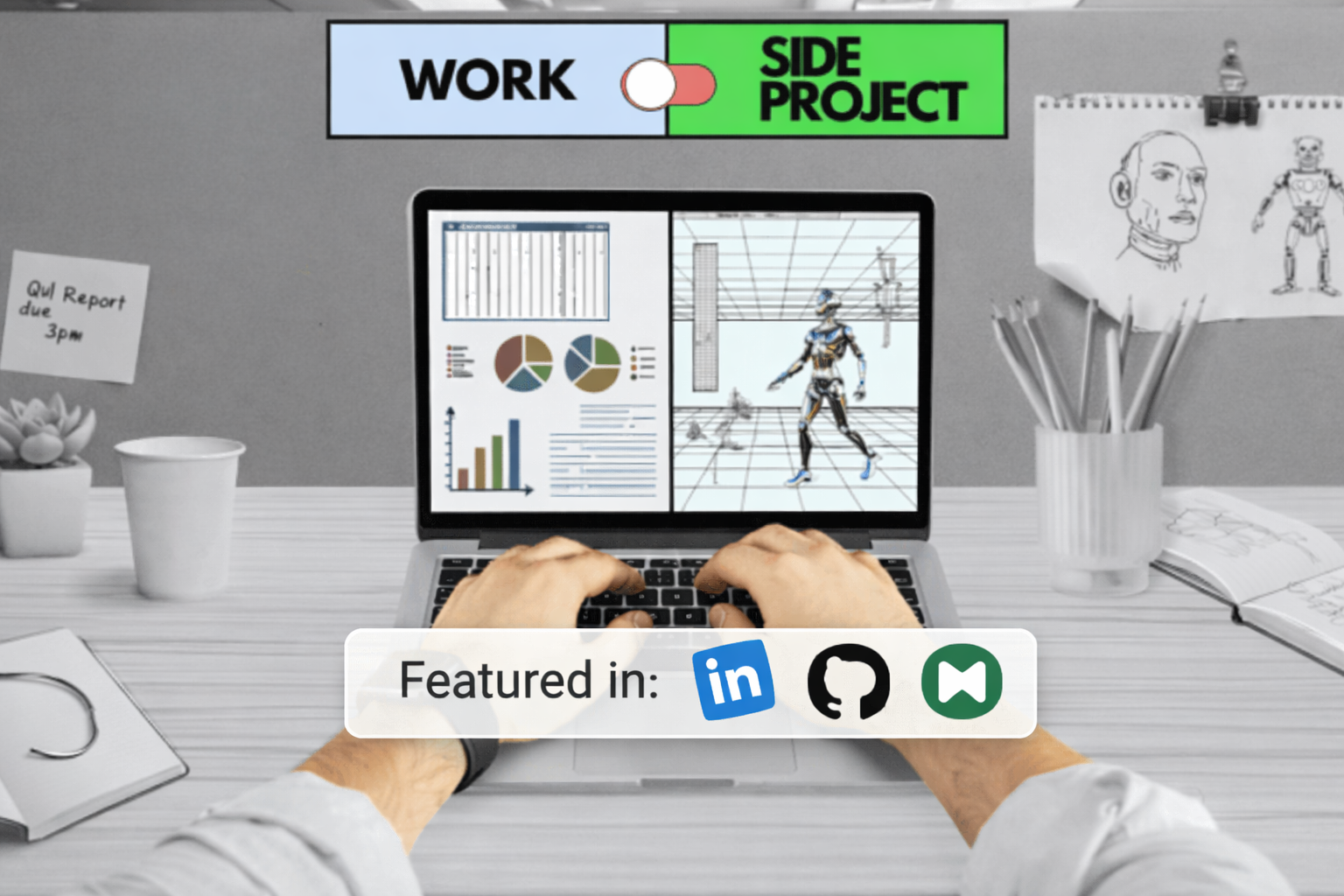
You can use multiple platforms to present side projects, but giving same detail everywhere is not important. Write short and impactful points in your resume and explain your projects on portfolio website, Medium, or LinkedIn in detail. Adding your projects in the feature section of LinkedIn has become very effective these days. You can also mention your any relevant side project in your cover letter, in short, to make your profile more strong.
3. How to Structure Side Projects on a Resume
You always need to show side projects in a clear and dedicated section of your resume. Include proper title of every project, two to three concise bullet points, and mention clearly a skills or tools used bullet points instead of writing paragraph, so that recruiter can scan easily. While writing description, tell what problem you solved, how you worked, and what was the result. Use simple professional language and avoid unnecessary details to make your projects more polished and credible.
4. Writing Side Project Descriptions Professionally
While writing side project descriptions, the most important thing is to show the value of work clearly. Always write description in a simple structure, such as what was the problem, what action you took, and what was the result. Avoid casual or vague lines such as “worked on a project.” Use professional tone and highlight a scale, tools, and approach to make recruiter understand what was your contribution.
5. Highlighting Transferable Skills Through Side Projects
The biggest benefit of side projects is you can showcase your transferable skills, which works for every role. Whether project is technical or creative, you can show skills like communication, problem-solving, time management, research, creativity, and ownership mindset. While writing description, also mention process instead of just writing output, such as planning, coordination, taking feedback, or maintaining consistency. These skills will shows that you can take responsibility easily.
6. Showing Outcomes and Results
For professional presentation, only telling “what you did is not enough” telling “what was the result” is more impactful. If possible, show your outcomes as a number or a measurable results, such as views, engagement, improvement, reach, or efficiency. If numbers are not available, then mention qualitative results, such as improved clarity, positive feedback, or successful outcomes to your side project to build credibility.
7. Using Side Projects to Fill Experience Gaps
If you are fresher, career breaker, or career switcher, then side projects can cover experience gap positively. It shows that you continued learning and practicing even in gap. Present your side projects in resume as a real-world experience without exaggeration. Through this, recruiter gets signals that you are a true actor.
8. Presenting Side Projects on LinkedIn
Presenting projects professionally on LinkedIn has become very powerful these days. You can add your projects in experience section, projects section, or featured section. Attach a neat image or sample with project to increase its credibility. You can write short post about your side project in which you can share your learnings, challenges, and results. It increases your visibility and you can build your personal brand.
Conclusion
Side projects are no longer just extra work—they are powerful tools to demonstrate skills, initiative, and real-world application. When presented professionally, they can strengthen resumes, fill experience gaps, and create strong first impressions for recruiters and clients. The key lies in choosing relevant projects, describing them clearly, highlighting transferable skills, and showcasing measurable outcomes.
Whether displayed on a resume, portfolio, or LinkedIn, well-presented side project turns passion and self-learning into credible professional value. By treating side projects with the same seriousness as formal experience, candidates can stand out confidently in competitive job markets.
Explore more such blogs here.






Comments
Be the first to leave a comment.