

Introduction
Social media has changed how hiring works. Job opportunities no longer live only on career pages or job boards. Today, many recruiters actively hire through social platforms. That is why learning how to use Twitter for job search has become a valuable career skill.
Twitter moves fast, but it also creates direct access to decision-makers. Recruiters, founders, and hiring managers often share openings before they appear elsewhere. When used strategically, Twitter can shorten your job search timeline.
This blog explains how to use Twitter for job search in a practical and professional way. You will learn how to build presence, connect with recruiters, and discover real opportunities.
Why Twitter matters in modern job searching
Twitter is built around conversations, not resumes. This makes it different from traditional job platforms. Employers use Twitter to share updates, opinions, and hiring needs in real time.
Because of this openness, job seekers can engage directly with industry professionals. This interaction builds visibility before any formal application begins.
When you use Twitter for job search correctly, you stop being just another resume. You become a recognizable professional voice.
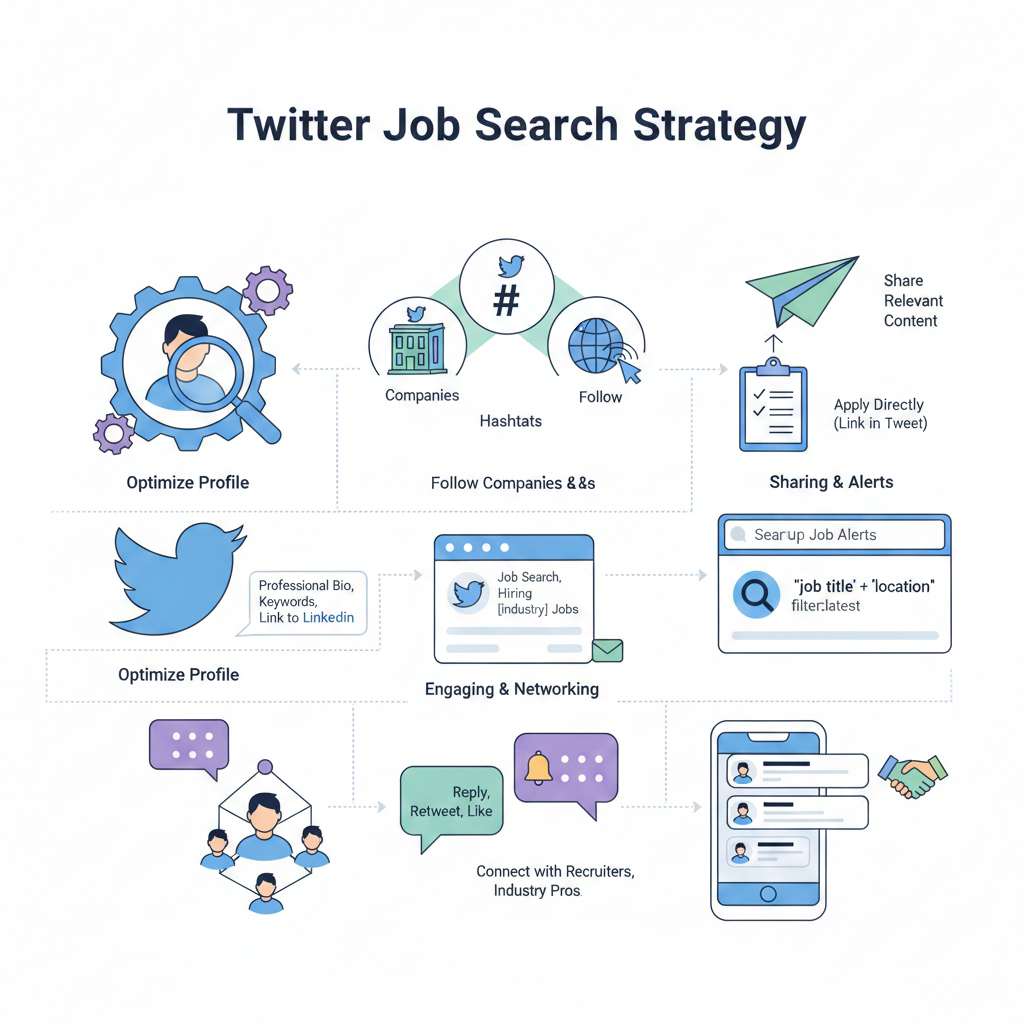
Setting up a professional Twitter profile
Your profile is your first impression. Recruiters often check it before responding. A clean and professional profile builds trust immediately.
Your bio should clearly describe your role, skills, and interests. Avoid vague or casual descriptions. A focused bio makes your intent clear.
Your profile photo should look professional and friendly. Consistency between your Twitter profile and LinkedIn profile strengthens credibility.
A strong profile supports your goal to use Twitter for job search effectively.
Building visibility through consistent engagement
Twitter rewards activity and relevance. Simply creating an account is not enough. You need to participate consistently.
Engaging with posts from industry leaders increases visibility. Commenting thoughtfully shows expertise and interest. Over time, people begin to recognize your name.
Sharing insights, lessons, or experiences related to your field adds value. This positions you as a professional, not just a job seeker.
Visibility plays a major role when you use Twitter for job search seriously.
Finding job opportunities using Twitter search
Many job openings never reach traditional job boards. They appear first on Twitter. Recruiters often post roles with hashtags and short descriptions.
Searching regularly helps you spot opportunities early. Timing matters because early applicants often get faster responses.
Following recruiters and companies in your industry improves discovery. Their posts often include direct application links or contact details.
Using Twitter for job search gives you access to opportunities others miss.
Networking with recruiters and hiring managers
Networking on Twitter feels more natural than formal messages. Conversations start with replies, not requests.
Responding to recruiter posts with thoughtful comments builds familiarity. Over time, this creates comfort and trust.
When you send direct messages, keep them respectful and brief. Mention shared interests or recent posts to personalize the message.
Strong networking increases the effectiveness of how you use Twitter for job search.
Sharing content that attracts opportunities
Your content reflects your mindset and skills. Recruiters observe what you share and how you communicate.
Posting about projects, learnings, or industry trends builds authority. It shows curiosity and growth.
Even simple reflections on work experiences can attract attention. Consistency matters more than perfection.
When done right, content turns Twitter into a passive job magnet.
Maintaining professionalism while being authentic
Twitter encourages casual conversation, but professionalism still matters. Your tone should remain respectful and constructive.
Avoid negative posts about employers or colleagues. Recruiters notice attitude as much as skill.
At the same time, authenticity builds connection. Sharing honest challenges and growth moments creates relatability.
Balancing authenticity with professionalism strengthens your ability to use Twitter for job search long term.
Converting Twitter connections into real interviews
Connections alone do not guarantee interviews. Action bridges the gap.
When you see a relevant opening, respond quickly and professionally. Mention your interest clearly and include relevant experience.
Following up politely shows seriousness without pressure. Many interviews start from simple conversations.
Strategic follow-up turns Twitter engagement into real career progress.
Conclusion
Twitter is no longer just a social platform. It is a powerful career tool when used with intention. That is why learning how to use Twitter for job search can transform your job-hunting approach.
By building a professional profile, engaging consistently, and networking authentically, you create opportunities beyond traditional applications. Visibility and timing work in your favor.
To strengthen your job search further, combine social strategies with the best job tool. It helps you discover verified roles that match your skills and goals.
Find Your Dream Job Today – Explore Endless Career Opportunities and Secure Your Next Role with Best Job Tool.






Comments
Be the first to leave a comment.