

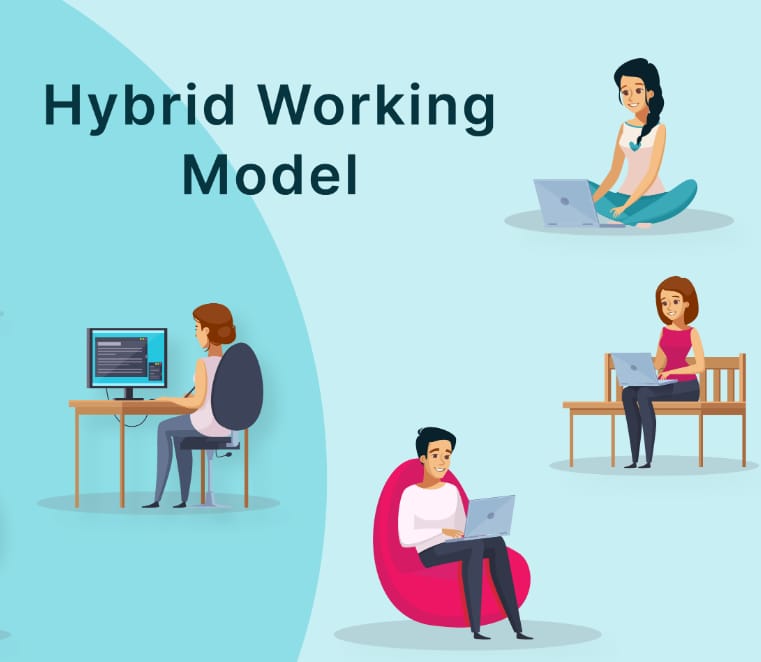
Introduction
Hybrid work is no longer an experimental perk or pandemic relic — by 2026 it’s the baseline expectation for millions of U.S. workers who can do their jobs outside the office. But “hybrid” means a lot of different things to different people: some want two days in-office for collaboration, others want strictly remote with occasional in-person retreats. As employers build policies for the long term, the big question is no longer whether hybrid will stay, but how to design it so employees feel respected, productive and invested in their careers.
This article unpacks what employees actually want from hybrid work in 2026 — based on the latest trends, major surveys, and what forward-thinking companies are learning in the real world — and gives practical guidance for leaders who want hybrid to be an advantage rather than a headache.
The State of Hybrid: Steady, But Shifting
A simple fact underpins everything: the majority of remote-capable employees prefer a hybrid arrangement. Recent national research shows roughly six in ten remote-capable workers want hybrid work — while about a third prefer fully remote and fewer than 10% want fully on-site roles. That majority has proved remarkably durable even as some firms push for more office time. Hybrid employees are currently averaging roughly 2–2.5 days per week in the office, a modest increase from the immediate post-pandemic norm but far from a return to pre-pandemic five-day office weeks.
At the same time, employers are experimenting. Some big firms have tightened in-office expectations and even begun to track location data; others offer generous flexibility as a talent-attraction strategy. This mixed environment means employees are watching not only whether they get flexibility, but how consistent and fair the rules are across roles and teams.
What Employees Want from Hybrid Model
Across surveys and employer reports, a consistent set of desires emerges. Employees aren’t asking for vagaries — they want systems, clarity and support that make hybrid practical and humane.
1) Real flexibility — but predictable structure
Employees want flexibility about where they work, and they also want predictable when. Random “come to the office” mandates that vary week-to-week frustrate people. The sweet spot many workers report is a predictable cadence (for example: two fixed in-office days plus flexible remote days) combined with the option to occasionally swap days for personal needs. When hybrid rules are arbitrary or applied unevenly, resentment and presenteeism spike.
2) Respect for time in hybrid work
One of the most common hybrid complaints is meeting overload. Employees want fewer, shorter, and more purposeful meetings — and meeting norms that respect both remote and in-office attendees (e.g., no “office-first” formats where remote workers are an afterthought). Leaders who insist on brainstorming only in-person inadvertently penalize remote workers; conversely, hybrid-friendly facilitation — structured agendas, shared documents, and deliberate inclusion of remote participants — dramatically improves perceived fairness and productivity.
3) Career development and visibility
A recurring fear for remote and hybrid workers is losing out on visibility, mentorship, and promotion opportunities. Employees want explicit systems to protect career mobility for those who work remotely part of the time: planned shadowing, regular mentorship interactions, and transparent promotion criteria that don’t assume physical proximity equals commitment. Where organizations fail to codify career pathways, remote workers report stagnation and disengagement.
4) Psychosocial safety and belonging
Working remotely can increase loneliness and make onboarding or culture-building harder. Psychological safety — the feeling that you can speak up, make mistakes without penalty, and be seen — is a non-negotiable employee need. Teams that schedule regular social rituals, inclusive recognition practices, and hybrid-specific onboarding see better engagement and retention. Employees want belonging to be intentional, not incidental.
5) Fair, transparent policies (and involvement in designing them)
Only a minority of employees report being consulted about hybrid rules, yet those who are consulted feel more committed and report better outcomes. Workers want to be part of the conversation — not just informed after decisions are made. They also want consistent, transparent enforcement so hybrid rules don’t become a source of perceived favoritism.
6) Better tools, better spaces, and support for the commute
Employees expect companies to invest in hybrid-friendly technology (video-first meeting rooms, collaboration platforms, async documentation) and in-office amenities that make the commute worth it (quiet spaces for deep work, collaboration pods, easy booking systems). Where commuting is long and office time poorly designed, people ask: “Why come in at all?” Employers who treat office days as valuable collaboration time — not email factories — get higher voluntary attendance.
7) Health, wellbeing and work-life boundary protections
Work–life balance remains a driver. Hybrid employees consistently report improved wellbeing compared with five-day office workers, but that advantage depends on respecting boundaries: predictable work hours, manager support for disconnecting, and workload management. Many employees are more likely to trade higher pay for better balance — and companies that ignore this risk losing talent.
8) Clear and fair approaches to AI and workload
By 2026, AI is a central part of modern workflows. Employees want clarity about how AI will be introduced, who is accountable for AI-driven decisions, and whether AI will reduce drudge work or simply raise expectations without additional compensation. Training and time to learn are now expected elements of workforce planning.
What Successful Companies Are Doing in 2026?
Organizations that report the best hybrid outcomes tend to share several design choices:
- Set a clear hybrid operating model (who is expected in-office, when, and why) — but build in exceptions and swap rules for real life. Clarity reduces anxiety and guesswork.
- Create meeting norms and “camera/on” policies that don’t penalize remote workers. Use shared facilitation tools and require inclusive meeting hosts for cross-location meetings.
- Measure outcomes, not seat time. Instead of tracking hours in-office as the primary KPI, strong teams measure output, customer impact, and wellbeing metrics — and they report these transparently.
- Invest in manager capability. Hybrid managers need explicit training in remote performance coaching, inclusive meeting facilitation, and workload design. Managers are the single biggest driver of perceived fairness in hybrid models.
- Design the office experience. When people do come in, the day should be designed for collaboration, community, and work that benefits from co-presence. That requires flexible spaces, easy booking, and clear agendas for in-office days.
- Use technology intentionally. Companies are standardizing on tools that make asynchronous work visible (workboards, strong documentation practices) and on meeting-room tech that gives equal voice to remote participants.
- Bring employees into policy design. Firms that involve staff in shaping hybrid rules get higher adherence and trust. This consultation can be rapid (surveys, focus groups) but must be meaningful.
Six Concrete Commitments Employees Want From Hybrid Employers in 2026
If you run an organization or lead a team, these six commitments are the most powerful ways to signal you’ve heard employees:
- A written hybrid compact that explains expectations, how decisions are made, and how exceptions are handled.
- A career-protection plan for hybrid/remote workers (mentoring quotas, role rotation, sponsorship programs).
- Meeting principles that limit meeting time and standardize inclusion practices (agenda, facilitator, shared notes).
- Office-day design: every in-office day should have at least one planned collaborative activity and no pointless town halls.
- Manager training with measurable outcomes and manager scorecards for inclusion and clarity.
- AI and workload roadmap: training, clear policies on AI use, and commitments to monitor workload as AI features are introduced.
Risks If Hybrid Employers Ignore What Employees Want
- Companies that treat hybrid as a temporary convenience or try to revert to old models without providing clear rationale risk four outcomes:
- Attrition: employees will vote with their feet to firms offering flexibility and better manager support. Hybrid is now a major retention lever.
- Unequal career outcomes: if promotion systems implicitly reward visibility over output, remote workers will be disadvantaged.
- Lower engagement: unpredictable or enforced in-office mandates without better office experiences frustrate staff and reduce discretionary effort.
- Legal and reputational headaches: aggressive monitoring of location or activity can raise privacy concerns and affect employer brand if handled without transparency.
Conclusion
Hybrid’s staying power in 2026 isn’t a surprise — it reflects broader employee priorities: autonomy, wellbeing, and purposeful work. But simply allowing a few remote days doesn’t guarantee the benefits. The organizations that succeed are the ones that design hybrid as a system: clear expectations, fair career pathways, purposeful in-office days, strong manager skills, and technology that supports both synchronous and asynchronous work.
Employees want flexibility — and they want fairness, predictability and investment. Employers that deliver on those promises will find hybrid to be a central talent differentiator in 2026: a model that improves retention, widens candidate pools and sustains performance. Employers that don’t will face the slow churn of disengagement, declining applications, and the reputational cost of being seen as out of step with modern worker priorities.
Want to read more informational blogs? Click here.






Comments (7)
I don’t think the title of your article matches the content lol. Just kidding, mainly because I had some doubts after reading the article.
Thanks for sharing. I read many of your blog posts, cool, your blog is very good.
Your point of view caught my eye and was very interesting. Thanks. I have a question for you.
Your article helped me a lot, is there any more related content? Thanks! https://accounts.binance.com/register/person?ref=JW3W4Y3A
Thank you for your sharing. I am worried that I lack creative ideas. It is your article that makes me full of hope. Thank you. But, I have a question, can you help me?
Can you be more specific about the content of your article? After reading it, I still have some doubts. Hope you can help me. https://accounts.binance.bh/register/person?ref=GGYHGRE
Your point of view caught my eye and was very interesting. Thanks. I have a question for you. https://www.binance.bh/register?ref=IXBIAFVY