

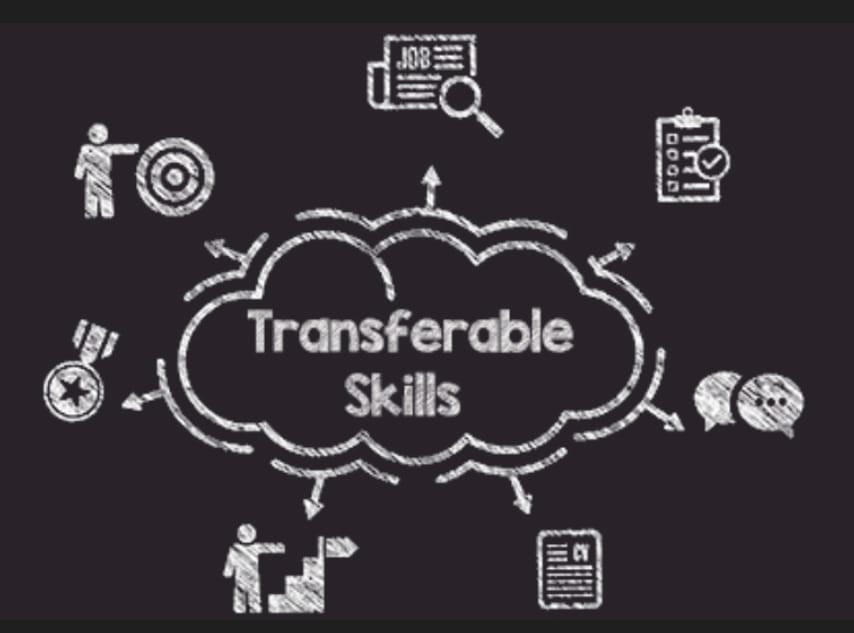
What are transferable Skills?
Transferable skills means those skills which you can use from one job, project, or experience to another job or field. These skills move everywhere with you whether you want to change your career, want to join new field, or you are a fresher.
Transferable skills equals to those skills which work from one situation to another.
Examples of transferable skills are,
- Communication skill
- Teamwork
- Problem solving
- Time management
- Leadership
- Adaptability
Transferable skills are universal skills which make you successful in every industry, role, or job.
Why Do Recruiters Value Them?
Recruiters love candidates who have transferable skills because these skills show that you can adapt, learn fast, and perform well in any environment. Today’s job market changes very quickly—new tools, new technology, new roles—so companies want people who can grow with them.
- Shows You Can Adapt to New Roles
Recruiters value transferable skills because they know that if you have these abilities, you can adapt to new roles easily, handle tasks independently, and complete your responsibilities effectively.
- Reduces Training Time
If you have transferable skills, then the training period will be shorter because you already possess those skills that are taught during training. You can start your work and reduce your training time with transferable skills.
- Helps You Perform Even With Limited Experience
Transferable skills help you perform effectively even with Limited experience, as they enable you to manage any work effectively, regardless of your experience.
- Indicates Strong Problem-Solving Ability
Transferable skills help you solve problems in any situation because they help you keep calm even in drastic situations. This shows your problem-solving ability.
- Shows You Fit the Work Culture
When you have transferable skills then you can easily adapt to new rules or new technology because of your skills and you can easily complete your work effectively with the change as well which shows you fit the work culture.
Methods to Showcase Transferable Skills Brilliantly
1. Identify Your Transferable Skills
The first step to showcasing your transferable skills is to identify them, because until you know what your transferable skills are, you won’t be able to present them effectively. To identify your transferable skills, make a list of all the abilities you have gained from your education, internships, freelancing, projects, or volunteering work. Analyze each project carefully—how you managed it, what challenges you handled, and what skills you used to complete it successfully. These will form your transferable skills, such as problem-solving, teamwork, communication, leadership, and many more.
You can also extract skills from your daily activities, not just from the workplace, because we use many skills in our everyday life as well—like communication, handling problems, and leadership. Once you identify your transferable skills, it becomes much easier to explain them to someone else or to a recruiter.
2. Match Transferable Skills to the Job Description
The second step after identifying your transferable skills is to match them to the job description. Every job description lists the skills required from candidates, so you should compare those required skills with your own transferable skills. If you possess the right skills, you will adapt to the work environment more easily and your chances of being hired will increase significantly. Read each job description carefully—don’t miss a single point, because every detail matters. Identify the keywords and required competencies, then align your skills with the job’s expectations.
3. Use the STAR Method to Present Skills Clearly
Even after having transferable skills, many candidates still get rejected. The main reason for this rejection is their weak presentation of those skills. If a candidate cannot present their transferable skills clearly, the recruiter will never understand their true abilities. To present your skills effectively, you should use the STAR method.
STAR Method:
- Situation – First, explain the situation or challenge you were facing.
- Task – Describe the tasks involved in that situation and what you were responsible for, including any deadlines.
- Action – Explain the actions you took to handle the situation and make things easier or better.
- Result – Share the final outcome of your actions. The result should be positive, as it creates a strong impression on the recruiter.
If you use this STAR method, it becomes much easier to present your skills clearly and confidently.
4. Showcase Skills in Your Resume
It means to customize your resume so that it looks for your targeted field only. Highlight your transferable skills ( your previous skills that will also work in your new career). To pass your resume in ATS ( applicant tracking system) use the job description keyword. Show your achievements and projects to add value to your new role.
Add relevant skills to your resume. Ask colleagues or past clients to endorse your top skills to build credibility.
Pro Tip: Match your skills to the jobs you’re targeting.
5. Highlight Transferable Skills in Your Cover Letter
A cover letter is a personalized document you send with your resume when applying for a job. The main purpose is to introduce yourself, tell why you are interested in the applied job, and how you are a perfect match for that job. A resume only shows your qualifications and experience, but a cover letter allows you to tell the interviewer about yourself. A resume is the answer to ‘what you have done’, but a cover letter is the answer to ‘why you have done it and its importance’.
Learn About the Company
- What are the mission, vision, and values of the company?
- What type of products or services does the company provide?
- Have they recently shared any news or achievements?
Understand the Job Description
- Which skills and qualifications do they need?
- Key responsibilities of the role
Find the Hiring Manager’s Name
- If possible, find out the name of the hiring manager or recruiter:
- Check the job post or the company’s LinkedIn page
Match the Role to Your Skills
- Identify 1–2 past experiences that connect directly to the role.
- Think about how you can add value or solve problems for the company.
- Prepare examples that show results or achievements.
If you write a cover letter without any research, it feels like generic copy and paste. But if you write with proper research, it will be more effective and tailored to the specific job, and that’s the thing that impresses the hiring manager.
6. Prove Your Transferable Skills in Interviews
Giving an interview is an important part of our career. Interview questions can be confusing sometimes, whether you are a fresher or an experienced one. To remove this confusion and nervousness, you need to be prepared for it before the interview.
Tell me about yourself – “I’m a graduate in [Your Field] with a passion for [Your Interest, e.g., digital marketing]. Over the past year, I’ve worked on projects that improved my skills in [Key Skill]. I’m now looking for an opportunity to apply my skills in a dynamic organization like yours.”
Why should we hire you? – “I believe my skills match your job requirements perfectly. I’m a quick learner, detail-oriented, and always eager to take on new challenges. I’m confident I can contribute to your team’s goals and add value from day one.”
Tell me about a time you faced a challenge at work.
“In my internship, I had to complete a report with limited data. (Situation) I gathered additional information from team members and online sources. (Task) I stayed late to ensure accuracy. (Action) The final report was well-received and used in the final presentation.
Describe a time when you worked under pressure.
“During college exams, I also had a project deadline. I made a clear schedule, divided my time efficiently, and stayed focused. I submitted the project on time and performed well in exams too.”
Give an example of when you worked in a team.
“During a group project, I handled the research part. We divided tasks based on strengths, regularly communicated, and helped each other. The project received top grades.”
7. Leverage LinkedIn to Highlight Transferable Skills
It is very important to keep your LinkedIn profile professional and up to date. Write your headline in a way that clearly shows which field you are interested in. In the About section, give a short and positive explanation of your career change. Update the Skills section and add skills relevant to your new career. Keep your profile photo professional and use an industry-related image for the banner. Regularly share posts, write articles, and participate in industry discussions to increase your visibility.
LinkedIn is your most powerful networking tool. Keep your profile updated, use relevant keywords, and connect with professionals in your related field. Share industry-related posts and start commenting on valuable posts to show your activity. Join professional groups (LinkedIn groups, WhatsApp/Telegram industry communities, Facebook groups, etc.) and take part in discussions. With the help of these, you will be updated with the latest news and updates.
Catchy & Clear Headline
Your headline doesn’t have to be just your job title. Use it to show your value, skills, and target role.
Examples:
“Unemployed | Looking for work”
“Content Writer | SEO Specialist | Helping Brands Grow with Engaging Content”
A good headline grabs attention and helps you appear in searches.
Strong About Section (Summary)
This is where you tell your professional story. Use simple language to cover:
- Who you are?
- Your top skills and experience.
- Your goals or what you’re looking for?
- A call to action (e.g., “Open to new opportunities” or “Let’s connect!”)
- Use short paragraphs or bullet points to make it easy to read.
8. Evaluating your skills, strengths, and weaknesses
Evaluating your skills, strengths, and weaknesses means honestly assessing yourself to understand what abilities you already have and which areas need improvement.
Start by making a skills list — including technical skills (like software knowledge or tool usage), soft skills (such as communication, teamwork, problem-solving), and industry-specific skills. Then, identify which of these will be useful in your new career.
Recognizing your strengths – is important because they boost your confidence and can be highlighted in your resume or interviews. Examples include leadership, creativity, adaptability, or quick learning.
At the same time, pay attention to your weaknesses — such as lacking knowledge of a specific tool or feeling nervous about public speaking. Work on improving these areas so you’re better prepared for the career change.
This step gives you a clear roadmap of what to maintain and what to improve, ensuring a smoother and more successful transition.
Applying to suitable opportunities
Instead of applying blindly everywhere, choose a job that is related to your interests and matches your new career goal. Read the job description carefully and customize your resume according to it. Try to reach hidden jobs through networking, because not every job is posted publicly. Best Job Tool will help you apply to suitable opportunities.
Common Mistakes People Make
- Listing too many vague skills.
Listing too many skills is a common mistake people make. You should only mention the skills that matter, the ones that can help the company grow and the skills in which you are genuinely strong.
- Not aligning skills with the job role.
Another common mistake is not aligning your skills with the job role. Your skills must match the requirements of the job; only then will you have a higher chance of getting hired. If your skills don’t match, the HR will reject you immediately.
- Using generic words without proof.
You should never write anything in your resume that you cannot prove, because it creates a bad impression and may lead to instant rejection. That’s why you must include only those points that are 100% true.
- Not preparing stories for interviews.
You should also prepare stories for your interviews so that your interview does not become boring. The HR should not feel that you have memorized your answers. You need to explain your situations and experiences in a storytelling manner to keep the interview engaging.
Conclusion
Showcasing transferable skills is one of the smartest ways to stand out in today’s competitive job market. When you identify your skills, match them correctly with the job description, and present them clearly through methods like the STAR format, you make it easier for recruiters to understand your true potential.
Remember, it’s not just about having skills — it’s about proving them with real experiences and presenting them confidently. If you stay honest, focused, and clear in your communication, you will create a strong impression and increase your chances of getting hired.






Comments
Be the first to leave a comment.