

Introduction: Why Resume Length Matters
When it comes to writing a resume, one of the most common questions is: “How long should my resume be?” Many job seekers worry about whether their resume is too short or too long. Over time, many myths have developed around resume length, and these myths can confuse candidates. In this article, we will explain the most common resume length myths, why they are not always true, and how to write a resume that works for you.
A resume is more than just a list of your education, skills, and experience. It is the first impression you give to a recruiter or hiring manager. A well-written resume can make the difference between getting an interview and being ignored.
Many people focus on the length of their resume because they believe that a short resume looks weak, or a long resume looks unprofessional. However, the truth is that resume length is not the most important factor. What matters most is relevance, clarity, and honesty.
Understanding the myths about resume length will help you create a resume that highlights your strengths and avoids unnecessary mistakes.
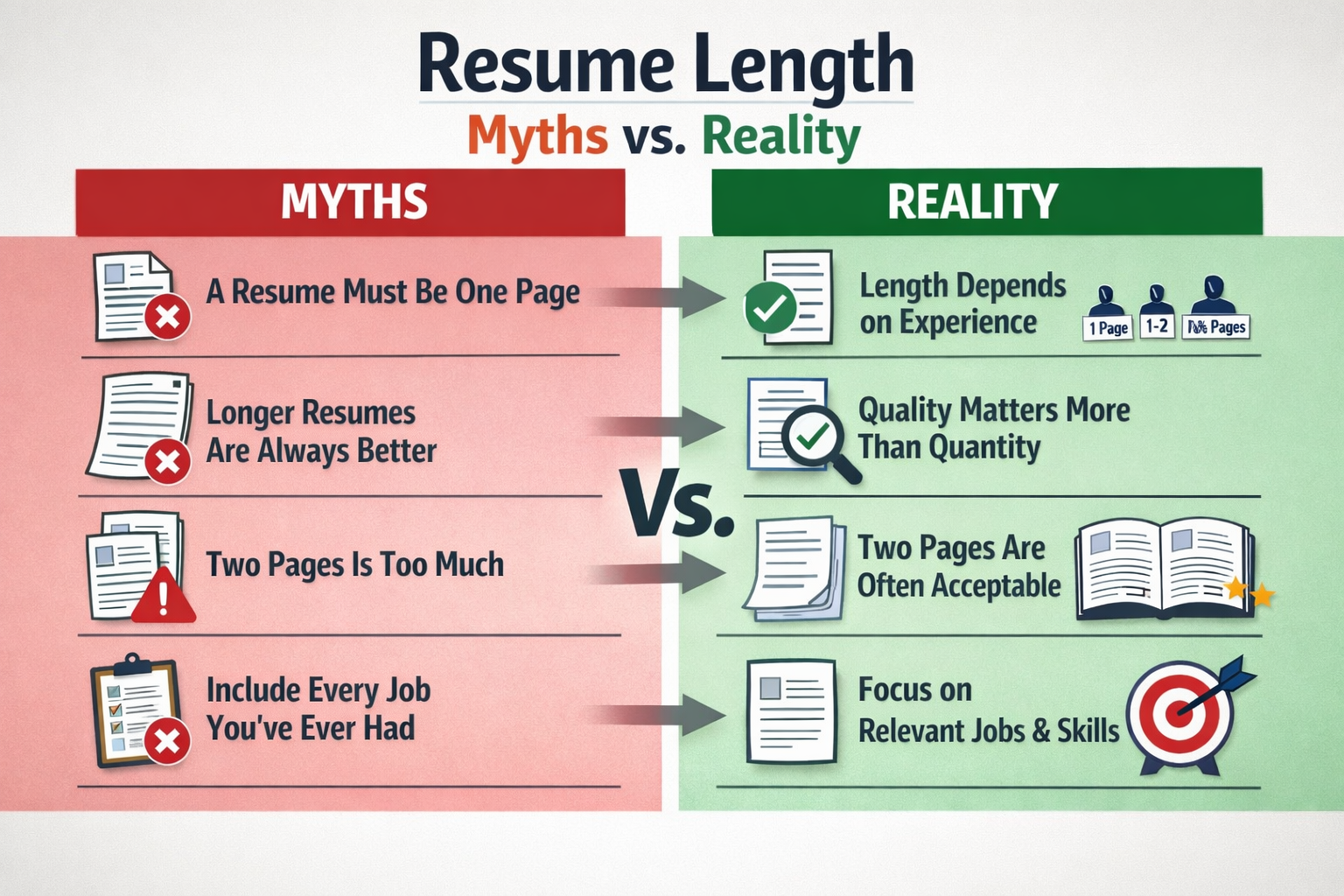
Myth 1: A Resume Must Always Be One Page
One of the most popular resume myths is that your resume should never be longer than one page. While it is true that recruiters often skim resumes quickly, there is no universal rule that a resume must fit on one page.
Why This Myth Exists:
- Many resume templates are designed for one page.
- Some older hiring practices suggested keeping resumes short.
- Recruiters are assumed to prefer shorter resumes for easy reading.
The Reality:
- A one-page resume works well for students, fresh graduates, or people with less than 5 years of experience.
- Professionals with more experience may need two or even three pages to showcase relevant skills, achievements, and projects.
- The key is not the number of pages but the quality of information. Every word should add value.
Tip: If you are early in your career, aim for one page. If you have extensive experience, do not force yourself to cut important details just to fit one page.
Myth 2: Longer Resumes Impress Recruiters
Some candidates believe that a long resume shows that they have a lot of experience and skills. They think adding every job, project, or responsibility will make them look more impressive.
Why This Myth Exists:
- People equate more information with more credibility.
- Job seekers want to stand out from the competition.
The Reality:
- Long resumes filled with irrelevant information can confuse recruiters.
- Recruiters typically spend 6–10 seconds on the first scan of your resume. If it is too long, they may not read important points.
- Quality always beats quantity. Highlight relevant skills and achievements rather than listing everything.
Tip: Focus on your most recent and relevant experiences. Use bullet points and short sentences to make it easy to read.
Myth 3: Two Pages Are Too Long
Some candidates worry that a two-page resume is automatically considered bad. This belief is particularly common among people changing careers or professionals in competitive industries.
Why This Myth Exists:
- Career advice websites often emphasize “one-page resumes.”
- Fear of overwhelming the recruiter.
The Reality:
- A two-page resume is perfectly acceptable for experienced professionals.
- Many recruiters prefer a two-page resume if it clearly shows accomplishments and skills.
- The main rule is: if it’s relevant, it belongs on the resume. If it’s not, leave it out.
Tip: Use the first page to showcase your most impressive skills and experience. Use the second page for additional details, certifications, or projects.
Myth 4: Only Executives Can Have Long Resumes
There is a belief that only senior executives or managers can have two- or three-page resumes. Entry-level or mid-career professionals are often advised to stick to one page.
Why This Myth Exists:
- Advice from traditional career guides.
- Misunderstanding of what constitutes relevant content.
The Reality:
- Long resumes are not just for executives. Anyone with relevant experience, projects, or certifications can justify a longer resume.
- Even entry-level candidates may need a longer resume if they have completed internships, volunteering, side projects, or freelance work.
Tip: Focus on relevance and clarity. If the information strengthens your candidacy, don’t worry about length.
Myth 5: Resume Length Determines Your Professionalism
Some candidates worry that a short resume will make them seem inexperienced, or a long resume will make them appear disorganized.
Why This Myth Exists:
- Resume advice often links length with competence.
- Candidates fear judgment from recruiters.
The Reality:
- Recruiters judge resumes by content, formatting, and clarity, not by the number of pages.
- A short, well-organized resume can be more professional than a long, cluttered one.
- Being concise shows that you can communicate effectively, which is a valuable skill.
Tip: Focus on clean formatting, clear headings, and concise language. One or two pages can both be professional if done correctly.
Myth 6: You Must Include Every Job You’ve Ever Had
Another common myth is that leaving out any job from your work history will hurt your chances. Candidates think that recruiters will assume they are hiding something.
Why This Myth Exists:
- Fear of gaps in employment.
- Belief that more work experience equals better credibility.
The Reality:
- Not every job is relevant to the role you are applying for.
- Including unrelated jobs can make your resume longer without adding value.
- Recruiters care about relevant skills, experience, and achievements.
Tip: Include only jobs that demonstrate skills and experience related to the position. For older or unrelated jobs, a brief summary is enough.
How to Decide the Right Resume Length
Choosing the right resume length depends on a few factors:
- Experience Level
- Entry-level: 1 page is ideal.
- Mid-level: 1–2 pages.
- Senior-level: 2–3 pages may be appropriate.
- Industry Standards
- Creative fields may prefer concise resumes with portfolios.
- Technical fields may require detailed resumes with certifications, projects, and achievements.
- Content Relevance
- Include only information that strengthens your application.
- Remove irrelevant tasks or outdated roles.
- Formatting
- Use bullet points, headings, and short sentences.
- Avoid large blocks of text that make the resume harder to read.
Conclusion: Focus on Quality Over Length
Resume length is often surrounded by myths and confusion. The truth is that there is no “perfect” length for every candidate. What matters most is:
- Relevance of information
- Clear and organized formatting
- Highlighting achievements
- Honesty and accuracy
Whether your resume is one page or two, it can be impressive if it effectively communicates your value to a recruiter. Focus on making every word count, tailoring your resume for the role, and presenting your experience clearly.
Remember, a well-crafted resume is your first step toward landing an interview. Don’t let myths about length hold you back from creating a resume that truly represents your skills and experience.
Read more such blogs here.






Comments
Be the first to leave a comment.