

Introduction
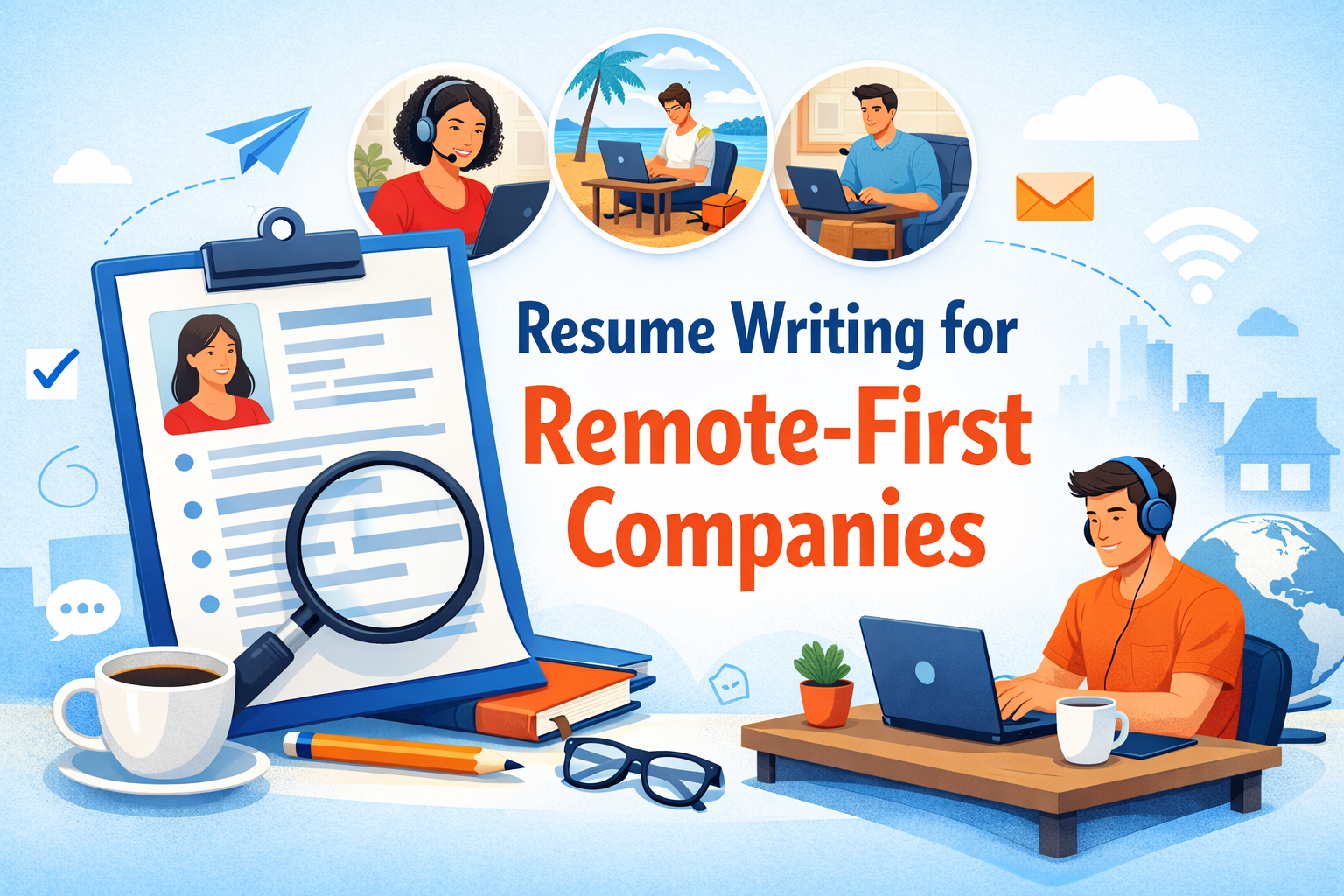
Remote work is no longer a trend. It has become a permanent work culture for many companies around the world. Remote-first companies are organizations where remote work is the default option, not a temporary arrangement. These companies hire people from different cities, countries, and time zones. Because of this, their expectations from candidates are also different.
When you apply to a remote-first company, your resume needs to show more than just your technical skills or job experience. It should clearly reflect that you can work independently, communicate effectively, manage your time, and collaborate with a remote team. In this article, we will discuss how to write a strong resume for remote-first companies, what sections to focus on, and common mistakes to avoid.
Understanding What Remote-First Companies Look For
Before writing your resume, it is important to understand what remote-first companies value the most. These companies do not see you in person every day, so they depend on trust, communication, and results.
Here are some key qualities remote-first companies look for:
- Strong communication skills (written and verbal)
- Ability to work independently without constant supervision
- Time management and self-discipline
- Experience with remote tools and technologies
- Problem-solving mindset
- Accountability and ownership of work
Your resume should reflect these qualities clearly and honestly.
Choose the Right Resume Format
Choosing the right resume format is very important when applying to remote-first companies. The most suitable formats are:
1. Reverse-Chronological Format
This is the most commonly used format. It lists your most recent experience first. It is ideal if you have relevant work experience, especially remote or hybrid experience.
2. Combination Format
This format focuses on both skills and experience. It is useful if you are changing careers or applying for remote roles for the first time.
Avoid using overly creative or complex formats. Remote recruiters prefer clean, simple, and easy-to-read resumes.
Resume Writing for Remote-First Companies
1. Highlight Remote Work Experience Clearly
If you have worked remotely before, make sure to highlight it clearly in your experience section. Recruiters want proof that you understand remote work culture.
How to Mention Remote Experience:
- Mention “Remote” or “Work From Home” in your job title or location
- Describe how you communicated with your team
- Mention tools you used like Slack, Zoom, Trello, Asana, or Google Workspace
- Highlight results, not just tasks
Example:
Content Writer (Remote)
ABC Digital Agency | Jan 2022 – Present
- Collaborated with remote editors and designers across different time zones
- Delivered SEO-optimized articles while managing deadlines independently
- Used Slack, Google Docs, and Trello for daily communication and task tracking
2. Focus on Communication Skills for Remote-First Companies
Communication is one of the most important skills for remote jobs. Since most communication is written, your resume should reflect clarity and professionalism.
Ways to show communication skills on your resume:
- Mention writing, reporting, or documentation tasks
- Highlight client communication or team coordination
- Use clear and simple language throughout your resume
Avoid grammatical mistakes and spelling errors, as they create a negative impression.
3. Showcase Time Management and Self-Discipline
Remote-first companies want people who can manage their time without supervision. Your resume should show that you can handle responsibilities independently.
You can highlight this by:
- Mentioning deadlines you consistently met
- Showing long-term remote roles
- Including phrases like “managed multiple projects independently”
Example:
- Managed multiple content projects simultaneously while meeting weekly deadlines without supervision
4. Include Remote Tools and Technical Skills
Remote work depends heavily on tools and technology. Make sure to include tools that are commonly used in remote workplaces.
Common Remote Tools:
- Communication: Slack, Zoom, Microsoft Teams
- Project Management: Trello, Asana, ClickUp
- Documentation: Google Docs, Notion
- Design & Editing: Canva, Grammarly
Create a separate “Skills” section and list these tools clearly.
5. Emphasize Results Over Responsibilities
Remote-first companies focus on outcomes, not hours. Instead of listing duties, focus on what you achieved.
Weak Example:
- Wrote blog articles for the company
Strong Example:
- Wrote 30+ blog articles that increased website engagement and organic traffic
Even if you do not have exact numbers, you can still describe positive impact in simple words.
6. Add a Dedicated Skills Section for Remote-First Companies
A clear skills section helps recruiters quickly understand your strengths. Divide your skills into categories if possible.
Example Skills Section:
Remote Skills:
- Asynchronous communication
- Time management
- Self-motivation
Technical Skills:
- Google Workspace
- Slack
- Trello
- Canva
7. Mention Freelance and Contract Work
Remote-first companies value freelance and contract experience. It shows that you can work independently and handle clients.
If you are a freelancer, do not hide it. Present it professionally.
Example:
Freelance Content Writer (Remote)
- Worked with multiple international clients on content and blog writing projects
- Maintained consistent communication and met deadlines independently
8. Education and Certifications for Remote-First Companies
Your education section does not need to be very detailed unless required. Focus more on skills and experience.
If you have done any online courses related to remote work, communication, or tools, include them.
Example:
- Certificate in Remote Work Productivity
- Online Course in Digital Communication
9. Optimize Resume for ATS (Applicant Tracking Systems)
Many remote-first companies use ATS to filter resumes. To pass ATS:
- Use simple fonts like Arial or Calibri
- Avoid tables and graphics
- Use keywords from the job description
- Save your resume in PDF or DOCX format
Read the job description carefully and match your resume language with it.
10. Customize Resume for Each Remote Role
Do not use the same resume for every job. Customize your resume based on:
- Job requirements
- Tools mentioned in the job description
- Skills the company values
This increases your chances of getting shortlisted.
Common Mistakes to Avoid for Remote-First Companies
Here are some common mistakes candidates make when applying to remote-first companies:
- Not mentioning remote experience clearly
- Writing long and confusing sentences
- Ignoring communication skills
- Using generic resumes for all jobs
- Including unnecessary personal details
Keep your resume focused, relevant, and simple.
Read “Why your resume should be updated every 3 months”.
Conclusion
Writing a resume for remote-first companies requires a different approach. It is not just about your job title or years of experience. It is about showing that you can work independently, communicate clearly, and deliver results without constant supervision.
By highlighting your remote skills, tools, communication abilities, and achievements, you can create a resume that stands out in the remote job market. Keep your language simple, your format clean, and your content relevant. With the right resume, you can increase your chances of getting hired by a remote-first company and build a successful remote career.
Read more such blogs here.





Comments
Be the first to leave a comment.