

Introduction
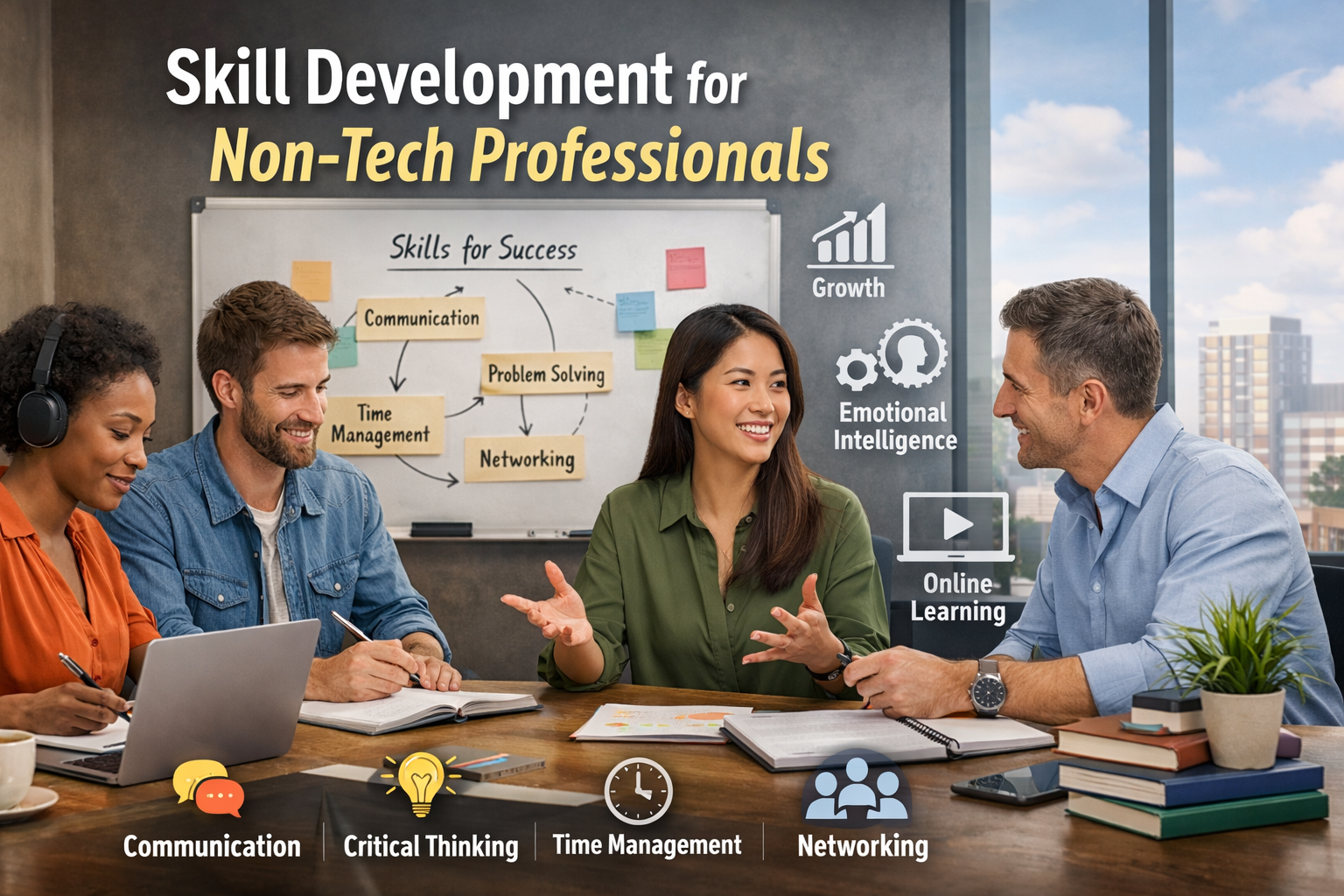
In today’s fast changing world, skills are more important than degrees. Many people think that only technical skills like coding, data science, or artificial intelligence can give success. But this is not true. Non-tech professionals also have many opportunities if they focus on the right skills.
Non-tech professionals include writers, teachers, marketers, HR professionals, sales executives, designers, managers, entrepreneurs, and many others. They may not work in IT or coding fields, but they still need to develop strong skills to grow in their careers.
Skill development is not only for students. It is for everyone who wants to improve and move forward. In this article, we will understand why skill development is important for non-tech professionals and what skills they should focus on.
Why Skill Development is Important for Non-Tech Professionals?
The job market is changing very fast. Companies are looking for people who can solve problems, communicate clearly, and adapt to change. Just having a degree is not enough anymore.
Here are some reasons why skill development is important:
1. Better Career Growth
When you improve your skills, you increase your chances of promotion. Skilled professionals are more valuable to companies.
2. Higher Income
If you have strong skills, you can ask for better salary. You can also start freelancing or consulting.
3. Job Security
Companies prefer employees who keep learning. If you improve your skills, you reduce the risk of losing your job.
4. More Confidence
When you know you are skilled, you feel confident in meetings, interviews, and presentations.
5. More Opportunities
Skillful people get more offers and better opportunities.
Important Skills for Non-Tech Professionals
Now let us talk about the most important skills that non-tech professionals should develop.
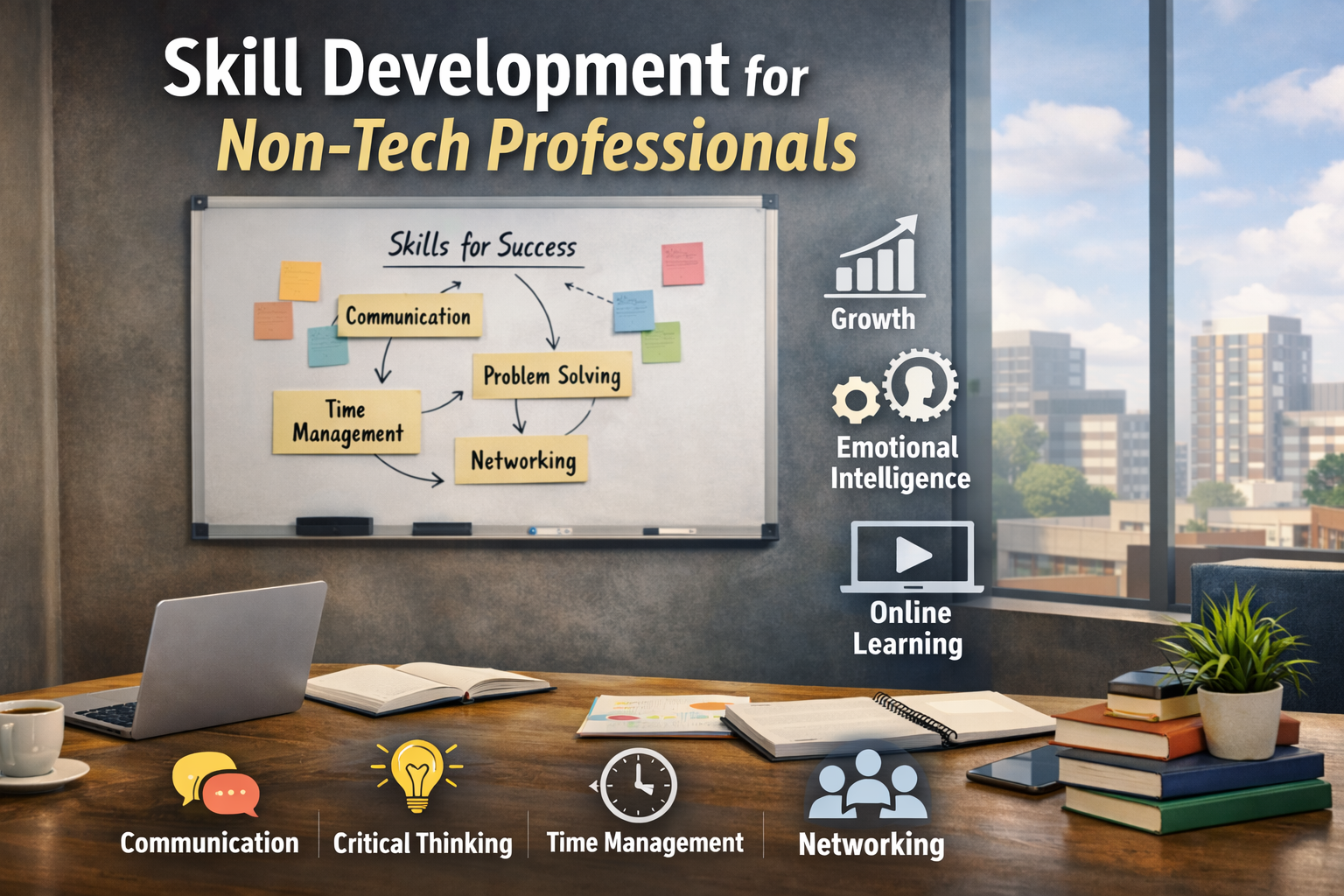
1. Communication Skills for Non-Tech Professionals
Communication is one of the most important skills in any profession.
Good communication includes:
- Speaking clearly
- Writing clearly
- Listening carefully
- Understanding others
If you can explain your ideas properly, people will respect you. In offices, communication helps in teamwork, leadership, and problem solving.
You can improve communication by:
- Reading books
- Practicing speaking
- Writing daily
- Watching good speakers
For content writers, communication is everything. For managers, it is leadership.
2. Critical Thinking
Critical thinking means thinking deeply before making decisions. It means not believing everything without checking facts.
In the workplace, you face many problems. Instead of reacting emotionally, you should think logically.
Ask questions like:
- Why is this happening?
- What are the possible solutions?
- What will be the result?
Critical thinking helps you make better decisions and avoid mistakes.
3. Emotional Intelligence
Emotional intelligence means understanding your own emotions and others’ emotions.
In offices, conflicts happen. Sometimes people feel stressed or angry. If you understand emotions, you can handle situations calmly.
Emotional intelligence helps in:
- Teamwork
- Leadership
- Client handling
- Customer service
A person with high emotional intelligence builds strong relationships.
4. Time Management for Non-Tech Professionals
Many professionals struggle with time management. They feel busy but not productive.
Time management means:
- Planning your day
- Setting priorities
- Avoiding distractions
- Completing tasks on time
You can improve time management by:
- Making to-do lists
- Using calendars
- Setting deadlines
- Avoiding unnecessary social media use
Time is money. If you manage time properly, your productivity increases.
5. Digital Literacy
Even if you are not in IT, digital knowledge is important.
Digital literacy means:
- Using basic computer tools
- Understanding online platforms
- Using email professionally
- Working with documents and presentations
For example:
- Writers should know content tools.
- Marketers should understand social media.
- HR professionals should know HR software.
You do not need to become a coder. But you should be comfortable with technology.
6. Personal Branding
Today, personal branding is very important.
Personal branding means how people see you professionally. It includes:
- Your LinkedIn profile
- Your online presence
- Your communication style
- Your expertise
If you build a strong personal brand, people trust you more.
You can build personal branding by:
- Sharing knowledge online
- Writing articles
- Posting on LinkedIn
- Networking with professionals
A strong personal brand brings opportunities without chasing them.
7. Networking Skills for Non-Tech Professionals
Many professionals ignore networking. They think only skills are enough.
Skills are important, but connections also matter.
Networking means:
- Building professional relationships
- Staying in touch with industry people
- Helping others
Networking does not mean using people. It means building genuine relationships.
Sometimes opportunities come from connections, not job portals.
8. Adaptability
The world is changing fast. New tools and trends are coming every year.
If you are not adaptable, you will struggle.
Adaptability means:
- Accepting change
- Learning new methods
- Being open-minded
Companies prefer employees who can adjust easily to new systems.
9. Problem-Solving Skills for Non-Tech Professionals
Every company wants problem solvers.
Instead of complaining about problems, learn to solve them.
When you see a problem:
- Understand it clearly
- Find possible solutions
- Suggest improvements
Problem-solving makes you valuable in any organization.
10. Financial Awareness
Non-tech professionals should also understand basic finance.
You should know:
- How business makes profit
- How costs affect company
- Basic budgeting
Financial awareness helps you make smarter decisions.
For example, if you are a marketer, you should understand ROI. If you are a freelancer, you should manage income properly.
How to Start Skill Development for Non-Tech Professionals?
Many people feel confused about where to start. Here is a simple process:
Step 1: Identify Your Goal
Ask yourself:
- What do I want in 3 years?
- Promotion?
- Freelancing?
- Leadership role?
Clear goals help you choose the right skills.
Step 2: Choose One Skill
Do not try to learn everything at once. Focus on one skill for 2-3 months.
Step 3: Learn from Free Resources
You can learn from:
- YouTube
- Online courses
- Books
- Articles
- Podcasts
Learning does not always need money.
Step 4: Practice Daily
Skill improves with practice, not only theory.
For example:
- Want to improve writing? Write daily.
- Want to improve speaking? Practice speaking daily.
Step 5: Track Progress
Check improvement every month. Adjust if needed.
Conclusion
Skill development is not only for tech professionals. Non-tech professionals also need strong skills to grow in their careers.
The world is competitive, but opportunities are also increasing. If you focus on communication, emotional intelligence, problem solving, adaptability, and digital literacy, you can build a strong career.
Do not wait for the perfect time. Start today. Choose one skill. Practice daily. Improve slowly.
Remember, success does not come from background. It comes from consistent skill development.
Your degree may open the door, but your skills will keep you inside the room.
Keep learning. Keep growing.






Comments (1)
I genuinely appreciated
reading this article because it was
very helpful for me.
The way you presented the topic
made it easy to understand,
and it cleared many of my doubts.
I was searching for information like this,
but this one stood out.
Thanks a lot for sharing such
insightful content.
Please keep posting.