


Introduction
Career flexibility is a very important factor in building a stable and efficient career. Life is not always stable; situations keep changing from time to time. However, this does not mean that we should be afraid of these changes, stop moving forward, or step back. We should know how to handle every situation.
When we learn to adapt in every situation, this is what we call career flexibility. It means using our existing skills to adjust to a new job and perform our work efficiently. Career flexibility includes many important skills that help us handle new situations effectively.
In this article, we will discuss those skills that increase career flexibility and help you build your career more easily.
What Is Career Flexibility?
First, let us understand what career flexibility means.
Career flexibility refers to the ability to adapt, grow, and move across different roles and industries. It does not mean that professionals have to start from zero every time. Instead, it means adjusting responsibilities, career direction, and skills to fit into a new role without starting from scratch.
If a candidate changes jobs frequently without a clear purpose, it is not considered career flexibility. Career flexibility means using transferable skills in different situations, not changing jobs randomly without direction.
Core Skills That Increase Career Flexibility
1. Communication Skills to Increase Career Flexibility
Whether you are in the office or doing remote work effective communication works everywhere. Clarity should be in every format of communication whether it’s verbal, written, or digital communication. Also, active listening is important because right communication does not happen just by speaking it also by understanding. Focusing on clarity and tones in digital messages or virtual meetings has also become an essential skill.
2. Adaptability and Learning Mindset
In today’s fast-changing world, adaptability and flexibility are the most important soft skills. These skills work when you need to adjust to new technology, tools, or a job role. People who accept changes quickly become successful in the future workforce. Also staying open for lifelong learning is important because knowledge and skills are never static.
3. Problem-Solving Skills to Increase Career Flexibility
If you have strong problem-solving skills, you will not stop or feel afraid in difficult situations. Instead, you will be prepared to handle every challenge effectively. Problem-solving skills help professionals face unexpected and new challenges with confidence.
Whether the role or job is old or new, challenges exist everywhere. It is the responsibility of a good employee to handle every situation confidently and find solutions. That is why problem-solving skills are one of the most important skills for career growth and flexibility.
4. Creativity and Innovation Skills
Creative doesn’t mean art only, it also means thinking out of the box in every field. Innovative people find new ideas and unique perspectives which impact directly in the growth of the company. In the time of AI and automation, human creativity is one and only skill that is irreplaceable.
5. Time Management to Increase Career Flexibility
Time management is the backbone of successful work. It allows you to stay focused, complete tasks efficiently, and meet deadlines without unnecessary stress. With proper planning and discipline, workers can maintain a healthy work-life balance, avoid burnout, and make the most of the flexibility that jobs offer. Moreover, mastering time management builds reliability and professionalism, helping you grow in your career while staying productive and motivated every day.
6. Emotional Intelligence (EQ)
Emotional intelligence improves communication and understanding between team members. When team members understand the emotions of each other’s than communication becomes clearer and respectful. People can share ideas freely in this environment and collaboration becomes strong naturally, which improves productivity and creativity.
Conflict is normal in teamwork but emotionally intelligent people handle that calmly. They listen to others and try to understand the situation instead of reacting immediately. It helps to decrease unnecessary misunderstandings and problems get solved easily which helps to create a healthy and peaceful work environment.
When team members understand each other’s emotions and perspectives then they build trust for each other. Emotionally intelligent people show empathy and value everyone’s contribution. It creates mutual respect for everyone in the team and everyone feels important.
7. Critical Thinking to Increase Career Flexibility
Critical thinking means analyzing a situation logically and making smart decisions. In future jobs, only seeing data will not be enough instead taking data-driven and creative decisions will be important. The people who find innovative solutions with a different perspective, their demand will increase in every industry.
8. Networking and Relationship-Building Skills
Networking and relationship-building skills are very important for increasing career flexibility. When you build strong professional relationships, you gain access to many opportunities and learn many new things. All these factors become extremely helpful when you need to change jobs, make a career transition, or explore something new.
You can also read “Top Soft Skills That Will Be in Demand Beyond 2026”.
Conclusion
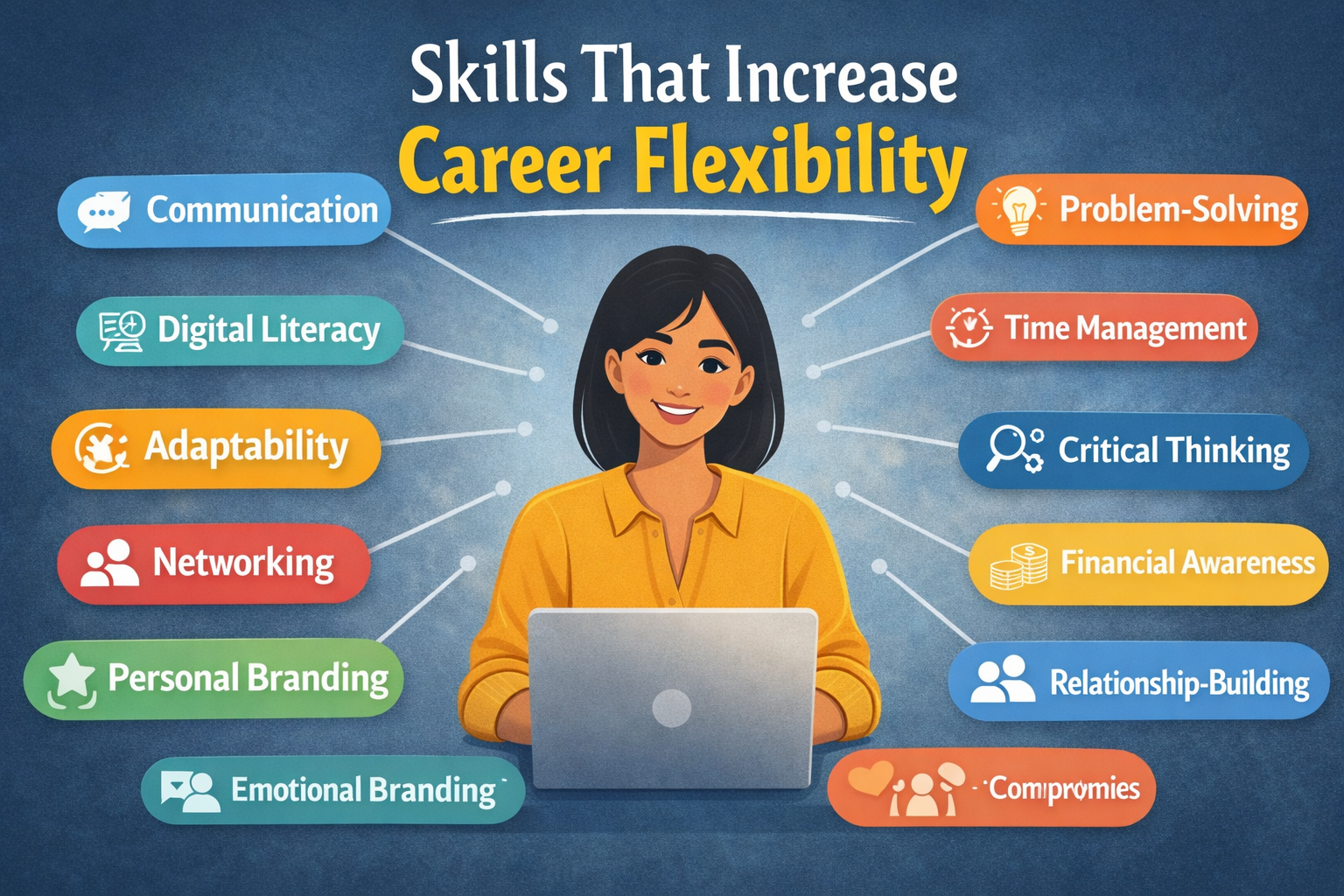
All these skills are extremely important for career flexibility so that you can work confidently in a new job or role. Career flexibility has become very important in today’s time because the work environment is changing very rapidly. Sometimes new tools are introduced, sometimes you need to change jobs, and sometimes you want to explore new opportunities.
If you have skills like communication, problem-solving, and adaptability, it becomes much easier for you to learn new things and adjust yourself confidently in any new environment.
Want to explore more such blogs? Visit here.






Comments
Be the first to leave a comment.