

What Does “Clarity” Mean?
Career clarity is not just about knowing your job title. It is about understanding your strengths, interests, values, skills, and goals. It answers important questions like:
- What kind of work do I enjoy?
- What skills do I want to use daily?
- What type of growth do I expect in the next 5–10 years?
- What kind of lifestyle do I want from my career?
When you have clear answers to these questions, your career decisions become easier and more confident. You stop following trends blindly and start making choices that align with your personal vision.
Why Clarity Improves Applicant Quality?
1. Clarity Indicates Self-Awareness
You can copy the best resume format from the internet. You can use strong action words and optimize it for ATS systems. But if you are confused about your career, that confusion will reflect in interviews, job choices, and work performance.
People without clarity often accept jobs only because of salary, pressure, or fear of unemployment. Later, they feel stuck, demotivated, or disconnected from their work.
No resume can protect you from burnout if you are walking in the wrong direction.
Career clarity helps you choose roles that match your interests and energy. This leads to better engagement, better performance, and long-term satisfaction.
2. Shows Clear Thinking
One of the biggest benefits of career clarity is better decision-making. When you know your goals, you stop overthinking every opportunity.
You can easily decide:
Which jobs to apply for
Which offers to accept or reject
Which skills to learn next
Which companies match your values
Without clarity, every decision feels risky. You keep asking others what you should do because you don’t trust your own judgment.
3. Clarity Helps in Goal Setting
When you are clear about the goals of your career, then you know what you have to achieve in short term and long term. This clarity gives you direction at every step and decreases confusion. For example, if you are clear that you want senior position in next two years, then you will develop your skills and knowledge according to it. Through this, you avoid chasing irrelevant opportunities or random jobs. Instead, you take focused and intentional decisions. When goals are clear, then anxiety reduces naturally because you are aware with the roadmap of handling challenges.
4. Clarity Supports Long-Term Retention
Job hopping is often a result of confusion, not ambition. People who are unclear about their career keep switching roles, companies, and industries, hoping to find satisfaction. Instead, they end up feeling lost.
When you have clarity, you choose roles that align with your values and interests. This increases job satisfaction and reduces the urge to quit frequently. Stability does not mean staying stuck. It means growing in the right direction.
You can also read our another blog on “Why career clarity is more important than a perfect resume”.
5. Clear Candidates Understand the Role Better
Clear candidates have proper understanding of roles. They know about their responsibilities, expectations, and important skills for the role. That’s why they give relevant and confident answers in the interview.
These candidates have clear focus, that’s why they do not remain confuse between the unmatched things. Hiring managers feel that this candidate understand the job seriously and can perform effectively after joining.
6. Clarity Reduces Training Time
When candidate have clarity for the role, then they do not have much confusion at the time of training. They know earlier what to learn and how to apply that’s why training process becomes fast.
These candidates can understand the instructions easily, avoid mistakes, and there’s no need to ask same thing multiple times. That’s why hiring managers think clear candidate become more productive.
7. Clarity Helps in Planning and Action
Clarity is not just limited to thinking, it also help you take action, when you know your goal and the steps you will take, then you can create a concrete plan and follow it. Through this, you can reduce uncertainty and anxiety because you do not wait, instead take steps actively for your career growth, for example, if you want leadership role, then Clarity will guide you, what skills you need to first improve, how to handle projects and which mentorship opportunities you should follow.
Conclusion
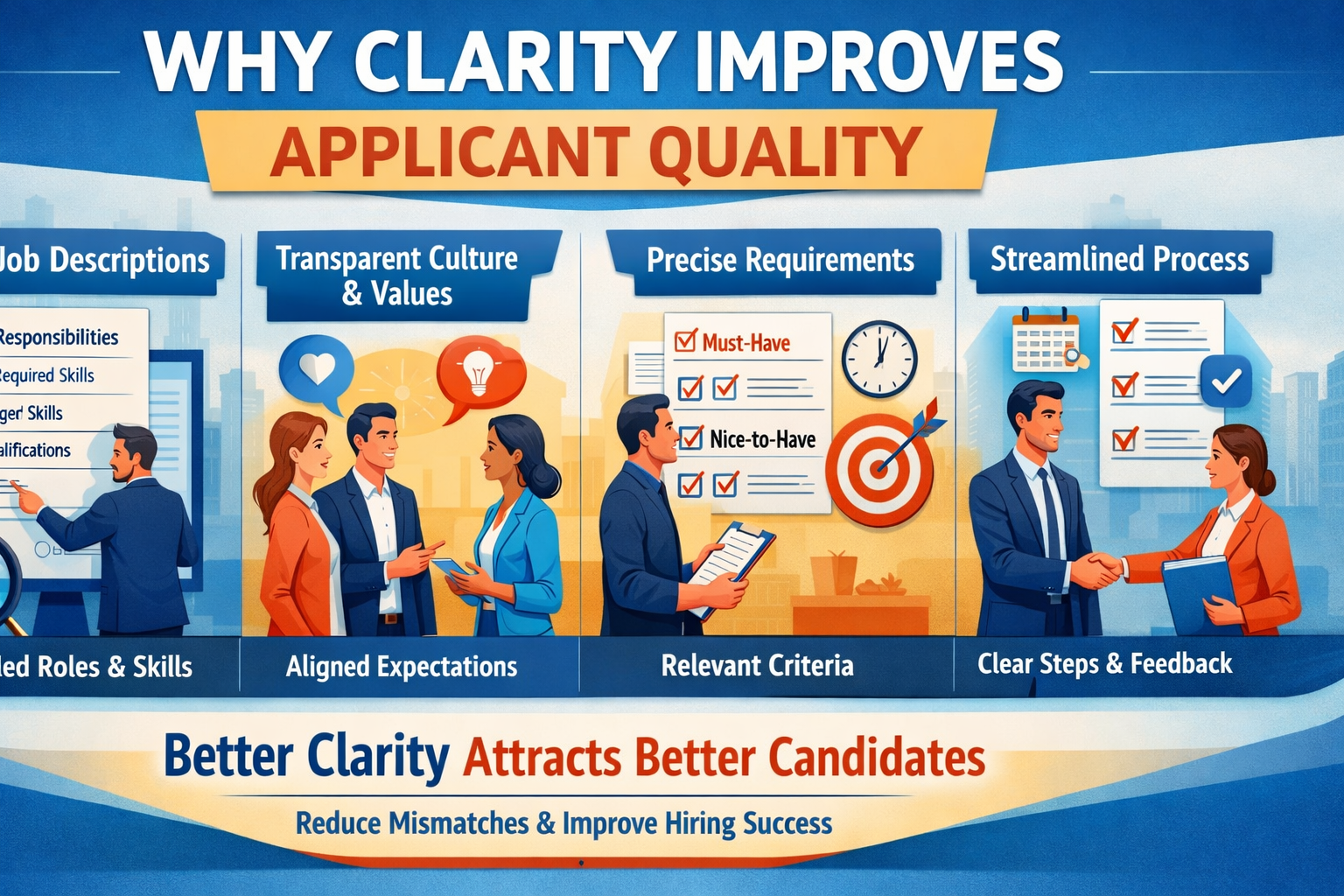
Clarity is not just a nice-to-have in recruitment—it is a critical factor that directly influences the quality of applicants. Clear job descriptions, transparent communication about company culture, precise requirements, and a well-defined application process help candidates understand exactly what is expected of them.
This reduces mismatches, attracts motivated and qualified applicants, and creates a positive candidate experience. By prioritizing clarity, organizations not only save time and resources but also build trust and credibility with potential talent, ultimately strengthening their workforce with the right people.
Read more such blogs here.






Comments
Be the first to leave a comment.