

Introduction
In today’s comparative job market, only skills and experience are not enough. Employers search for candidates who are strong in design thinking, problem-solving, think creatively, and can adapt according to situations.
The role of design thinking is very important because it is an approach in which we use empathy, creativity, and structured problem-solving. That means we understand problems first, then think of innovative ideas instead of just giving random solutions.
This approach is also very useful in job interviews. When you follow the mindset of design thinking, you create structured and thoughtful answers. It also shows the interviewer that you are an adaptable, proactive, and solution-oriented candidate.
In this article, we will see how design thinking can give you an edge in interviews and which topics and strategies are useful with this approach.
What is Design Thinking?
Design thinking is a problem-solving approach that focuses on understanding people’s needs, thinking creatively, and finding effective solutions. The focus is on understanding the needs and problems of users or clients. In this approach, there is a combination of creativity and experimentation through which candidates can come up with innovative solutions.
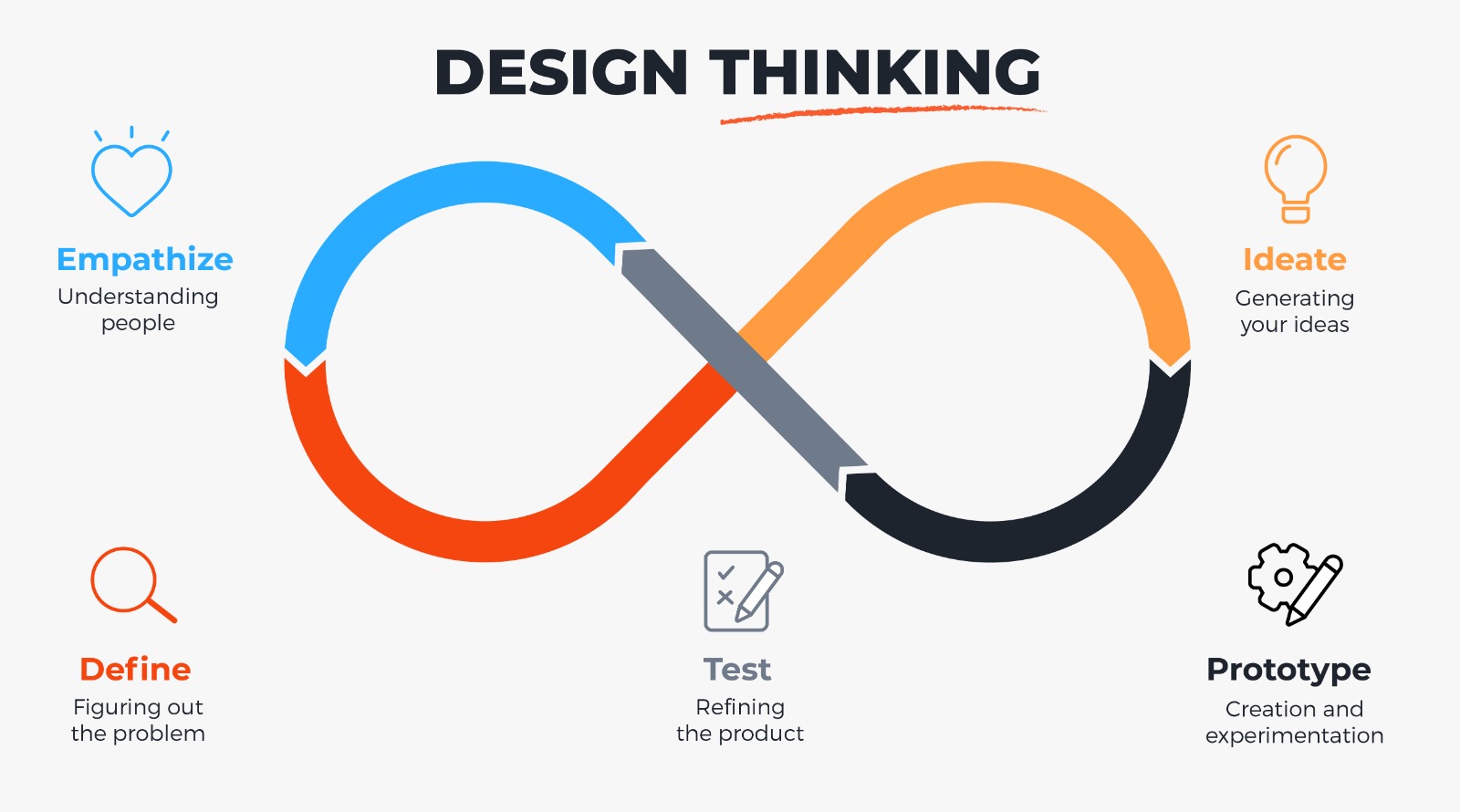
The main steps of design thinking are:
- Empathize – First, you need to understand the problem and see it from the user’s perspective.
- Define – Define the problem clearly so that you gain clarity in finding a solution.
- Ideate – Brainstorm multiple creative solutions.
- Prototype – Make a small-scale version or model of ideas to test.
- Test – Test the prototype and improve it on the basis of feedback.
In job interviews, you can provide structured answers, innovative solutions, and an empathetic approach using design thinking, which can impress interviewers.
Why Design Thinking Helps in Job Interviews?
1. Understanding the Employer’s Perspective
Showing only your skills and achievements in a job interview is not enough. You also need to understand what the employer wants and what challenges they are facing. The first step of design thinking is empathy, in which you try to understand the point of view of the interviewer. When you do this, you can tailor your answers according to the employer’s needs.
This means you demonstrate that you can understand business problems or team challenges and provide solutions. This approach shows that you are a thoughtful and considerate candidate.
2. Problem-Solving Approach
In interviews, you are often given situational or behavioral questions that require problem-solving. The structured approach of design thinking is very useful in such cases. The approach includes define, ideate, prototype, and test. First, you clearly define the problem, then think of multiple solutions, and finally choose the best one.
If you show this approach in your answers, the interviewer perceives you as a logical, analytical, and solution-oriented candidate.
3. Creativity and Innovation
In design thinking, the ideation step encourages creativity and innovation. In a job interview, you sometimes face questions where you need to provide new solutions or fresh ideas.
By discussing multiple creative approaches, you can showcase your innovative thinking, flexibility in problem-solving, and ability to think outside the box. Through this, you highlight your value and stand out in the interview.
4. Design Thinking Helps in Storytelling and Communication
Presenting solutions in design thinking is as important as solving the problem itself. In job interviews, you can make your answers engaging and structured by using storytelling. This means you not only share the result but also explain the flow of the problem, your approach, and the solution to the HR. Through this, you highlight your communication skills and present yourself as a confident and articulate candidate.
5. Iterative Learning and Adaptability
Another important part of design thinking is prototype and testing, which means trying ideas and improving them based on feedback. If you share your past experiences and the lessons you learned in an interview, it demonstrates your adaptability and willingness to learn. Employers value candidates who learn from their mistakes, improve their approach, and remain flexible when facing new challenges.
6. Design Thinking Helps in Collaboration and Teamwork
Design thinking is also collaborative, where candidates find solutions by considering the perspectives of team members. In interviews, during group discussions or teamwork-related questions, you can demonstrate that you can work efficiently in a team by showing empathy and a cooperative approach. This skill is valuable for every role because modern workplaces place a high importance on collaboration and teamwork.
7. Enhancing Personal Branding
You can also strengthen your personal brand by adopting a design thinking mindset. When you show a structured, creative, and empathetic approach, interviewers perceive you as a proactive, innovative, and solution-oriented professional. Small things, like thoughtful answers, clear communication, and a problem-solving approach, make you a memorable candidate and support your long-term career growth.
Conclusion
Applying Design Thinking in job interviews can give candidates a significant edge. By understanding the employer’s perspective, approaching problems methodically, showcasing creativity, communicating effectively, and demonstrating adaptability and teamwork, candidates not only answer questions more effectively but also present themselves as innovative and solution-oriented professionals.
This mindset helps build a strong personal brand, making a lasting impression on interviewers. Ultimately, it is not just a tool for solving problems—it’s a way to stand out, demonstrate value, and grow professionally in any career path.
You can explore more such blogs here.






Comments
Be the first to leave a comment.