

Introduction
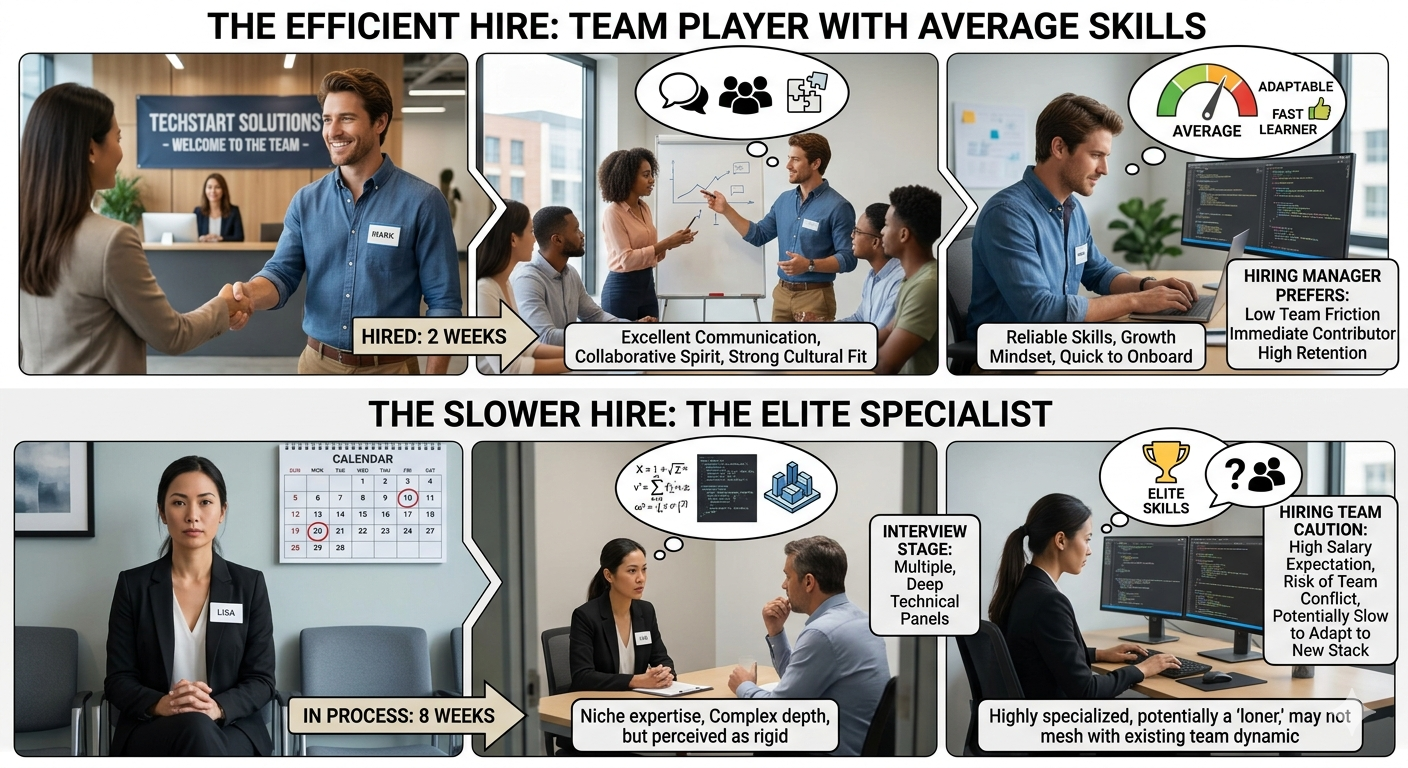
Many candidates assume that only highly skilled engineers get hired quickly. They focus heavily on mastering advanced algorithms, complex frameworks, or niche technologies. However, in real hiring scenarios, candidates with average technical skills often secure roles faster than expected. This happens because hiring decisions depend on multiple factors beyond raw technical ability. This explains exactly why engineers with average skills still get hired faster in competitive job markets.
Employers look for candidates who can contribute effectively from day one. Skills matter, but so do communication, clarity, reliability, and alignment with team needs.
Clarity in communication builds trust
First, candidates who explain their ideas clearly perform better in interviews. Even if their technical solutions are simple, they communicate their thought process in a structured way.
Interviewers prefer candidates they can understand easily. Clear communication reduces confusion and builds confidence in the candidate’s ability to collaborate with teams.
Clarity often outweighs complexity in hiring decisions.
Problem-solving approach matters more than complexity
Hiring managers rarely expect perfect or highly optimized solutions during interviews. Instead, they focus on how candidates approach problems.
Candidates with average skills who demonstrate logical thinking, step-by-step reasoning, and structured problem-solving often outperform technically stronger candidates who lack clarity.
A clear approach signals reliability in real work environments.
Reliability and consistency attract employers
Companies prefer candidates who can deliver consistent results rather than occasional high performance. Engineers with average skills often show steady and predictable work habits.
During interviews, they answer questions calmly, follow instructions carefully, and maintain consistency across rounds. This behavior signals reliability.
Reliable candidates reduce risk for employers.
Strong collaboration skills improve selection chances
Modern engineering roles involve teamwork across multiple functions. Candidates who demonstrate collaboration skills often gain an advantage.
Engineers with average technical skills but strong teamwork ability fit well into team environments. They communicate effectively, accept feedback, and align with group goals.
Collaboration potential influences hiring decisions significantly.
Adaptability to learning new skills
Employers understand that technologies change frequently. Therefore, they look for candidates who can learn quickly rather than those who only know advanced but narrow skills.
Candidates with average skills who show curiosity, learning mindset, and adaptability are often preferred. They can grow within the organization over time.
Learning ability increases long-term value.
Interview performance outweighs theoretical strength
Some highly skilled engineers struggle to perform well in interviews. They may overcomplicate answers, fail to explain their thinking, or appear unstructured.
In contrast, candidates with average skills who communicate clearly and stay focused perform better during interviews. Hiring decisions often depend on interview performance rather than theoretical capability.
Practical performance influences selection outcomes.
Alignment with job requirements
Not every role requires advanced technical expertise. Many positions focus on practical implementation, maintenance, or incremental improvements.
Candidates with average skills often match these requirements closely. Overqualified candidates may not align with the role or may raise concerns about retention.
Good role alignment increases hiring speed.
Positive attitude and professionalism
Attitude plays a major role in hiring decisions. Candidates who remain positive, respectful, and confident create a strong impression.
Engineers with average skills who demonstrate professionalism often stand out compared to technically strong candidates with poor attitude or communication.
Professional behavior builds trust with interviewers.
Lower onboarding risk for employers
Hiring managers consider how quickly a candidate can adapt to the team and start contributing. Candidates with clear communication and practical skills often require less onboarding effort.
Engineers who demonstrate structured thinking and willingness to learn are easier to integrate into teams.
Lower risk leads to faster hiring decisions.
Consistent performance across interview rounds
Many hiring processes involve multiple rounds. Candidates who perform consistently across all stages increase their chances of selection.
Engineers with average skills often maintain steady performance rather than excelling in one round and struggling in another.
Consistency signals dependability and readiness.
Conclusion
Technical excellence remains valuable, but hiring decisions depend on a broader set of qualities. That is precisely why engineers with average skills still get hired faster in many real-world scenarios.
Employers prioritize communication, problem-solving approach, reliability, collaboration, and adaptability alongside technical ability. Candidates who demonstrate these qualities often outperform those with higher technical skills but weaker overall presentation. By focusing on clarity, consistency, and practical thinking, engineers can significantly improve their hiring success and career growth opportunities.
Find Your Dream Job Today – Explore Endless Career Opportunities and Secure Your Next Role with Best Job Tool.






Comments
Be the first to leave a comment.