

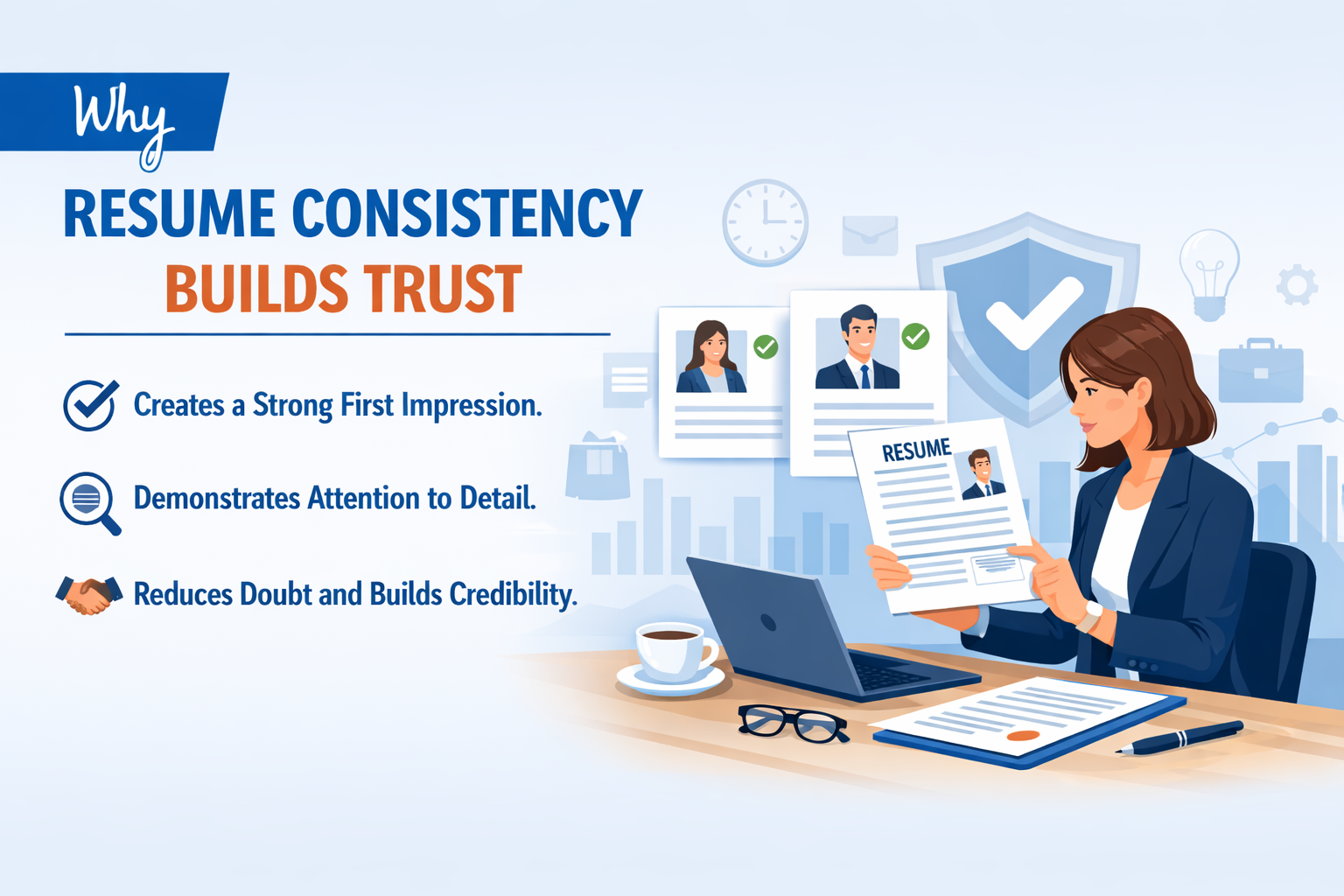
Introduction: Why Trust Matters in Hiring
Trust is the most important part of the hiring process, and building a recruiter’s trust is very important for candidates. As we all know, a resume is the first interaction between a recruiter and a candidate. In just a few seconds, a recruiter understands a candidate’s credibility, reliability, resume consistency and professionalism by looking at the resume.
It is not necessary that only candidates with many skills get hired. Recruiters prefer to hire candidates whom they can trust. If a recruiter feels that a resume is inconsistent, unclear, or poorly structured, they may reject it immediately, even if the candidate has strong qualifications. That is why building trust in the job market is very important, and resume consistency plays a major role in building that trust. In this article, we will understand why this is so.
What Does Resume Consistency Mean?
Resume consistency means maintaining clarity, alignment, and uniformity in your resume. It means that all the information you write should be logical, well-structured, and flow smoothly, so it is easy for the recruiter to understand.
Consistency also means that the dates, job titles, and roles you mention should be accurate. For example, if you list a skill in your skills section, the same skill should be clearly reflected in your work experience as well.
The main purpose of resume consistency is to honestly and smoothly explain your career journey to the recruiter, so that trust can be built.
Why Resume Consistency Builds Trust?
1. Resume Consistency Shows Honesty and Transparency
Creating a consistent resume means sharing your information with honesty and transparency. When all the details in a resume match with each other, hiring managers trust the candidate more, which helps create a good impression. Consistency also reduces misunderstandings.
Recruiters are trained to notice mismatched timelines or any kind of exaggeration. Even small inconsistencies can be easily identified by recruiters, and they may consider the candidate dishonest, which is a negative point. That is why presenting a clear and consistent resume is always a good idea—it helps present the candidate as truthful and reliable in front of the recruiter.
2. Resume Consistency Creates a Strong First Impression
Recruiters scan a resume in just a few seconds, and within those seconds, they form their first impression. If your resume is consistent—meaning it has uniform formatting, clear section headings, and a logical flow—it creates a very positive impression on the recruiter.
However, if your resume is inconsistent or not well prepared, it creates a negative impression and reduces your chances of getting hired. Using proper spacing, bullet points, and clear language throughout the resume makes it much easier and more attractive for recruiters to read.
A strong first impression is very important to move forward in the hiring process, which is why making your resume clear, consistent, and impressive is essential.
3. Resume Consistency Demonstrates Attention to Detail
A consistent resume shows that a candidate is attentive and valuable. When formatting, spacing, fonts, bullet styles, and tense are the same throughout the resume, it shows that the candidate has put effort into the document and has carefully reviewed it before submitting.
This helps recruiters believe that the candidate will handle their work with the same level of care and attention. On the other hand, even small inconsistencies in a resume—such as uneven dates, mixed verb tenses, or inconsistent job titles—can signal carelessness. Recruiters often avoid such candidates.
That is why being consistent in your resume is always the best approach.
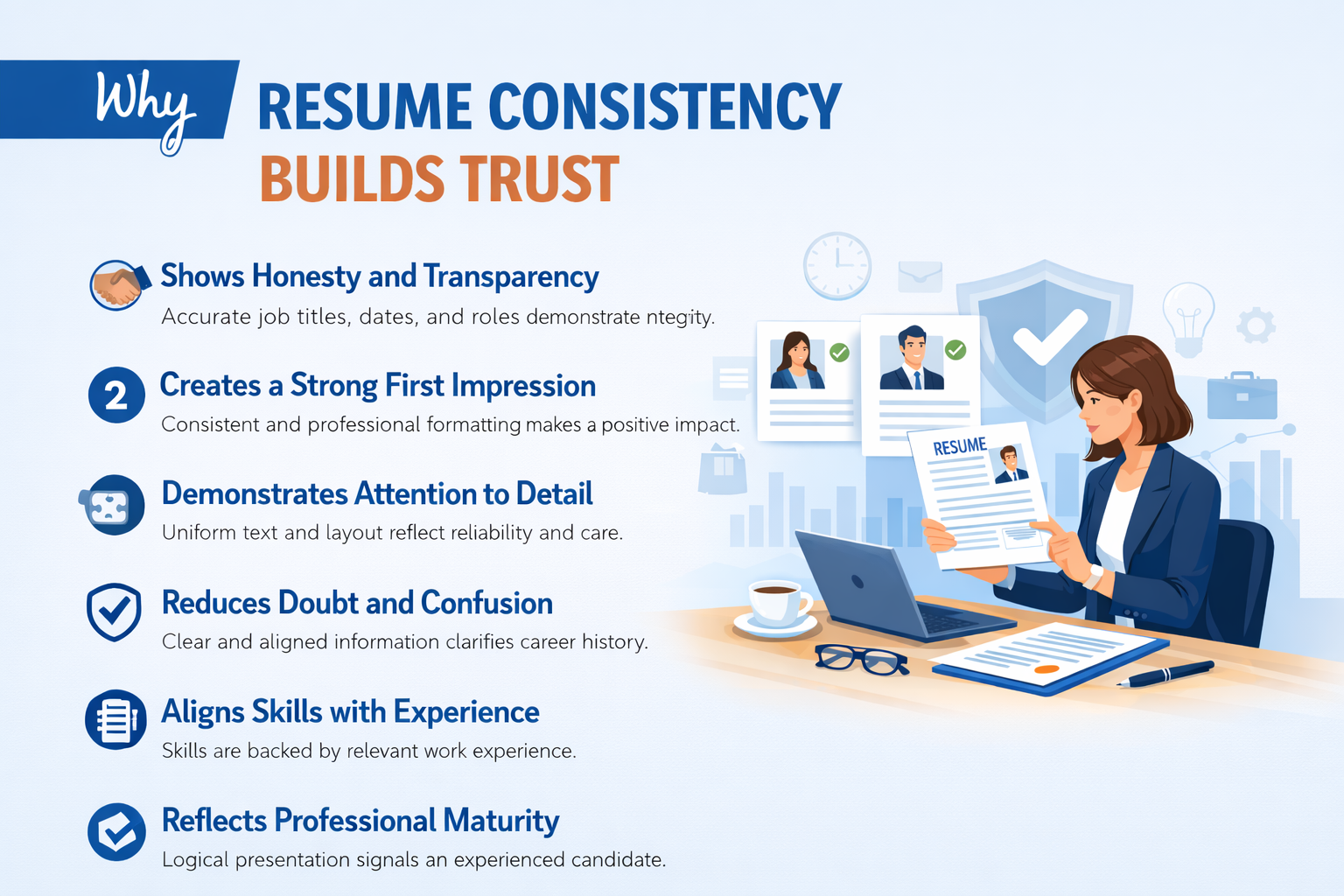
4. Reduces Doubt and Confusion
A consistent resume reduces errors and ensures that every part of your information—even the smallest details—is clear. When you present job titles, employment dates, and responsibilities in a logical way, it demonstrates the effectiveness of your work, which impresses recruiters.
Inconsistencies, such as overlapping dates, unclear roles, or skills not supported by experience, can create doubts in a recruiter’s mind. If you want to create a strong and lasting impression, showing consistency in your resume is essential.
5. Aligns Skills with Experience
A consistent resume ensures that the skills you list are clearly supported by your work experience. For example, if you mention project management as a skill, your job responsibilities should reflect project management experience. Only then does the skill become valuable. Otherwise, recruiters may see you as dishonest.
When skills and experience consistently match throughout the resume, it builds trust because recruiters can easily verify your capabilities.
Conclusion
So, this was all about why resume consistency builds trust. If you want to gain a recruiter’s trust, you need to maintain consistency in your resume. Consistency not only builds trust but also impresses the recruiter, which increases your chances of getting hired.
If you take it lightly, it can become your biggest mistake and one of the main reasons for rejection. Resume consistency is more than just formatting or neatness—it reflects your professionalism, honesty, and attention to detail. That’s why it’s important to put effort into maintaining consistency throughout your resume.
Explore more such blogs here.






Comments
Be the first to leave a comment.