

Introduction
For many students and professionals, there is a common belief that success depends on attending a prestigious university or graduating from a well-known institution. While respected Journeys colleges can provide valuable opportunities, they are not the only path to career growth.
Across industries, countless professionals have built impressive careers without degrees from elite universities. They achieved success through continuous learning, practical experience, adaptability, strong work ethics, and a commitment to developing valuable skills.
Today’s job market is changing rapidly. Employers increasingly focus on what candidates can do rather than where they studied. Skills, experience, portfolios, certifications, and demonstrated results are becoming more important than brand-name educational credentials alone.
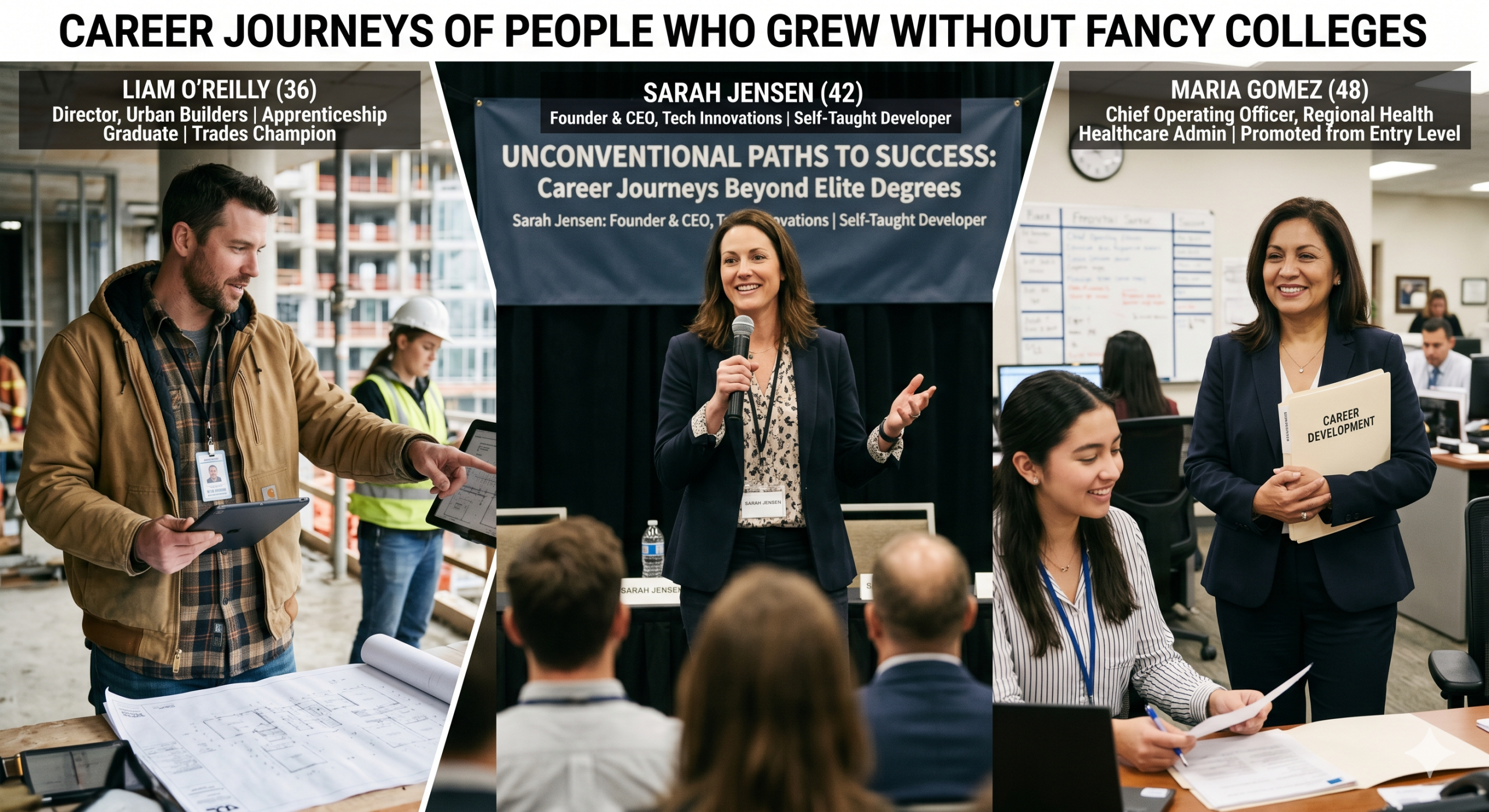
The career journeys of successful professionals who came from ordinary colleges—or in some cases no college at all—offer valuable lessons for anyone worried that their educational background might limit their future.
Why College Reputation Is No Longer the Only Factor
A strong educational institution can provide advantages such as networking opportunities and access to resources. However, employers are increasingly evaluating candidates based on performance and potential.
Several workplace trends are contributing to this shift:
- Skills-based hiring
- Remote work opportunities
- Online learning platforms
- Professional certifications
- Portfolio-based recruitment
- Practical experience requirements
Organizations want employees who can solve problems, communicate effectively, adapt to change, and contribute results.
As a result, candidates from non-elite institutions often compete successfully when they demonstrate relevant capabilities.
Successful Careers Often Begin With Small Opportunities
Many accomplished professionals did not start their careers with prestigious positions.
Instead, they:
- Accepted entry-level roles
- Completed internships
- Worked on freelance projects
- Volunteered for additional responsibilities
- Learned through practical experience
Early opportunities may not seem impressive, but they often provide critical experience and skill development.
Career growth is frequently the result of consistent progress rather than dramatic breakthroughs.
Professionals who focus on learning and performance often create opportunities regardless of their educational background.
Skills Often Matter More Than Credentials
Many successful professionals share one common characteristic: they continuously develop skills.
Examples include:
Communication Skills
Strong communication improves leadership, teamwork, and career advancement opportunities.
Problem-Solving Skills
Organizations value employees who can identify challenges and implement solutions.
Digital Skills
Technology proficiency has become important across nearly every industry.
Project Management
The ability to organize work and manage responsibilities is highly transferable.
Analytical Thinking
Data-driven decision-making is increasingly valuable in modern workplaces.
Professionals who consistently improve their skills often Journeys outperform those who rely solely on credentials.
The Power of Self-Learning
The internet has transformed access to education.
Today, professionals can learn from:
- Online courses
- Industry webinars
- Professional certifications
- Educational videos
- Digital communities
- Industry publications
Many individuals who did not attend elite institutions have used self-directed learning to develop expertise and advance their careers.
Continuous learning demonstrates initiative and adaptability—qualities employers value highly.
The willingness to learn often matters more than where learning takes place.
Building Experience Through Real Projects
Experience frequently outweighs academic reputation.
Professionals can gain experience through:
- Freelance work
- Side projects
- Volunteer opportunities
- Internships
- Personal initiatives
For example:
- A marketer can build campaigns for local businesses.
- A project manager can coordinate volunteer initiatives.
- A writer can publish articles online.
- A data analyst can create independent research projects.
Practical work demonstrates capability more effectively than credentials alone.
Employers often prefer evidence of results over educational prestige.
Networking Creates Opportunities
Many career opportunities arise through professional relationships.
Successful professionals often invest time in:
- Industry events
- Professional communities
- LinkedIn networking
- Mentorship relationships
- Alumni networks
- Online discussions
Networking is not about collecting contacts. It is about building genuine professional relationships.
People who consistently engage with others in their industry often discover opportunities that never appear on traditional job boards.
Strong networks can help compensate for the absence of a prestigious educational background.
Remote Work Has Expanded Career Access
Remote work has significantly changed hiring practices.
Organizations increasingly recruit talent from diverse geographic and educational backgrounds.
Employers now focus more on:
- Skills
- Results
- Communication
- Productivity
- Collaboration
Remote work reduces the emphasis on location and, in many cases, educational prestige.
Professionals who demonstrate competence can access opportunities previously limited to specific regions or institutions.
This shift has created new possibilities for ambitious individuals regardless of where they studied.
Productivity and Consistency Drive Long-Term Growth
Many successful professionals without elite degrees share another common trait: consistency.
They focus on:
- Continuous improvement
- Reliable performance
- Meeting deadlines
- Learning from feedback
- Taking initiative
Career growth rarely happens overnight.
Long-term success often results from small, consistent improvements made over many years.
Productivity habits frequently contribute more to advancement than academic credentials.
Organizations reward employees who consistently deliver value.
Financial Planning Supports Career Development
Building a successful career requires more than professional ambition.
Financial planning can support long-term growth by enabling investments in:
- Certifications
- Skill development
- Professional memberships
- Conferences
- Career transitions
Professionals who manage finances effectively often have greater flexibility to pursue opportunities and adapt to changing circumstances.
Strategic financial planning can create options that accelerate career development over time.
Common Traits Shared by Successful Professionals
Although career journeys differ, many professionals Journeys who succeeded without prestigious colleges demonstrate similar characteristics.
These include:
Curiosity
A desire to learn continuously.
Persistence
The ability to keep progressing despite setbacks.
Adaptability
Willingness to embrace change and new opportunities.
Accountability
Taking responsibility for results and performance.
Growth Mindset
Believing skills can be developed through effort and experience.
These qualities often contribute more to long-term success than institutional reputation.
Creating Your Own Career Story
One of the most important lessons from successful professionals is that career growth is highly individual.
Rather than comparing yourself to others, focus on:
- Building valuable skills
- Gaining practical experience
- Expanding your network
- Improving productivity
- Seeking growth opportunities
Every project, role, and learning experience contributes to your professional development.
Your career story is shaped by your actions, not solely by yourJourneys educational background.
Finding Opportunities Based on Skills
The rise of skills-based hiring has created new opportunities for professionals from diverse educational backgrounds.
Global job platforms such as BEST JOB TOOL help candidates discover opportunities based on abilities, experience, and professional potential rather than institutional prestige alone.
BEST JOB TOOL also provides insights into emerging skills, remote work opportunities, workforce trends, and employer expectations. These insights help professionals identify areas for growth and align their development efforts with current market demand.
By focusing on skill-building and practical experience, candidates can compete effectively in a rapidly evolving job market.
Conclusion
Attending a prestigious college can provide advantages, but it is far from the only route to career success. Across industries, countless professionals have built rewarding careers through self-learning, practical experience, networking, persistence, and continuous improvement.
Today’s employers increasingly value skills, adaptability, and demonstrated results. Remote work, online learning, and skills-based hiring have expanded opportunities for Journeys professionals from all educational backgrounds. As a result, career growth is becoming more accessible to individuals who are willing to invest in their development and consistently deliver value.
The most successful professionals are often not defined by where they studied, but by how they learn, adapt, and contribute throughout their careers. Combined with opportunities available through platforms like BEST JOB TOOL, determination and skill development can create career paths that are every bit as successful as those traditionally associated with elite institutions.






Comments
Be the first to leave a comment.