

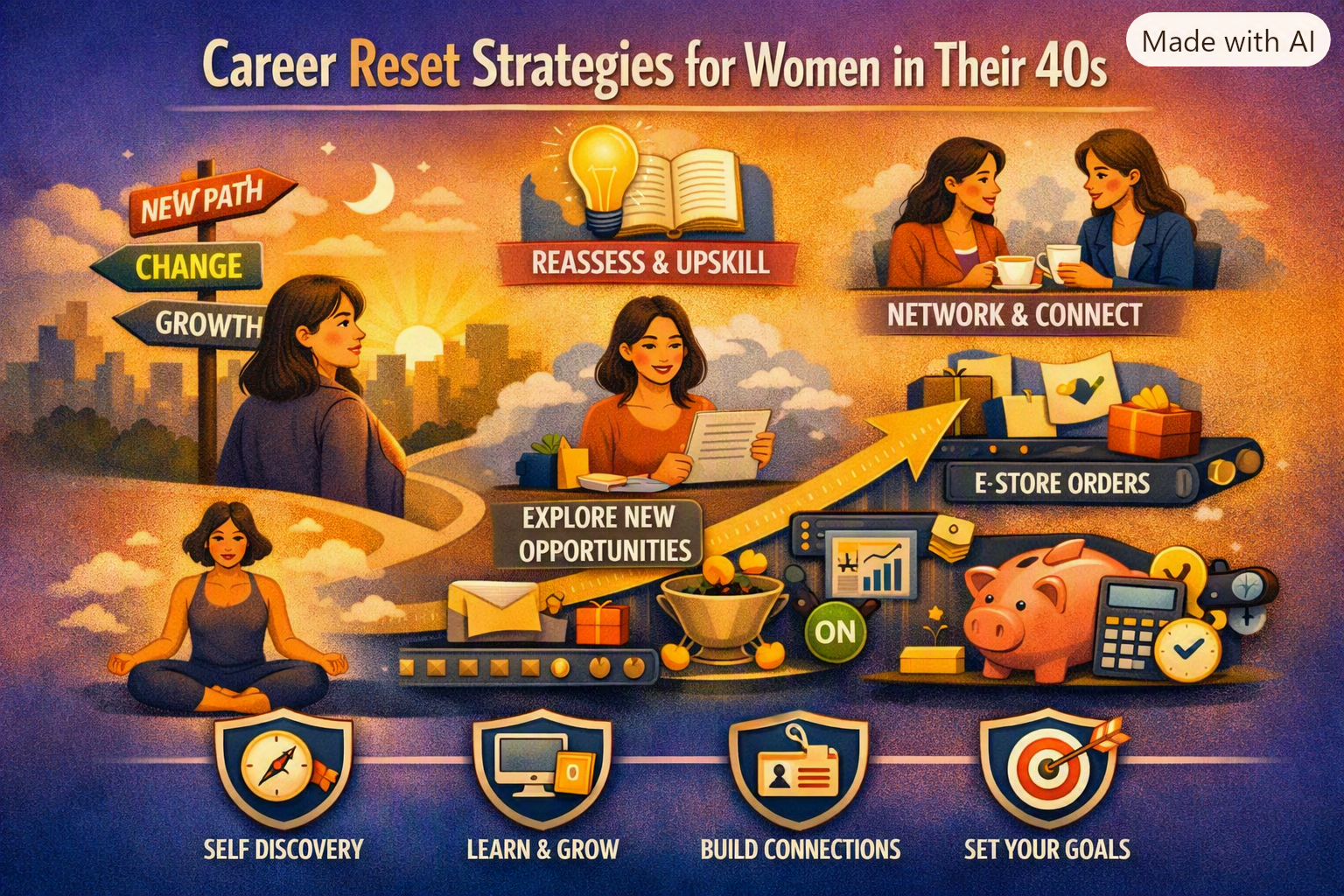
Introduction: Career Strategies For Women
Career strategies for women in their 40s who want a reset is a guide that helps women understand that it is never too late to change direction in their careers and to reassess their options and aspirations.
It is a common assumption that once you have been working in the same field for a period of time, you will be reluctant to acquire new skills, knowledge, or competencies. However, this is not always the case. In fact, you may find that you are in a much better position to do so now, as you may have developed a greater awareness of what you want out of life.
Career strategies for women in their 40s who want a reset will help you realize your potential and create a roadmap towards achieving it.
Career Strategies For Women In Their 40s Who Want a Reset Rewritten
1) Understand Why You Seek a Change
Before thinking about changing jobs, it is essential to know why you need it. You must have had enough of the current position, be it due to poor wages, working conditions, or something else. Moreover, some girls want to try something exciting; for example, another career path entirely.
Therefore, before looking for a new workplace and job opportunities, make a list of reasons why you want to change jobs. It will also help to determine what you want in your future workplace.
2) Do Not Think You Are Starting From Zero
One of the most common mistakes women make when transitioning careers is that they feel as if they need to start from square one.
You have years of experience to draw from. You have managed people, handled customer service calls and resolved issues, trained new staff, worked under pressure, and led projects. All of these are transferable skills and valuable to any field of work. The secret is figuring out how they might apply to your future career.
To give you an example, administrators often transition into operations, teachers often become trainers, and sales professionals frequently become customer success managers. You do not need to start from zero; you simply need to determine how your past experience can shape your future career.
3) Find Your Transferable Skills
Create a list of all skills that you already possess. Remember to include hard and soft skills. Communication, collaboration, leadership, negotiation, problem-solving, planning, and time management are just some skills that are applicable in various industries.
Review the job descriptions of your desired positions and make a list of their requirements. Compare the skills that you have with the ones that companies are looking for. It might surprise you how close you are to your dreams job!
4) Learn New Skills Without Feeling Overwhelmed
A career change does not necessarily mean going back to college for a few more years. It can be done in a shorter time frame by taking online courses, attending seminars, getting certifications, and gaining experience through practice.
The key is to identify which skills you need to acquire for a specific profession; prioritizing is essential. It is important not to get overwhelmed by trying to learn everything at once.
For instance, if you want to change your career path to digital marketing, you need to learn SEO, content creation, social media, and analytics. However, it does not mean you need to master each of these areas right away. You can start practicing what you have learned after taking a beginner’s course.
5) Updating Your Resume
Your resume should be “forward facing,” a guide for where you’re going, rather than a timeline of everywhere you’ve been
When you update your resume, do not include every job you’ve ever held; instead, highlight the positions that relate most to the role you’re seeking.
To make your resume as compelling as it can be, use active language and quantify where you can. Instead of saying ‘Handled customer complaints,’ consider writing ‘Solved customer issues and created new paths for customer satisfaction.’ Similarly, be sure that the copy on your linkedIn profile reflects your new career direction.
6) Believe That You Can Start Again
A career reset in your 40s is not a failure. Sometimes, it just means that your priorities have changed Perhaps, you want more fulfilling work, to have a better-work/life balance, earn more money or to have more flexibility.
Whatever the reason, it is important that you do not make any snap decisions. The most important thing is to think through the decision carefully. Your 40s could be the start of a whole new chapter in your working life. After all, you are not starting out in this world fresh out of college anymore.
So, take advantage of the experience, knowledge and insight that you have accumulated thus far. A career reset doesn’t mean that you have to unlearn everything that you know. It just means that you can use all of the tools at your disposal to build a career that is to your liking.
Conclusion: Career Strategies For Women
While it might seem challenging to start anew in your 40s, it is never too late to reinvent yourself. You need to have faith in your current skills and knowledge. It will help you to take it step by step, learn new things, and update your resume. You should network with people that can help you navigate the transition.
Most importantly, you need to believe that you can have a different career. Your 40s should not define who you are and what you can achieve. So take the reins, leave the past in the past, and embrace change.
“A career reset in your 40s is not starting over—it’s building on the skills, experience, and lessons you already have. Identify your strengths, explore new opportunities, and take intentional steps toward a career that fits your goals. Make your next career move with confidence using Best Job Tool.”






Comments (1)
[4582]playabets লগইন ও অ্যাপ ডাউনলোড – বিকাশ দিয়ে ক্যাসিনো ডিপোজিট,playabets লগইন করার নিয়ম জানুন এবং অ্যাপ ডাউনলোড করে অনলাইন স্লট গেম খেলার নিয়ম শিখুন। লাইভ ক্যাসিনো বোনাস অফার পেতে আজই জয়েন করুন। visit: playabets