

Introduction
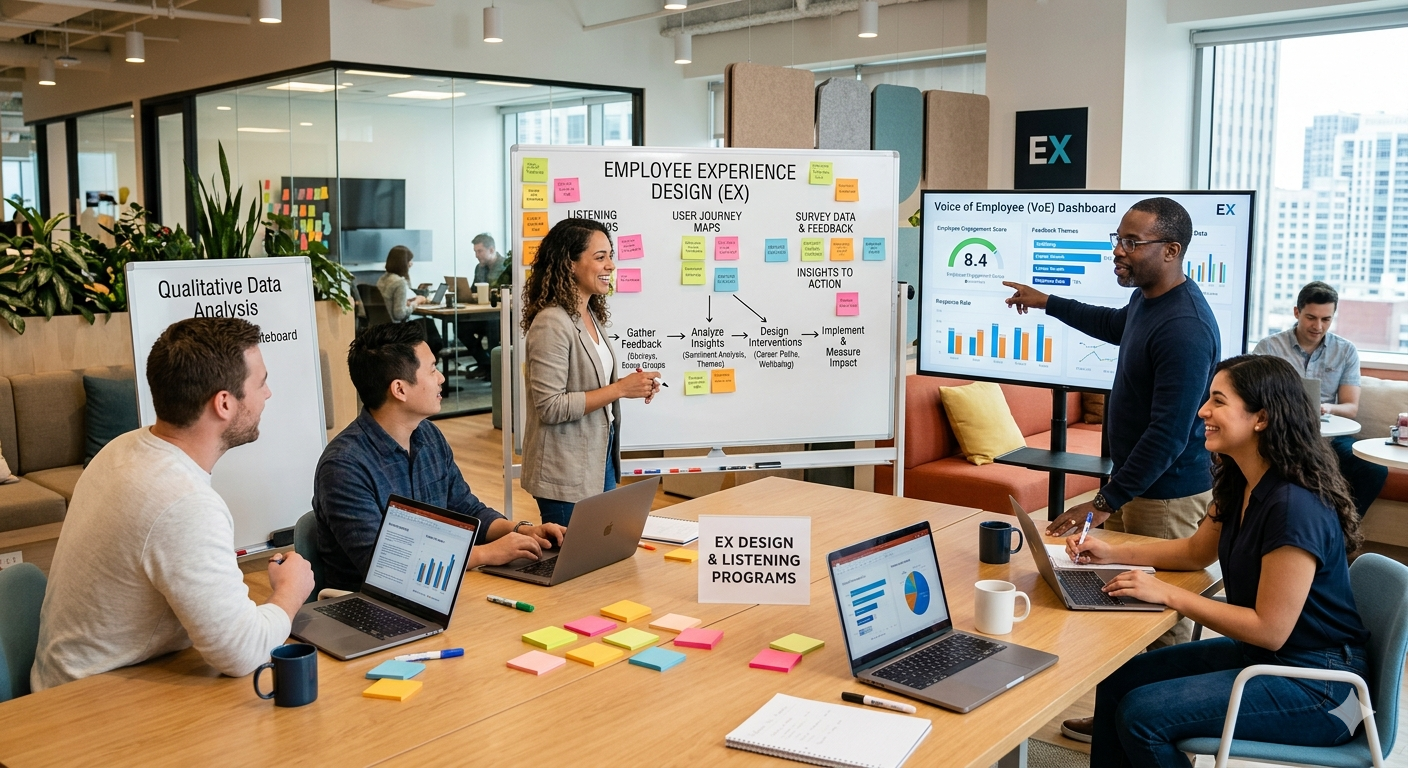
Organizations are no longer focused only Experience Design on productivity. They are now investing in how employees feel, engage, and grow within the workplace. This shift has led to the rise of careers in employee experience design and listening programs.
Employee experience (EX) focuses on the entire journey of an employee, from hiring to growth and retention. Listening programs, on the other hand, help organizations gather feedback and insights directly from employees. Together, they create a more responsive and people-centered workplace.
As companies prioritize engagement and retention, professionals in this field are becoming increasingly valuable.
Understanding employee experience design
Employee experience design involves shaping how employees interact with an organization at every stage. It includes onboarding, daily work, communication, and career development.
Professionals in this field focus on improving satisfaction, engagement, and productivity. They design systems that make work more meaningful and efficient.
Additionally, employee experience design aligns employee needs with business goals. This ensures that both individuals and organizations benefit.
Therefore, it is a strategic function rather than just an HR initiative.
What are listening programs in organizations
Listening programs are structured methods used to gather employee feedback. These include surveys, pulse checks, focus groups, and one-on-one conversations.
The goal is to understand employee concerns, expectations, and experiences. This data helps organizations make informed decisions.
Additionally, listening programs create a Experience Design sense of inclusion. Employees feel valued when their voices are heard.
Moreover, continuous feedback allows organizations to adapt quickly.
Thus, listening programs play a critical role in modern workplaces.
Why companies are investing in these roles
Organizations face challenges such as low engagement, high turnover, and burnout. Traditional approaches are no longer effective.
As a result, companies are investing in employee experience and listening strategies. They want to create environments where employees thrive.
Additionally, data-driven insights help improve decision-making. Listening programs provide valuable information.
Moreover, strong employee experience improves retention and performance.
Therefore, careers in employee experience design and listening programs are growing rapidly.
Key roles in this field
There are several roles within this domain. Employee Experience Designers focus on improving the overall workplace journey.
Listening Program Managers design and manage feedback systems. Employee Engagement Specialists work on improving satisfaction and involvement.
Additionally, HR Analytics Professionals analyze employee data. Organizational Development Consultants implement strategic changes.
Each role contributes to building a better workplace experience.
Skills required for success
Strong communication skills are essential. Professionals must interact with employees and leadership.
Empathy is equally important. Understanding employee needs helps create effective solutions.
Additionally, analytical skills are required to interpret feedback and data.
Problem-solving skills help address challenges and Experience Design improve systems.
Moreover, creativity is important in designing engaging experiences.
These skills are key to success in this field.
Educational background and certifications
Many professionals enter this field through HR, psychology, or business management backgrounds. However, specialized training can enhance career prospects.
Certifications in employee experience, HR analytics, or organizational development are valuable.
Additionally, practical experience plays a significant role. Working on real projects provides deeper insights.
Continuous learning is important as workplace trends evolve.
Therefore, combining education with experience is essential.
The role of data in employee experience
Data is central to employee experience design. Listening programs generate valuable insights.
Professionals analyze metrics such as engagement scores, retention rates, and feedback trends.
These insights help identify problem areas and opportunities for improvement.
Additionally, data-driven strategies improve decision-making and effectiveness.
Thus, analytics plays a Experience Design crucial role in this field.
Challenges in employee experience roles
Working in this field can be complex. Balancing employee needs with business goals requires careful planning.
Additionally, collecting honest feedback can Experience Design be challenging. Employees may hesitate to share openly.
Moreover, implementing changes across large organizations can take time.
However, with the right approach, these challenges can be managed effectively.
Therefore, resilience and adaptability are important.
Career growth and future opportunities
Careers in employee experience offer strong growth potential. Professionals can move into leadership roles such as Head of Employee Experience or Chief People Officer.
Additionally, consulting opportunities are expanding. Organizations often seek external expertise.
Moreover, global companies require specialists to manage diverse teams.
As workplaces continue to evolve, demand for these roles will increase.
Thus, this is a future-ready career path.
Why this career is impactful and sustainable
Employee experience roles directly impact people’s lives. They improve workplace satisfaction and well-being.
Additionally, these roles are resistant to automation. Human understanding and empathy remain essential.
Moreover, organizations will continue to prioritize employee engagement.
Therefore, this career path offers both purpose and stability.
Conclusion
Careers in employee experience design and listening programs are shaping the future of work. They combine strategy, data, and human understanding to create better workplaces.
By developing the right skills and gaining relevant experience, professionals can build meaningful and impactful careers in this field.
As organizations continue to prioritize employee engagement and retention, the demand for these roles will only grow.
To explore opportunities in this space, use the best job tool and discover roles that align with your skills and career goals.
Find Your Dream Job Today – Explore Endless Career Opportunities and Secure Your Next Role with Best Job Tool.






Comments (4)
you’re truly a good webmaster. The website loading velocity is amazing. It sort of feels that you’re doing any distinctive trick. Also, The contents are masterpiece. you have performed a fantastic process in this subject!
I have been reading out some of your posts and i can claim pretty nice stuff. I will surely bookmark your site.
Hi there I am so excited I found your site, I really found you by error, while I was searching on Bing for something else, Regardless I am here now and would just like to say thank you for a fantastic post and a all round thrilling blog (I also love the theme/design), I don’t have time to browse it all at the moment but I have saved it and also added your RSS feeds, so when I have time I will be back to read a great deal more, Please do keep up the great work.
Hey there, You have done a great job. I’ll definitely digg it and personally suggest to my friends. I am confident they’ll be benefited from this site.