

Introduction: Remote Work
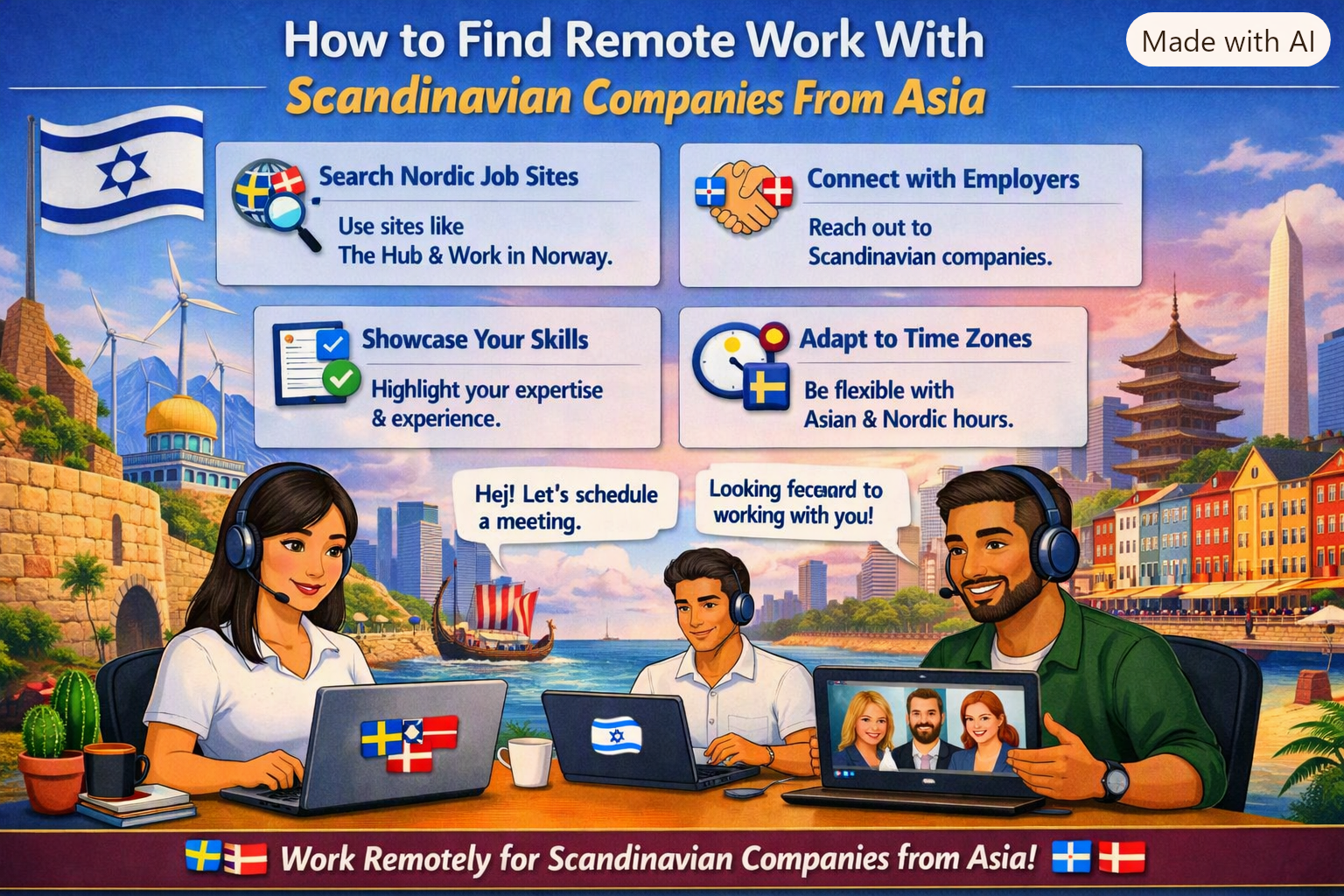
Working for a Scandinavian company while being based in Asia seems like a dream come true for many professionals. However, it requires knowing how to navigate the nuances of the job market.
Here are tips for finding remote jobs with Scandinavian companies from Asia.
How to Find Remote Work With Scandinavian Companies From Asia?
1. Know the nuances surrounding international remote jobs
The first thing to know is that not every company that offers remote jobs is open to hiring people based anywhere in the globe.
Many businesses just allow for working remotely within the country. Some permit working remotely throughout Europe, but not outside of Europe.
When searching job sites, read carefully any disclaimers stating “remote within Europe”, “remote in Sweden”, or “EU-based candidates only”.
Instead, look for companies that specifically state that they are open to international remote employees.
This will save you time when looking for jobs.
2. Search company career pages
Job boards are helpful, but company career pages can be even more helpful.
Start by compiling a list of companies based in Sweden, Denmark, Norway, Finland, and Iceland that operate internationally.
Technology companies, software businesses, digital agencies, consulting firms, fintech companies, gaming companies, and online services tend to have more experience working with international teams.
Make sure to visit their career pages and look for jobs that fit your qualifications. Do not be limited to job titles you have previously held. Read the job descriptions to understand the skills required, as Scandinavian companies may use different job titles.
3. Research companies on LinkedIn
LinkedIn can be a great tool for finding Scandinavian companies and employees.
When searching for companies, use keywords such as “Swedish technology company”, “Danish startup”, or “Norwegian SaaS company”.
You can also search for professionals working remotely from countries outside Scandinavia. These professionals can provide insight into whether a given company already has international remote employees.
When contacting recruiters, be sure to personalize your message. Avoid sending generic messages and instead, specify the position you are interested in and briefly explain how your experience fits the qualifications.
4. Showcase remote-work related skills
When applying from Asia, employers may want to know that you can work independently across distances and time zones.
Your resume should highlight your experience with remote communication, project management, collaboration tools, and independent work. You should also include tools you have used, such as Slack, Microsoft Teams, Zoom, Notion, Asana, Trello, and other such platforms.
More importantly, make sure to highlight the accomplishments you have made while working remotely.
Rather than simply stating “worked remotely”, explain what you achieved while working remotely.
For example, you could say that you managed projects with international team members, met project deadlines independently, and communicated with customers in different time zones.
5. Be open to time differences
Asia and Scandinavia have a significant time difference, although the exact difference varies throughout the year due to the fact that many Scandinavian countries observe daylight saving time.
Before applying to a job, make sure to confirm what time zone the company operates in.
Although some companies have overlapping work hours with Asia, others may require several hours of overlap or communicate asynchronously.
Knowing how to work asynchronously can be a huge advantage, as being located on two sides of the globe means that there will rarely be a time when both parties are awake and available for a spontaneous conversation. Being able to effectively write about your work and update others about project progress can go a long way.
6. Check employment and payment details
Perhaps the most crucial step in finding a remote job with a Scandinavian company from Asia is understanding how the company plans to hire you.
A Scandinavian company may hire international workers through an employer-of-record service, local entity, or independent contractor arrangement.
Each hiring method has different tax, legal, and benefit implications. Do not assume that a company can simply hire international workers directly in their country of origin.
Make sure to ask the recruiter about international employment policies before accepting the position. You should also understand salary currency, payment schedules, taxes, benefits, and equipment or expense policies.
Conclusion: Remote Work
Ready to find remote opportunities with Scandinavian companies from Asia? Use the best job tool to discover relevant international roles, track opportunities, and make your job search more efficient. Start exploring today and take the next step toward landing a remote position with a Scandinavian company.






Comments
Be the first to leave a comment.