

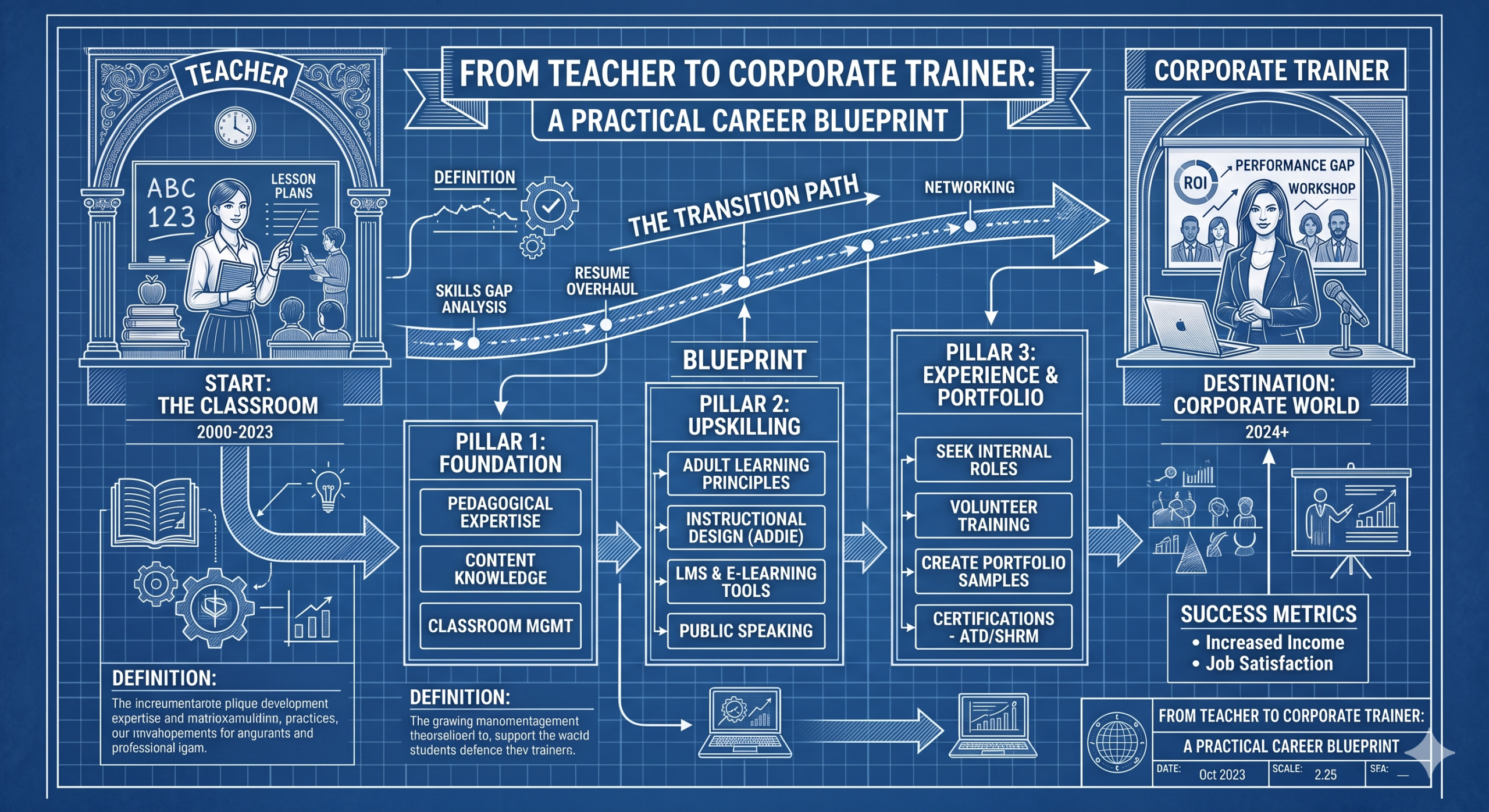
Many teachers eventually reach a stage where they want new professional challenges, higher income potential, better work flexibility, or career growth outside traditional classrooms. Blueprint One of the most natural and rewarding transitions for educators is moving into corporate training.
Corporate trainers help companies improve employee skills, productivity, communication, leadership, and workplace performance. Unlike school teaching, corporate training focuses on professional development within business environments. Organizations hire trainers to conduct workshops, onboarding programs, skill Blueprint development sessions, leadership coaching, and employee learning initiatives.
Teachers already possess many of the core skills required for this role. Classroom management, communication, lesson planning, presentation ability, and audience engagement directly translate into corporate training environments. With the right strategy, educators can successfully transition into corporate roles without starting their careers from zero.
This guide explains how teachers can move into corporate training through practical skill-building, positioning, networking, and career planning.
Understand the Difference Between Teaching and Corporate Training
Before making the transition, it is important to understand how corporate training differs from traditional teaching.
Traditional Teaching Focuses On:
- Academic learning
- Subject understanding
- Student development
- Curriculum completion
- Classroom assessment
Corporate Training Focuses On:
- Employee performance improvement
- Business productivity
- Workplace communication
- Leadership development
- Professional skill enhancement
Corporate learners are professionals rather than students. Training sessions are usually shorter, goal-oriented, and closely connected to business results.
Understanding this difference helps teachers adjust their communication and presentation styles for professional environments.
Recognize the Transferable Skills You Already Have
Many teachers underestimate how valuable their existing experience is in corporate settings. In reality, educators already possess highly valuable communication and instructional skills.
Transferable Skills Include:
- Public speaking
- Presentation delivery
- Lesson planning
- Audience engagement
- Communication clarity
- Conflict management
- Leadership ability
- Time management
- Performance evaluation
Corporate training roles require professionals who can explain ideas clearly, maintain engagement, and simplify complex information. Teachers already perform these tasks daily.
Instead of viewing yourself as a beginner, position yourself as an experienced learning and development professional adapting to a new audience.
Learn the Basics of Corporate Training
Although teaching experience provides a strong foundation, corporate environments operate differently. Understanding business learning systems is essential.
Areas to Learn:
- Employee onboarding
- Learning and Development (L&D)
- Corporate communication
- Leadership training
- Soft skills development
- Performance improvement systems
- Workplace behavior training
Popular Corporate Training Topics
Many companies hire trainers for:
- Communication skills
- Leadership development
- Sales training
- Customer service
- Team collaboration
- Productivity improvement
- Time management
- Workplace ethics
Teachers transitioning into corporate training should identify which topics match their strengths and experience.
Improve Your Business Communication Skills
Corporate environments use different communication styles compared to schools or academic institutions.
Key Communication Changes
Corporate communication is usually:
- More concise
- Goal-oriented
- Business-focused
- Performance-driven
Professionals expect trainers to connect learning directly with workplace outcomes.
Skills to Develop
Focus on:
- Professional email writing
- Presentation structure
- Business vocabulary
- Executive communication
- Meeting facilitation
These skills improve confidence during interviews, workshops, and corporate discussions.
Learn Digital Training and Remote Facilitation
Modern companies increasingly conduct training online. Remote work has expanded Blueprint demand for digital trainers who can engage employees virtually.
Important Tools to Learn
Corporate trainers should understand:
- Zoom
- Microsoft Teams
- Google Meet
- Learning Management Systems (LMS)
- Presentation tools
- Online collaboration platforms
Why Remote Training Skills Matter
Remote training allows:
- Global opportunities
- Freelance flexibility
- International workshops
- Hybrid work models
- Scalable training programs
Professionals with virtual facilitation skills often access broader career opportunities than trainers limited to in-person sessions.
Remote corporate training roles are increasingly available through global hiring platforms like Best Job Tool, where companies seek communication-focused professionals with strong instructional abilities.
Build a Professional Corporate Training Portfolio
A portfolio helps recruiters and companies evaluate your communication and training style.
Include:
- Workshop outlines
- Presentation samples
- Training videos
- Session recordings
- Learning materials
- Course structures
- Participant feedback
Even if you are transitioning from teaching, you can adapt classroom materials into professional training examples.
Create Sample Corporate Sessions
Examples:
- Time management workshop
- Communication skills session
- Leadership basics training
- Workplace productivity seminar
Practical demonstration often matters more than Blueprint theoretical claims during hiring.
Earn Relevant Certifications
Certifications can strengthen credibility, especially when transitioning industries.
Useful Certifications Include:
- Learning and Development certifications
- Instructional design courses
- HR and training certifications
- Corporate communication programs
- Leadership coaching certifications
You do not need multiple expensive certifications immediately. One recognized program combined with practical experience is often enough to begin.
Focus on Practical Learning
Recruiters value:
- Facilitation ability
- Presentation quality
- Engagement skills
- Problem-solving
- Professional confidence
Certifications support your profile, but execution matters more.
Develop Industry Knowledge
Corporate trainers work across industries such as:
- IT
- Healthcare
- Retail
- Finance
- Customer service
- Sales
- Startups
Understanding basic business operations improves training relevance.
Learn About:
- Workplace productivity
- Organizational behavior
- Employee engagement
- Team collaboration
- Business communication
- Performance management
Industry awareness helps trainers connect learning with real business situations.
Build a Strong LinkedIn Presence
LinkedIn is one of the most important platforms for corporate trainers because companies and HR professionals actively search for trainers online.
Optimize Your LinkedIn Profile
Your profile should clearly communicate:
- Training expertise
- Teaching background
- Workshop topics
- Communication strengths
- Industry interests
Share Valuable Content
Post about:
- Learning strategies
- Workplace communication
- Employee engagement
- Leadership development
- Productivity improvement
- Public speaking tips
Consistent professional content improves visibility and credibility significantly.
Start With Freelance or Part-Time Opportunities
Many successful corporate trainers begin through Blueprint freelance workshops, consulting, or part-time contracts before transitioning fully.
Beginner Opportunities Include:
- Online workshops
- Soft skills training
- School-to-corporate transition coaching
- Communication seminars
- Freelance facilitation
- Employee onboarding support
Smaller opportunities help build confidence, testimonials, and industry exposure.
Offer Value to Small Businesses
Many startups and small businesses need affordable training support but cannot hire full-time trainers.
This creates opportunities for educators transitioning into corporate learning roles.
Prepare for Corporate Training Interviews
Corporate interviews evaluate communication style heavily because training roles require audience confidence.
Common Interview Areas
Recruiters may assess:
- Presentation ability
- Facilitation style
- Communication clarity
- Professional confidence
- Problem-solving
- Business understanding
Practice Delivering Sample Sessions
Prepare short demonstrations on topics like:
- Team communication
- Time management
- Leadership basics
- Productivity strategies
Strong delivery often matters more than technical perfection.
Create a Long-Term Career Growth Plan
Corporate training offers multiple career paths.
Future Growth Opportunities
Possible roles include:
- Corporate Trainer
- Learning and Development Specialist
- Instructional Designer
- Leadership Coach
- HR Training Manager
- Learning Consultant
- Employee Development Manager
Some professionals also build independent consulting businesses or online learning brands over time.
Continue Improving Skills
Focus continuously on:
- Presentation quality
- Digital training methods
- Leadership communication
- Business understanding
- Remote facilitation
- Instructional design
Learning consistently helps trainers remain competitive in evolving industries.
Conclusion
Moving from teaching to corporate training is one of the most practical and Blueprint achievable career transitions for educators. Teachers already possess many of the core skills companies value, including communication, presentation, audience engagement, organization, and instructional ability.
The transition requires understanding business environments, improving corporate communication, learning digital training tools, and building a professional portfolio. With consistent effort and strategic positioning, teachers can successfully build rewarding careers in corporate learning and development.
As companies continue investing in employee growth, communication training, and leadership development, demand for skilled trainers will continue increasing across industries. Professionals looking for remote Blueprint opportunities, flexible careers, and modern corporate roles can also explore Best Job Tool to discover global career opportunities and professional growth paths.






Comments
Be the first to leave a comment.