

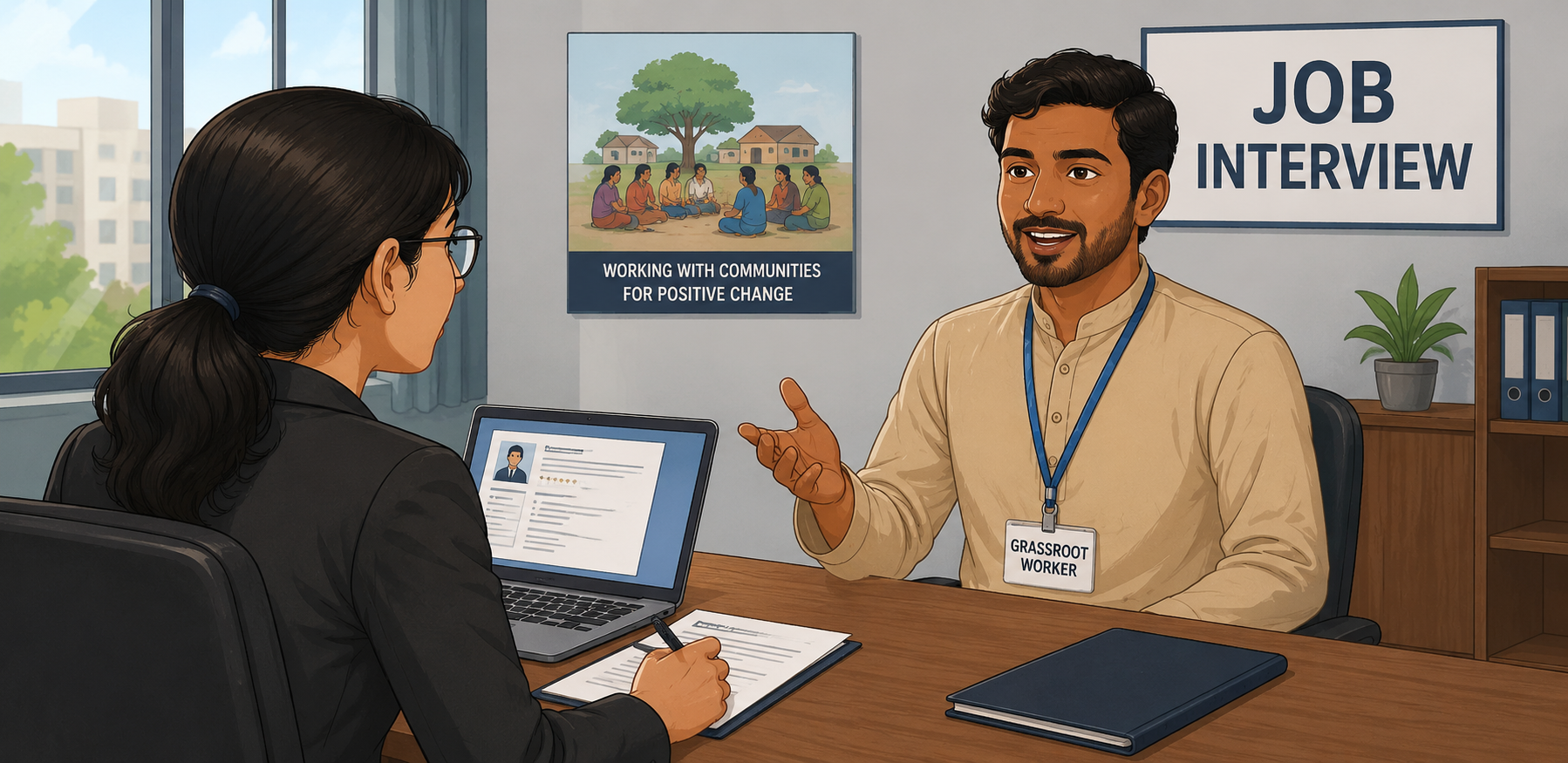
Introduction: Grassroots Workers
Grassroots workers are people who work at the local level and directly with communities. They spend less time in offices and more time in villages, neighborhoods, and communities because they help solve problems and support people in accessing opportunities.
Some examples of grassroots workers are ASHA workers, NGO field staff, and social workers.
Grassroots workers work very hard in their roles. However, when they apply for a new job, they often feel confused about how to present their experience to recruiters in a way that highlights their value.
In this article, we will understand how grassroots workers can build impactful career stories.
How Grassroots Workers Can Build Impactful Career Stories?
1. Understand the Value of Your Experience
Many grassroots workers feel underconfident about their experience when applying for a new job and attending interviews. Because of this, they often struggle to present themselves effectively, which can reduce their chances of getting hired.
That is why it is important to understand the value of your experience. If you do not recognize and appreciate your own experience, it will be difficult to explain its value to others.
Grassroots workers develop many valuable skills through their work, such as communication, problem-solving, community engagement, team coordination, and more. These skills can be a strong advantage and help them stand out during interviews.
2. Focus on Impact Instead of Tasks
One common mistake that many candidates make, whether they are grassroots workers or other professionals, is that they only explain their tasks during an interview. As a result, recruiters do not get a clear understanding of their responsibilities, experience, or achievements, and they may not be impressed.
A better approach is to focus on impact instead of just tasks. Do not only talk about what you did. Explain the results and impact of your work. Highlight the tasks that created positive outcomes and made a difference.
This helps recruiters clearly understand your contributions and the results you achieved. When recruiters can see the impact of your work, they are more likely to be impressed by your experience.
3. Collect Real Examples from Your Work
In many interviews, recruiters meet a lot of candidates. After the interview, they often forget most of the answers because they sound generic and nothing is unique or memorable.
But if you use real examples from your work during the interview, the recruiter can better connect with your answers and remember you. This also helps you stand out from other candidates.
Try to include situations where you solved a difficult problem, helped a community member, or managed a challenging project.

4. Use Numbers Whenever Possible
Another effective way for grassroots workers to build strong career stories is to use numbers whenever possible. When you include numbers in your answers, it gives two main benefits.
First, numbers make your achievements easier to understand. The recruiter gets a clear idea of the results you have achieved.
Second, it builds trust. When a candidate does not use numbers and only shares general achievements, it can sound vague. But when you use numbers, it shows confidence and makes your experience more believable. This helps recruiters trust you more.
5. Highlight Challenges You Overcame
Highlighting the challenges you have overcome is also one of the most effective ways for grassroots workers to build strong career stories. Recruiters look for candidates who can handle different types of challenges and help the company run smoothly.
When you talk about the challenges you have handled in your work, it creates a strong impression on the recruiter. This can increase your chances of getting hired.
Conclusion: Grassroots Workers
Grassroots workers can build strong and impactful career stories by clearly presenting their experience in the right way. Instead of only talking about tasks, they should focus on impact, real examples, numbers, and challenges they have handled.
When they understand the value of their experience and present it confidently, they can stand out in interviews and improve their chances of getting hired.
“Your real-world experience already holds powerful stories—learn how to turn them into career opportunities with Best Job Tool.”






Comments
Be the first to leave a comment.