

Introduction
Hiring decisions often appear straightforward from a candidate’s perspective. Most job seekers believe that skills, experience, and performance determine outcomes. However, there is a less visible factor that plays a major role behind the scenes. This is exactly how hiring budgets silently affect candidate selection in modern recruitment.
Every organization operates within financial constraints. These constraints influence not only business operations but also hiring strategies. Therefore, even highly qualified candidates may not always be selected if they do not align with budget expectations.
Understanding this hidden dynamic can significantly improve your job search strategy. It helps you position yourself better and align with what employers are actually looking for.
Understanding hiring budgets in recruitment
Hiring budgets are more than just salary limits. They include a combination of expenses such as compensation, benefits, onboarding costs, training, and tools required for the role.
Organizations allocate hiring budgets based on business priorities, revenue projections, and workforce planning. These budgets guide recruiters and hiring managers in making decisions.
Therefore, recruitment is not just about finding the best candidate. It is about finding the best candidate within a defined financial framework.
Additionally, budgets are often approved in advance. This limits flexibility during hiring. As a result, recruiters must carefully evaluate candidates based on both skills and cost.
How hiring budgets silently affect candidate selection during shortlisting
Shortlisting is one of the most critical stages in recruitment. This is where how hiring budgets silently affect candidate selection becomes clearly visible.
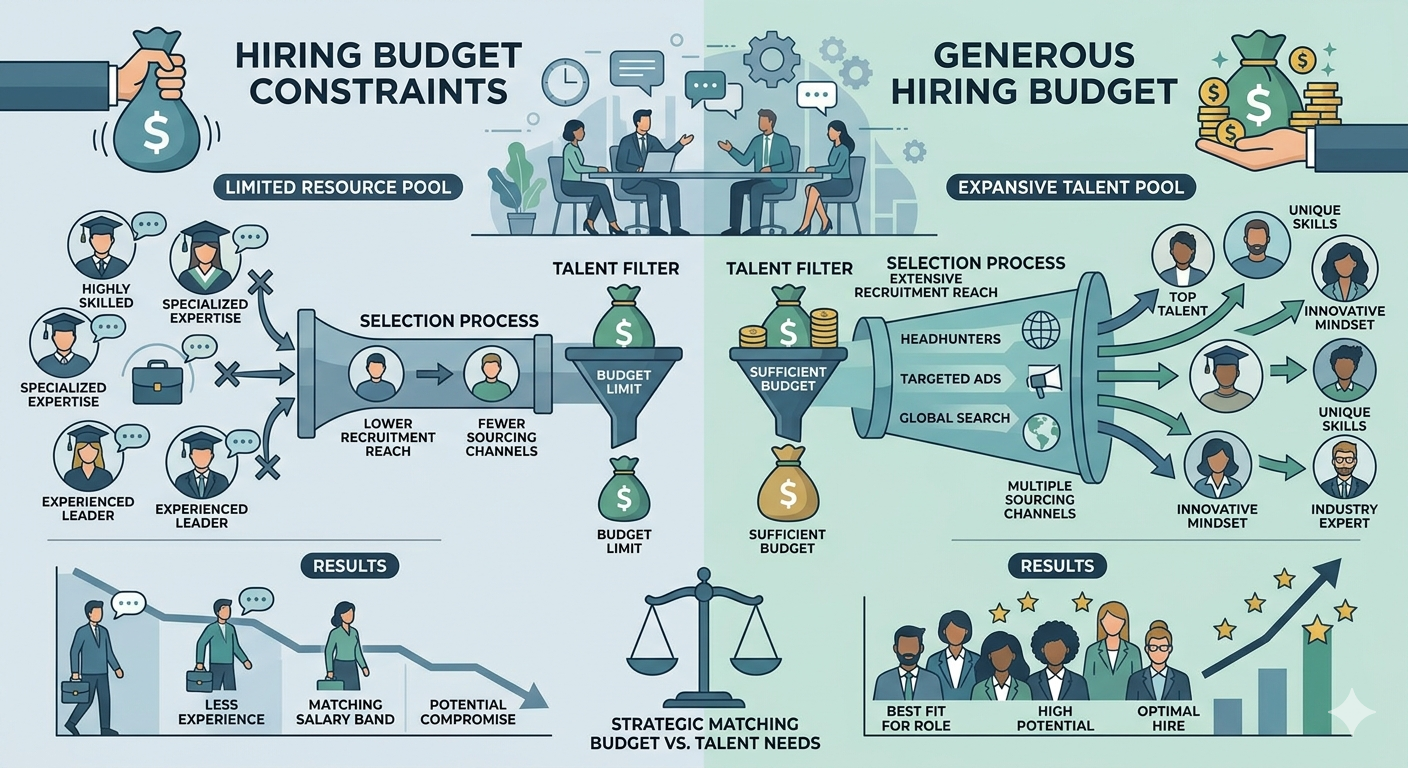
Recruiters often filter candidates based on expected salary ranges. If a candidate’s expectations exceed the budget, they may not move forward, regardless of qualifications.
Moreover, applicant tracking systems and recruiters may prioritize profiles that align closely with budget constraints. This ensures efficiency in the hiring process.
Additionally, candidates with slightly lower experience but matching salary expectations may be preferred over highly experienced candidates with higher demands.
Therefore, budget alignment becomes a silent but powerful filter in shortlisting decisions.
The hidden cost of hiring beyond salary
Many candidates focus only on salary. However, organizations consider the total cost of hiring.
This includes onboarding, training, equipment, and time required for integration. For example, a candidate who requires extensive training may increase overall hiring costs.
Therefore, companies often prefer candidates who can start contributing quickly. Practical experience becomes valuable because it reduces training expenses.
Additionally, hiring mistakes are costly. Replacing an employee requires time, effort, and additional budget. As a result, companies prioritize candidates who appear stable and predictable.
Thus, hiring budgets extend far beyond compensation. They influence how candidates are evaluated holistically.
Why companies prefer predictable and low-risk candidates
Hiring always involves risk. Organizations aim to minimize this risk, especially when budgets are tight.
Candidates with consistent performance and proven experience are seen as safer investments. They are more likely to deliver expected results.
On the other hand, candidates with uncertain profiles may require additional support. This increases both cost and risk.
Therefore, recruiters often choose candidates who demonstrate reliability and consistency.
Moreover, predictable hires reduce the chances of early attrition. This helps organizations stay within budget and maintain productivity.
As a result, stability often outweighs potential in budget-sensitive hiring decisions.
The impact of hiring budgets on salary negotiations
Salary negotiation is one of the most visible areas where budget constraints come into play.
Recruiters typically have predefined salary ranges. These ranges are approved by finance and leadership teams.
Therefore, negotiation flexibility is limited. Even if a candidate performs exceptionally well, the offer may not exceed budget limits.
Candidates who understand this dynamic can approach negotiations more strategically. Instead of focusing only on salary, they can highlight overall value.
Additionally, candidates can negotiate other benefits such as flexible work arrangements or learning opportunities.
Thus, understanding budget constraints improves negotiation outcomes.
Trade-offs organizations make during hiring
Hiring decisions often involve trade-offs between cost and capability.
For example, a company may choose a mid-level candidate instead of a senior professional due to budget limitations. While the senior candidate may bring more experience, the cost difference may not justify the investment.
Similarly, companies may prioritize candidates who can perform multiple roles. This reduces the need for additional hires.
Additionally, organizations may delay hiring for certain roles if budgets are restricted.
Therefore, hiring is not always about selecting the most qualified candidate. It is about balancing value and cost.
How candidates can align with hiring budgets
Understanding how hiring budgets silently affect candidate selection allows candidates to adapt their approach effectively.
Start by researching market salary trends. This helps you set realistic expectations.
Additionally, highlight your value in terms of results and efficiency. Show how you can contribute quickly and reduce costs.
Moreover, emphasize practical skills and experience. This demonstrates that you require minimal training.
Flexibility also plays an important role. Being open to negotiation can increase your chances of selection.
Furthermore, consider long-term growth opportunities instead of focusing only on initial compensation.
By aligning with budget expectations, candidates can improve their chances significantly.
The role of consistency in budget-driven hiring decisions
Consistency is a key factor in budget-conscious hiring. Employers prefer candidates who show stable performance over time.
Consistent professionals are easier to evaluate. Their track record provides confidence to hiring managers.
Additionally, consistency reduces uncertainty. This aligns well with budget constraints, as predictable outcomes are easier to manage financially.
Therefore, candidates who demonstrate consistent results often stand out.
Moreover, consistency strengthens trust. Employers feel more comfortable investing in candidates who have proven reliability.
Thus, consistency complements budget considerations and enhances selection chances.
Why hiring budgets matter more in modern recruitment
In today’s economic environment, organizations focus heavily on efficiency and cost management.
Hiring budgets are closely monitored. Every hiring decision must justify its cost.
Additionally, companies aim to maximize return on investment from employees. This means selecting candidates who deliver value quickly.
Moreover, remote work and global hiring have increased competition. Organizations now have access to a wider talent pool at varying cost levels.
Therefore, budget considerations have become even more significant.
Understanding this trend helps candidates stay competitive in a changing job market.
Conclusion
Understanding how hiring budgets silently affect candidate selection provides valuable insight into modern recruitment processes. While skills and experience remain important, financial alignment plays a crucial role in decision-making.
Organizations must balance talent acquisition with budget constraints. Therefore, candidates who align with these constraints gain a significant advantage.
By researching salary expectations, demonstrating value, and maintaining flexibility, candidates can improve their chances of success.
Ultimately, hiring is not just about being the best candidate. It is about being the right candidate within the right budgetFind Your Dream Job Today – Explore Endless Career Opportunities and Secure Your Next Role with Best Job Tool.






Comments
Be the first to leave a comment.