

Introduction
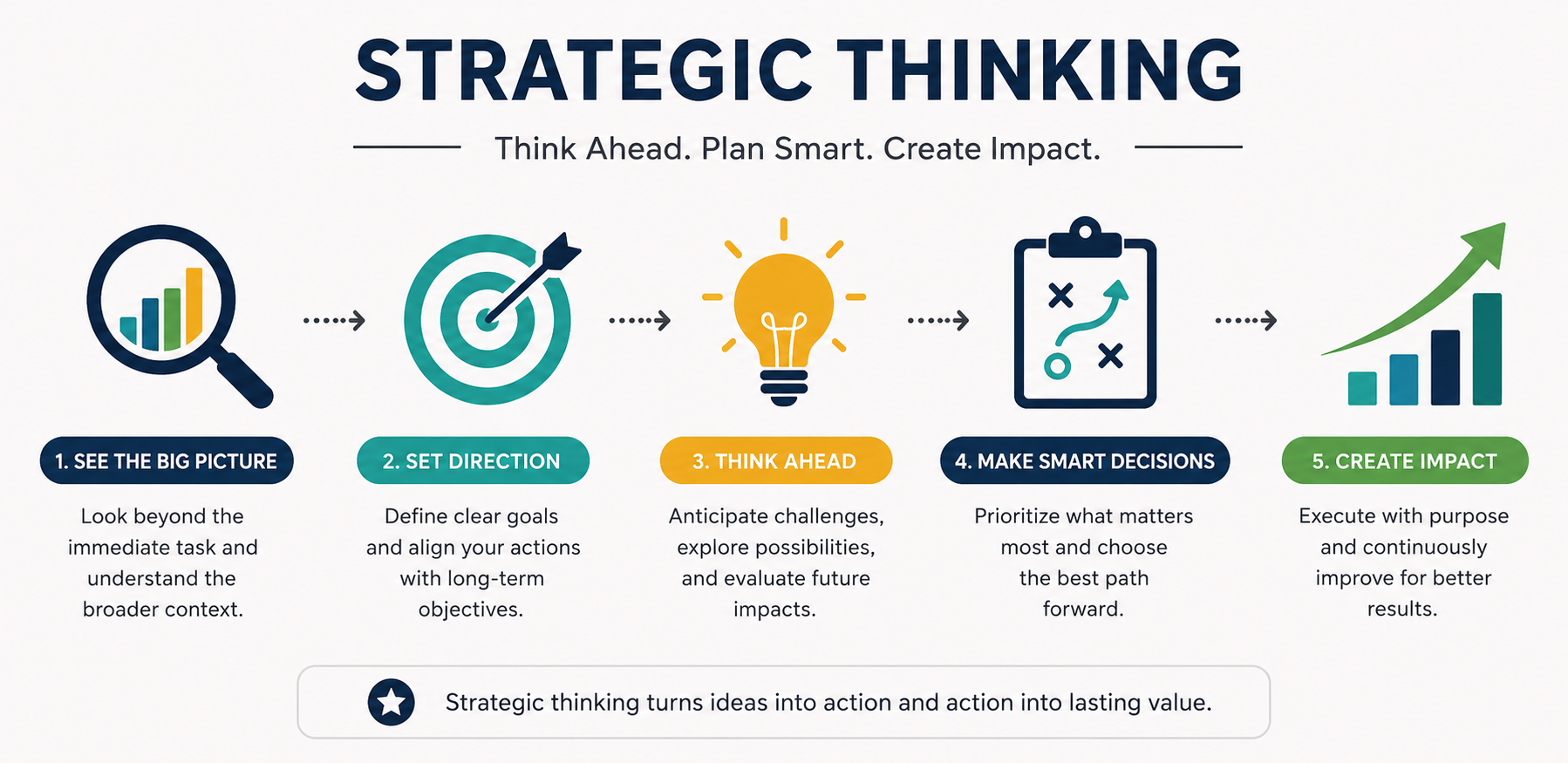
Strategic thinking means not only completing the tasks you are given, but also thinking like a planner about how it fits into a bigger goal.
It means you should not only think about what you have to do, but also why you are doing it, how you will do it, and how it will help you in the future.
It is important to show strategic thinking in junior roles so that senior people can understand your skills and value, and see that you can also work towards larger goals.
How to Demonstrate Strategic Thinking in Junior Roles?
1. Understand the “Why” behind your tasks
The first way to show strategic thinking in junior roles is to understand the reason behind your task.
This means that whenever you are given a task, you should not just follow instructions or try to finish it quickly. Instead, you should try to understand why the task is important and how it will impact the team, the project, and the customer.
By doing this, you can show strategic awareness.
2. Connect your work to bigger goals
Another way to demonstrate strategic thinking in junior roles is to connect your work to bigger goals.
When you connect your tasks with larger goals in a junior role, senior people can see that you are capable of collaborating on bigger projects and that your work is important for long-term objectives.
That is why you should try to link your work to bigger goals. To do this, you can communicate your updates in a way that shows the outcome.
For example, if you are asked to prepare a report, instead of simply saying that you have completed it, you can say:
“I have completed the report to help the team identify customer trends faster.”
3. Ask thoughtful questions to show strategic thinking in junior roles
Asking thoughtful questions is one of the most powerful ways to demonstrate strategic thinking in junior roles.
If you are a strategic thinker, you will ask creative questions that help in long-term success. These questions show that you are thinking beyond just your current task.
You can ask questions like:
- How will this be used in the next stage?
- What problem am I trying to solve with this?
- How does this work connect to the final goal?
When you ask such thoughtful and long-term focused questions, it shows that you are not just executing tasks, but also understanding the bigger picture.
4. Look for small improvements
It is not necessary to be in a senior role to become a strategic thinker. Even in junior roles, you can think in a strategic way and contribute to long-term growth.
There are many ways to show strategic thinking. For example, you can suggest a simple workflow, identify repetitive tasks, and improve clarity in documents. Even if the improvement is small, it still matters.
These small improvements show your initiative and help senior people notice that you are proactive and thinking beyond just your assigned work.
5. Think ahead, not just ahead of deadline
Completing work is not the only thing you should focus on. There are many other things you need to think about if you want to show strategic thinking.
Only thinking about deadlines is not strategic thinking. You should think beyond deadlines.
Before starting a task, you can think:
- What might go wrong?
- What information might be needed later?
- How can I make this task easier for the next person?
By doing this, you can also handle future uncertainties better.
6. Prioritize like a strategist
Another important way to demonstrate strategic thinking in junior roles is to prioritize like a strategist.
This means that if you have multiple tasks, instead of completing them in any random order, you should think about which tasks are more important, which are more impactful, and which are urgent and important.
Based on this understanding, you should complete your tasks in order of priority. This shows good decision-making skills.
Conclusion: Strategic Thinking in Junior Roles
Strategic thinking is about moving beyond day-to-day tasks and focusing on the bigger picture, long-term goals, and overall impact. It helps you understand not just what you are doing, but why you are doing it and how it contributes to a larger outcome.
When you develop strategic thinking, you start making smarter decisions, prioritizing better, and adding more value to your work—even in junior roles.
“Start thinking like a future leader from day one — explore opportunities on Best Job Tool where strategic thinkers get noticed early.”






Comments
Be the first to leave a comment.