

Introduction
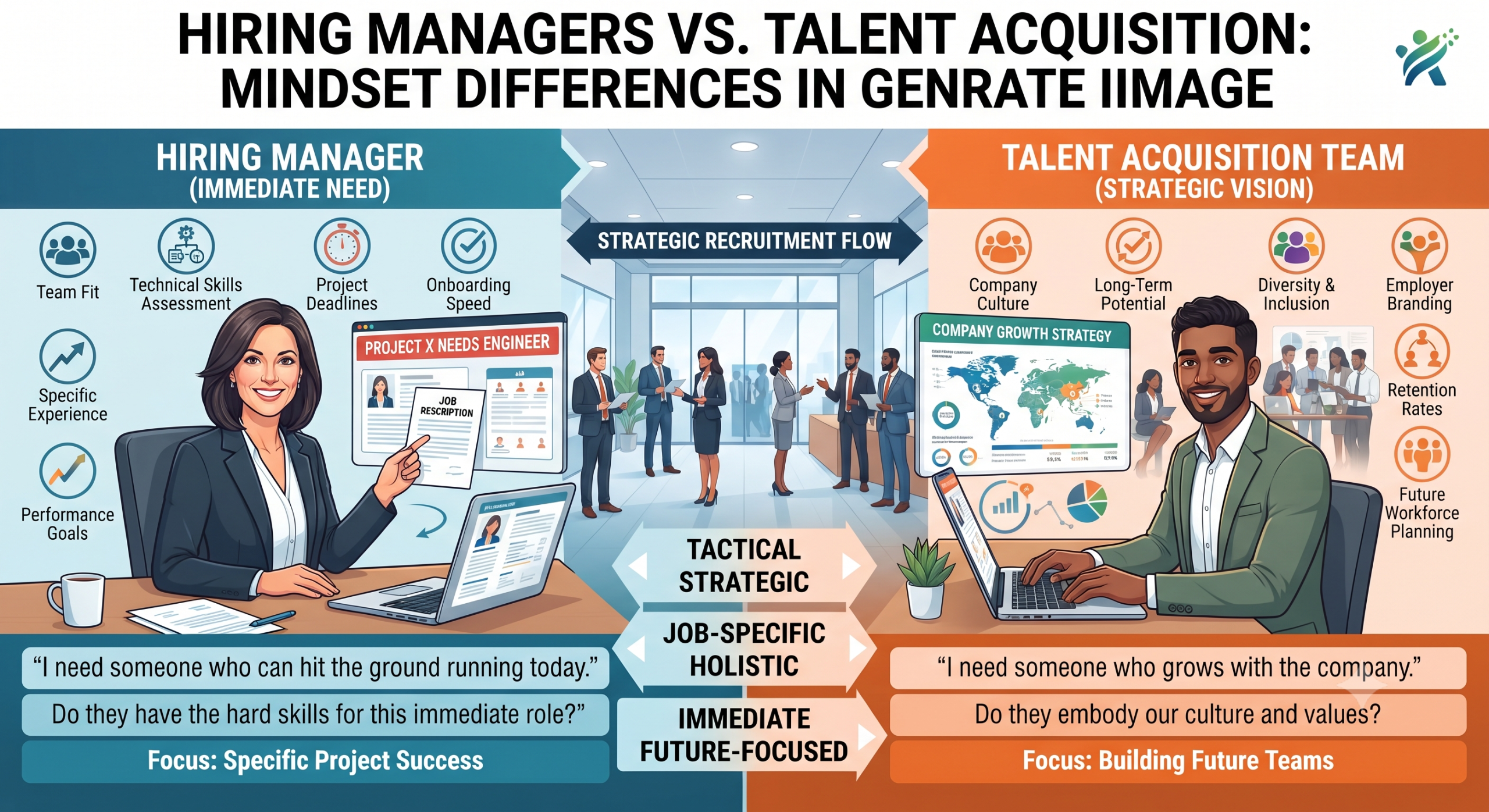
Candidates often assume that recruiters and hiring managers evaluate applications in the same way. In reality, they have different responsibilities, priorities, and success metrics throughout the hiring process. While both want to find the right person for the role, their perspectives differ because they solve different business problems.
Recruiters focus on attracting qualified talent, managing the hiring pipeline, and ensuring a smooth recruitment process. Hiring managers, on the other hand, think about long-term team performance, business outcomes, and whether a candidate can succeed in the role over time.
Understanding these differences can help you tailor your resume, communicate more effectively during interviews, and improve your chances of progressing through every stage of the hiring process. Whether you’re applying for remote, hybrid, or on-site positions, this guide explains how hiring managers think differently from recruiters and how you can meet the expectations of both.
Recruiters Focus on Finding Qualified Candidates
Recruiters are responsible for identifying candidates who meet the basic requirements of a position.
During the initial screening, they typically evaluate:
- Relevant work experience
- Required skills
- Educational qualifications
- Location requirements
- Salary expectations
- Work authorization
- Availability to join
Their objective is to determine whether you meet the essential criteria before presenting your profile to the hiring manager.
Recruiters often work across multiple roles simultaneously, so they rely on efficient screening methods and clear resume information.
Hiring Managers Focus on Business Impact
Hiring managers think beyond qualifications.
Instead of asking, “Can this person do the job?” they often ask:
- Can this person solve our problems?
- Will they improve team performance?
- Can they work independently?
- Will they adapt to changing priorities?
- Can they grow with the company?
They evaluate how your experience will translate into measurable business results.
Hiring managers are interested in outcomes rather than simply responsibilities.
Recruiters Evaluate Fit for the Hiring Process
Recruiters are responsible for keeping the recruitment process moving efficiently.
They assess factors such as:
- Professional communication
- Resume quality
- Career progression
- Interest in the role
- Interview availability
- Salary alignment
They also ensure candidates understand the hiring process and company expectations.
A recruiter wants confidence that you’re likely to succeed in later interview stages.
Hiring Managers Evaluate Team Contribution
Hiring managers are responsible for building successful teams.
They consider whether you will:
- Collaborate effectively
- Support team goals
- Communicate professionally
- Handle challenges constructively
- Learn quickly
- Strengthen the existing team
Behavioral interview questions often help hiring managers understand how you perform in real workplace situations.
They are evaluating your potential as a future colleague rather than simply an applicant.
Recruiters Think About Hiring Efficiency
Recruiters often measure success using hiring metrics such as:
- Time-to-fill
- Number of qualified applicants
- Interview completion rates
- Offer acceptance rates
- Candidate experience
Their role requires balancing employer needs with candidate expectations.
Efficient communication and timely follow-up are important parts of their responsibilities.
Hiring Managers Think About Long-Term Performance
Hiring managers are responsible for the employee after the hiring process ends.
They ask questions like:
- Can this person succeed for several years?
- Will they require significant supervision?
- Can they become a future leader?
- Will they continue learning?
- How will they perform under pressure?
A poor hiring decision affects productivity, team morale, and business performance.
For this reason, hiring managers often spend more time evaluating long-term potential than short-term qualifications.
Remote Work Changes Both Perspectives
As remote and hybrid work become more common, recruiters and hiring managers have expanded their evaluation criteria.
Recruiters often verify:
- Remote work eligibility
- Technology requirements
- Location flexibility
- Work authorization
Hiring managers focus on:
- Self-management
- Communication skills
- Productivity without supervision
- Virtual collaboration
- Time management
- Accountability
If you’ve successfully worked remotely or managed projects across different locations, highlight these experiences throughout the hiring process.
When searching for flexible opportunities, best job tool, a global job platform, can help you discover remote and hybrid roles that match your experience and career goals.
Tailor Your Approach for Both Audiences
A successful application addresses the priorities of both recruiters and hiring managers.
For recruiters:
- Use relevant keywords.
- Clearly list qualifications.
- Keep your resume well organized.
- Match the job description.
For hiring managers:
- Highlight measurable achievements.
- Explain business impact.
- Share leadership examples.
- Demonstrate problem-solving abilities.
- Show continuous learning.
Understanding who is evaluating your application at each stage allows you to communicate more effectively.
Build Relationships Throughout the Hiring Process
Both recruiters and hiring managers influence hiring decisions.
Maintain professionalism by:
- Responding promptly.
- Preparing thoroughly.
- Asking thoughtful questions.
- Following up professionally.
- Showing appreciation after interviews.
Strong communication builds trust throughout the recruitment process.
As your career grows, best job tool can help you connect with employers worldwide while discovering opportunities that align with your skills, career goals, and preferred work environment.
Conclusion
Although recruiters and hiring managers work toward the same hiring objective, they approach candidates from different perspectives. Recruiters focus on qualifications, process efficiency, and ensuring candidates meet the basic requirements of the role. Hiring managers look deeper, evaluating business impact, long-term potential, team contribution, and the ability to solve real organizational challenges.
By understanding these different priorities, you can tailor your resume, interview responses, and communication to meet the expectations of both audiences. Present clear qualifications for recruiters while demonstrating measurable achievements and strategic thinking for hiring managers. This balanced approach increases your chances of progressing through every stage of the hiring process. As you continue your job search, best job tool, a global job platform, can help you explore remote, hybrid, and international opportunities with employers seeking professionals who can create lasting business value.






Comments
Be the first to leave a comment.