

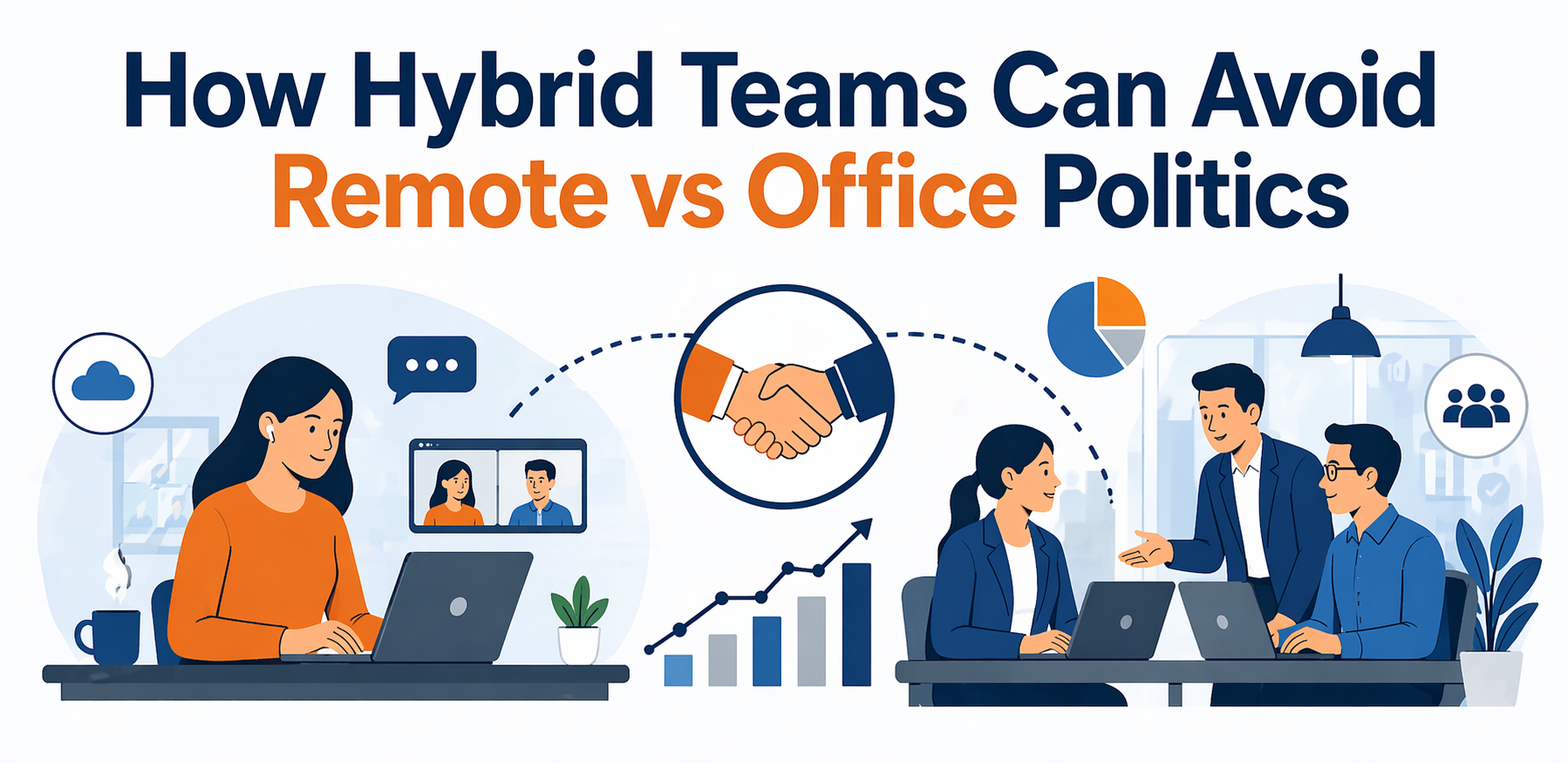
Introduction: Remote vs Office Politics
In this article, we will understand how hybrid teams can avoid remote vs office politics.
Politics exist in every workplace, whether it is on-site, hybrid, or remote. But that does not mean we should get upset or leave our job. We should stay calm and handle things in a thoughtful way so that we can do our work well without hurting others.
How Hybrid Teams Can Avoid “Remote vs Office” Politics?
1. Focus on Awareness, Not Reaction
The first tip to navigate office politics calmly is to focus on awareness and not react immediately.
Politics exists in every workplace. Sometimes, people may try to put down junior employees or create problems in their work. But you don’t need to take stress or overthink because of this.
First, you should observe everyone carefully. Notice how different employees communicate with you and how they behave in meetings. Also, try to understand who tends to create more politics.
You just need to understand each person first and not rush to judge anyone.
2. Control Your Emotions to Handle Office Politics
As we just discussed, before reacting immediately, you should try to understand every employee and see whether that person is actually involved in politics or not. But many employees make this mistake—they do not control their emotions and start reacting instantly.
Reacting instantly only increases your stress. It also affects your relationships with other employees, and people may even start blaming you. That’s why, before responding, you should take a pause, think about the long-term impact, and then respond professionally.
If you don’t control your emotions and react immediately to everything, people may see you as unreliable and immature. This is not good for your image or your growth.
3. Build Genuine Relationships
Office politics is very common because when many people work together, not everyone wants others to grow. But you can reduce this thinking by building good relationships with your colleagues.
As we all know, when we build good relationships, trust and understanding also grow. This helps reduce politics in the workplace. That’s why you should try to build a good relationship with your colleagues.
However, you don’t need to be friends with everyone. You just need to be respectful, communicate clearly, and help when possible. This will help others trust you, and instead of doing politics, they are more likely to support you.
4. Stay Neutral in Conflicts to Handle Office Politics
If you want that no one does politics with you, it is important that you also do not get involved in any politics. Do not gossip about anyone and do not become a reason for conflict. Treat everyone professionally and equally.
There may be many employees who try to involve you in office drama, but you should avoid getting involved unless it is really necessary. Whenever someone tries to pull you into unnecessary drama, just listen politely, do not add fuel to the situation, and stay diplomatic.
This will help you appear natural and professional, and you will be able to handle office politics calmly
5. Communicate Smartly
One of the most important things in the workplace is communication. Communication is important because it helps you present yourself clearly, build trust with others, and do your work effectively.
Communication is also very helpful in handling office politics because what you say and how you say it matters a lot. It can either build trust or create conflict. That’s why you should be careful and communicate smartly so you can avoid office politics and prevent unnecessary conflicts.
For example, if there is any problem in the office, instead of saying “This is not my fault,” you can say, “Let’s focus on solving this together.”
6. Protect Your Work Visibility
The last tip to navigate office politics calmly is to protect your visibility.
This means that in the workplace, everyone is busy with their own work. Because of this, it is not necessary that everyone will notice your work, even if you are doing it well. But it is very important for your growth that your good work is noticed, so you need to communicate it.
Communicating does not mean showing off. It means sharing updates professionally, documenting your contributions, and speaking up calmly in meetings.
This will help your work get noticed by others. They will see you as a professional, try to learn from you, and are less likely to involve you in politics.
Conclusion: Remote vs Office Politics
Hybrid teams don’t face problems because people work from different places—they face problems when fairness becomes unclear. “Remote vs office” politics usually grows in environments where visibility is mistaken for performance and communication is not equally accessible.
The strongest hybrid systems are the ones that remove location from judgment entirely. When outcomes are measured clearly, communication is shared transparently, and opportunities are distributed fairly, the workplace naturally becomes more balanced.
In the end, hybrid work succeeds not because everyone works the same way, but because everyone is evaluated the same way.
“Build a healthier hybrid culture and explore opportunities on Best Job Tool where collaboration matters more than location.”






Comments
Be the first to leave a comment.