

Introduction: Learning and Development Roles
Today, the market is changing very fast because of AI. New tools, technologies, and skills keep coming all the time. Because of this, people should not stop learning. They should continue learning new things so they can stay updated with the market and remain competitive in their careers.
It is also the responsibility of companies to train their employees and help them learn about new tools and technologies. This allows employees to work effectively with modern systems. That is why many companies hire Learning and Development teams to support employee learning and growth.
But today, because of AI, the role of Learning and Development teams is not limited to creating training materials or conducting workshops. They should also know how to use AI tools along with human skills so they can train employees more effectively.
In this article, we will learn how Learning and Development roles are evolving with AI.
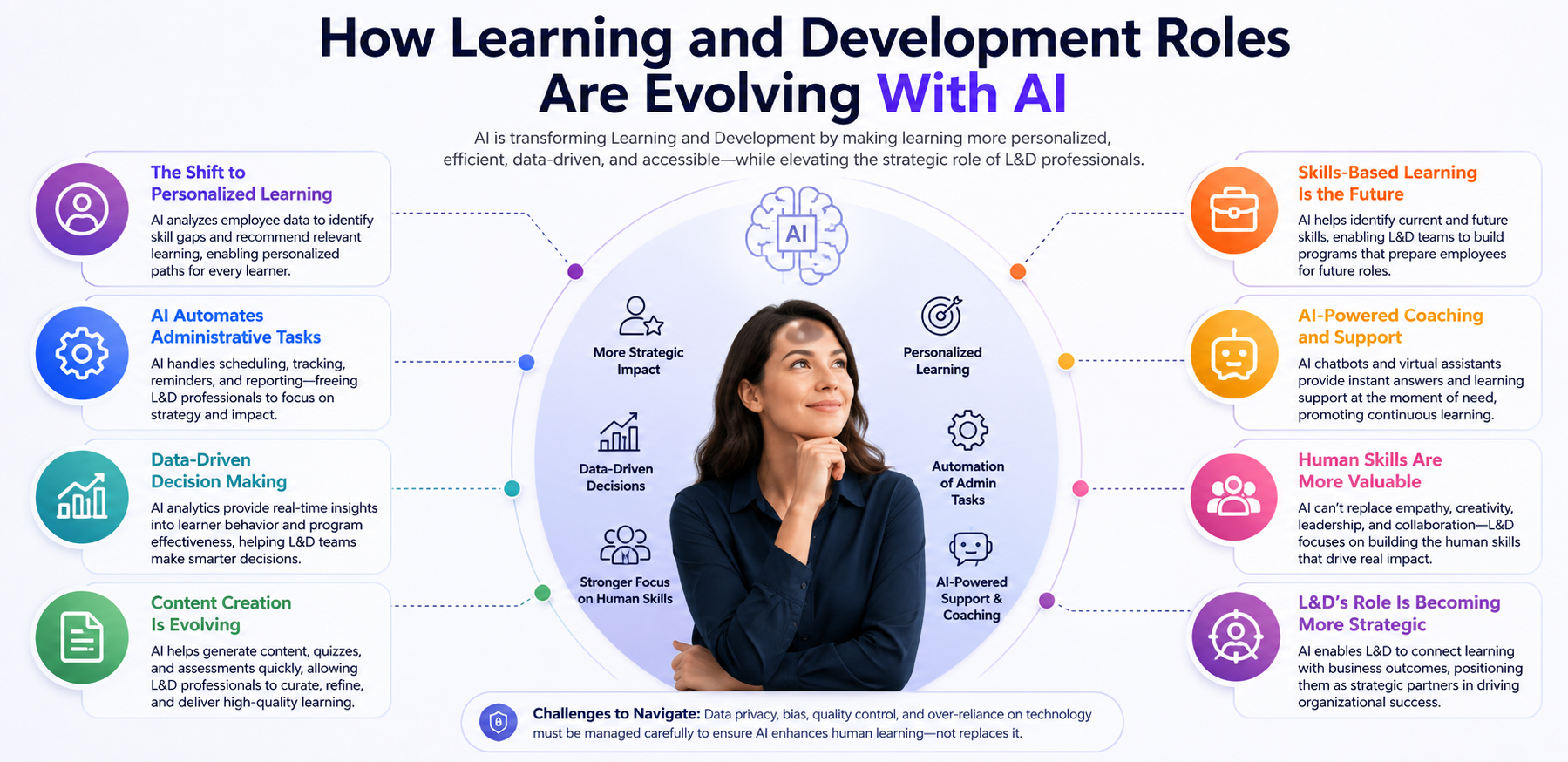
How Learning and Development Roles Are Evolving With AI?
1. AI Is Automating Administrative Tasks
Learning and Development teams have many tasks that they need to repeat every day, such as tracking attendance, sending reminders, and generating reports. These tasks take a lot of their time. AI can help a lot in this area.
AI tools can automate tasks that are repeated regularly. When Learning and Development teams use AI tools to handle administrative work, their workload becomes lighter. As a result, they have more time to create stronger and more effective training sessions.
2. Data-Driven Decision Making Is Becoming More Important
The job of a Learning and Development team is not only to provide training. It is also important for them to check whether employees are benefiting from the training and whether they are engaged with it or not.
To understand this, analyzing data is very important. However, there is often a large amount of data, which makes manual analysis difficult. AI tools make this process much easier because they can quickly analyze large amounts of data and provide results.
As a result, AI tools can help Learning and Development teams track things such as course completion rates, engagement levels, and assessment scores. This helps the team understand whether employees are learning new skills and whether they find the training interesting or not.
3. Learning Content Creation Is Changing
The job of a Learning and Development team is to train employees. For this, they need to create training sessions, prepare assessments, and create quizzes. These tasks take a lot of time, which can reduce the time they spend focusing on employees.
However, AI tools have made this process easier. The time that teams previously spent creating training materials manually can now be reduced because AI tools can quickly generate training content, create quizzes, and prepare assessments.
This saves a lot of time for the team and allows them to focus on other important tasks.
4. Skills-Based Learning Is Becoming a Priority
Today, providing random learning is not very beneficial. Skill-based learning is more useful because it can help employees in the future as well. That is why many companies prefer skill-based learning, and AI tools can greatly help Learning and Development teams in this area.
AI tools can help Learning and Development teams identify the skills that will be important in the future and find skill gaps across the workforce.
Based on this information, Learning and Development teams can prepare their training programs according to the needs of employees.
5. AI-Powered Coaching and Learning Support
Even after training, employees may face many problems while performing their daily tasks, which can affect their work. However, Learning and Development teams cannot always be available to help employees with every small issue.
But now, because of AI tools, employees can get help anytime for both small and big problems through AI-powered chatbots and virtual assistants. These tools are available all the time and can answer questions, provide resources, and guide employees.
As a result, employees can complete their daily tasks more effectively and with greater confidence.
Conclusion: Learning and Development Roles
AI is changing the way Learning and Development teams work. It helps automate repetitive tasks, analyze training data, create learning content faster, support skill-based learning, and provide employees with instant help through chatbots and virtual assistants. However, AI cannot replace the human side of Learning and Development.
Teams still need skills such as communication, creativity, and understanding employee needs. By combining AI tools with human skills, Learning and Development teams can create better learning experiences and help employees grow more effectively.
“AI is transforming Learning and Development, but human guidance remains essential. Stay ahead of the change with insights and opportunities from Best Job Tool.”






Comments
Be the first to leave a comment.