

Introduction
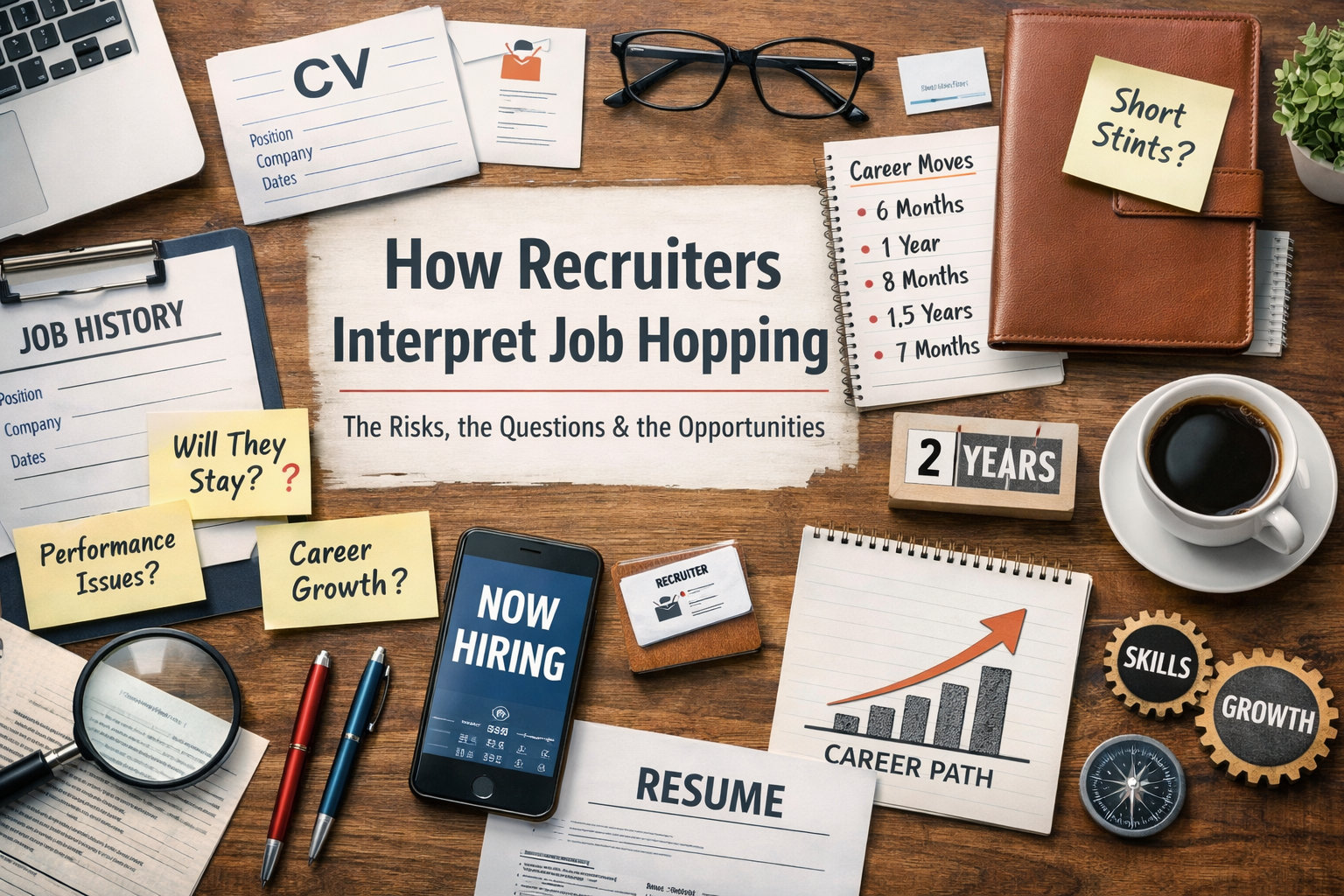
In today’s fast-moving job market, changing jobs frequently is no longer shocking. Especially in industries like tech, marketing, startups, and content, professionals often move every one to three years. But even though job hopping has become common, it is still carefully analyzed by recruiters.
If you are early in your career — or building a freelance path like many modern professionals — understanding how recruiters interpret job hopping can help you make smarter career decisions.
Let’s talk honestly about it.
Because job hopping is not automatically good or bad.
It depends on the story your career tells.
What Counts as Job Hopping?
Recruiters generally consider someone a “job hopper” when:
- They change jobs every 6–12 months repeatedly.
- They have no role longer than 1–2 years (especially early career).
- There is no visible career progression between roles.
- The moves look reactive rather than strategic.
But context matters. A startup shutting down is different from quitting impulsively. A contract role ending is different from walking away without explanation.
Recruiters don’t just count months.
They look for patterns.
How Recruiters Interpret Job Hopping?
When recruiters scan resumes (often in less than 30 seconds initially), frequent changes immediately raise silent questions.
Not accusations.
Questions.
1. “Will This Person Stay With Us?”
This is the biggest concern.
Hiring is expensive. Companies invest in onboarding, training, team integration, and project continuity. If someone has changed jobs every 8–10 months, a recruiter may wonder:
- Will they leave before becoming productive?
- Are they constantly looking for the next offer?
- Are they difficult to retain?
From a business perspective, stability reduces hiring risk.
If your resume suggests instability, you must compensate with clarity and performance.
2. “Is There a Performance Issue?”
This is rarely spoken openly, but it is a common internal doubt.
When someone leaves multiple roles quickly, recruiters may quietly ask:
- Were they asked to leave?
- Did they struggle with performance?
- Were they unable to handle pressure?
It may be unfair. But recruitment is risk management.
Without clear signals of achievement, frequent moves can create doubt.
3. “Is This Person Running From Something?”
Recruiters also look at emotional patterns.
Are the moves triggered by:
- Conflict?
- Impatience?
- Unrealistic expectations?
- Lack of resilience?
If someone leaves every time growth slows or challenges appear, it signals low tolerance for discomfort.
On the other hand, strategic moves toward bigger responsibility signal ambition.
The difference is visible in how roles progress.
4. “Is This Strategic Career Growth?”
Now here’s the important part.
Not all job hopping is negative.
If your resume shows:
- Bigger scope with each move
- Higher responsibility
- Clear skill advancement
- Strong results in each role
Recruiters often interpret it as intentional growth.
For example:
- From Intern → Executive → Senior Executive → Team Lead
That looks progressive.
But:
- Executive → Executive → Executive → Executive
With no skill shift or salary growth
That looks random.
The interpretation depends on trajectory.
When Job Hopping Actually Looks Smart?
Let’s be honest — sometimes staying too long can also look stagnant.
Recruiters appreciate mobility when it shows:
1. Exposure to Different Environments
If you’ve worked in:
- A startup
- A mid-sized company
- A corporate setup
That shows adaptability.
Recruiters value people who can operate in different systems and cultures.
2. Skill Acceleration
In fields like digital marketing, tech, or content, learning curves are fast.
If changing companies helped you:
- Learn new tools
- Manage bigger budgets
- Lead teams
- Handle international clients
That’s growth.
The key is demonstrating outcomes, not just timelines.
3. Market Awareness
In some industries, switching jobs is how professionals increase compensation and responsibility.
Recruiters understand this reality.
Especially in competitive markets, they know loyalty alone doesn’t guarantee growth.
But again — it must look intentional.
How Recruiters Evaluate Job Hopping During Interviews?
The resume creates questions.
The interview gives you the chance to answer them.
Here’s how recruiters interpret your responses:
1. If You Blame Every Company
Red flag.
Saying:
- “My manager was toxic.”
- “The company was disorganized.”
- “There was no growth anywhere.”
Repeated negativity signals a pattern.
Recruiters think: maybe the issue isn’t always external.
2. If You Show Self-Awareness
Strong signal.
Saying:
- “I realized I was chasing salary without clarity.”
- “I learned that stability matters.”
- “Now I’m looking for long-term alignment.”
This shows maturity.
Recruiters appreciate reflection.
3. If You Connect Moves to Skill Development
Best case.
For example:
“I moved from Company A to Company B to gain hands-on experience in performance marketing. After building that skill, I wanted exposure to team leadership, which I found in Company C.”
That’s structured thinking.
Recruiters interpret that as intentional growth.
How to Make Job Hopping Look Strategic?
If you already have frequent moves in your resume, don’t panic.
You can frame your story effectively.
1. Highlight Achievements Clearly for Job Hopping
Instead of:
“Handled social media campaigns.”
Write:
“Increased engagement by 45% in 8 months.”
Outcomes reduce doubts.
2. Show Progression with Job Hopping
Even if companies changed, demonstrate:
- Bigger budgets
- Bigger teams
- More ownership
- Higher accountability
Growth reduces risk perception.
3. Explain Short Roles Honestly
If a company shut down, say so.
If it was a contract, mention it.
Transparency builds trust.
4. Demonstrate Long-Term Intent Now
Recruiters worry about future retention.
Show that:
- You are clear about your direction.
- You are not exploring randomly.
- You are seeking depth, not just movement.
Clarity reduces fear.
Conclusion
Job hopping is not a crime.
But unexplained, patternless job hopping creates doubt.
Recruiters interpret resumes like stories:
- Is there direction?
- Is there growth?
- Is there ownership?
- Is there stability potential?
If your career decisions show thoughtfulness, skill accumulation, and increasing responsibility — even multiple switches can look powerful.
But if your resume looks reactive, random, and achievement-light, recruiters will hesitate.
At the end of the day, hiring is about trust.
Your resume and interview must communicate:
“I grow. I deliver. And when I commit, I stay.”
That’s what recruiters are really looking for.






Comments
Be the first to leave a comment.