

Introduction
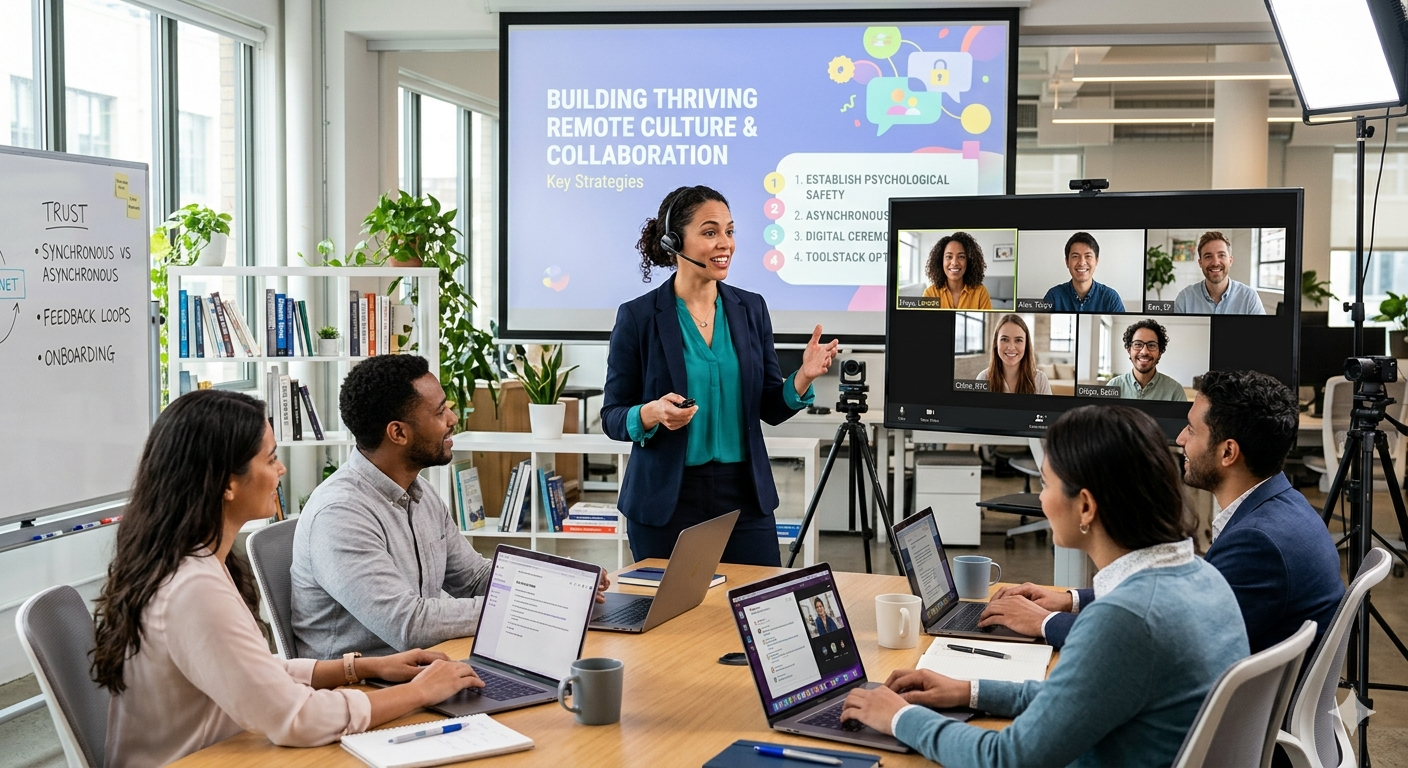
Remote work has moved from a temporary solution to a long-term workplace model. Companies across the world are building distributed teams, which creates new challenges in communication, engagement, and productivity. This is exactly why understanding how to become a specialist in remote culture and collaboration is becoming highly valuable.
Organizations are no longer just hiring remote employees. They are actively looking for professionals who can design systems that make remote teams successful. Therefore, this role sits at the intersection of human behavior, technology, and organizational strategy.
As businesses continue to expand globally, specialists in remote culture are becoming essential for sustainable growth.
Understanding remote culture and collaboration
Remote culture refers to how teams interact, communicate, and build relationships without physical presence. It includes trust, communication norms, engagement practices, and shared values.
Collaboration, on the other hand, focuses on how work gets done across distributed teams. It involves tools, workflows, and coordination.
A specialist in this field ensures that remote teams remain connected, productive, and aligned with company goals.
Additionally, they help organizations create environments where employees feel included and motivated, regardless of location.
Why companies need remote culture specialists
Remote work introduces unique challenges. Teams may struggle with communication gaps, lack of engagement, or unclear expectations.
Without proper systems, productivity can decline. Additionally, employees may feel isolated or disconnected.
Companies recognize that remote success is not just about tools. It requires intentional culture design.
Therefore, they need specialists who can build structured communication, improve collaboration, and maintain team cohesion.
This growing demand makes the role both relevant and future-proof.
How to become a specialist in remote culture and collaboration
Becoming a specialist requires a combination of skills and experience. Start by understanding how remote teams operate.
Gain experience in remote work environments. This helps you identify real challenges and solutions.
Additionally, study organizational behavior and team dynamics. This improves your ability to design effective systems.
Moreover, learn about collaboration tools and workflows. Technology plays a key role in remote work.
Finally, build practical experience by managing remote teams or projects. Hands-on exposure is essential.
Key skills required for this role
Strong communication skills are essential. Specialists must ensure clarity across teams.
Emotional intelligence is equally important. Understanding employee needs helps improve engagement.
Additionally, problem-solving skills are required to address challenges in remote environments.
Time management and organization also play a critical role. Remote teams rely on structured workflows.
Moreover, adaptability is necessary. Remote work evolves quickly, and professionals must stay updated.
Tools and technologies you should master
Remote collaboration depends heavily on technology. Specialists must be familiar with key tools.
Communication platforms like Slack or Microsoft Teams help maintain interaction. Project management tools such as Trello or Asana support task tracking.
Additionally, video conferencing tools enable real-time communication. Documentation tools ensure knowledge sharing.
Understanding how to integrate and optimize these tools is essential for success.
Building strong remote communication systems
Communication is the foundation of remote work. Specialists must design clear and effective communication strategies.
Set guidelines for meetings, updates, and feedback. This reduces confusion.
Additionally, encourage asynchronous communication where possible. This improves flexibility.
Moreover, ensure transparency in decision-making. This builds trust within teams.
Effective communication systems improve both productivity and engagement.
Creating engagement and team connection
One of the biggest challenges in remote work is maintaining engagement. Employees may feel disconnected without regular interaction.
Specialists must create opportunities for team bonding. Virtual events, check-ins, and recognition programs can help.
Additionally, promoting a sense of belonging improves morale.
Moreover, encouraging open communication strengthens relationships.
Thus, engagement is a key focus area.
Measuring success in remote culture
To ensure effectiveness, specialists must track performance. Metrics such as employee engagement, productivity, and retention provide insights.
Regular feedback helps identify areas for improvement. Surveys and performance reviews are useful tools.
Additionally, analyzing communication patterns can reveal gaps.
Continuous evaluation ensures that remote systems remain effective.
Career opportunities and growth
This field offers diverse opportunities. Professionals can work as remote culture consultants, HR specialists, or organizational development experts.
Additionally, companies with distributed teams actively seek these skills.
With experience, individuals can move into leadership roles focused on workplace strategy.
Moreover, the demand for remote expertise is expected to grow globally.
Thus, this career path offers strong long-term potential.
Conclusion
Understanding how to become a specialist in remote culture and collaboration opens doors to a future-focused career. As remote work continues to expand, organizations need professionals who can build effective and engaging systems.
By developing the right skills, gaining experience, and mastering tools, you can position yourself in this growing field.
This role combines human understanding with strategic thinking, making it both impactful and rewarding.
To explore opportunities in this space, use the best job tool and discover roles that align with your expertise and career goals.
Find Your Dream Job Today – Explore Endless Career Opportunities and Secure Your Next Role with Best Job Tool.






Comments
Be the first to leave a comment.