

Introduction: Build a Career in EdTech
The education industry has changed significantly over the last few years. Technology has become an important part of learning, creating a fast-growing industry known as Educational Technology or EdTech. Many people think that only teachers can work in EdTech, but that is not true. In reality, EdTech companies need professionals from many different backgrounds. Whether you are a writer, marketer, designer, customer support specialist, or project manager, there are many opportunities available.
If you are interested in education and technology but do not want to become a teacher, EdTech can offer a rewarding career path. The industry combines innovation, learning, and technology to help people gain knowledge and develop skills. In this article, we will discuss how you can build a career in EdTech without being a teacher.
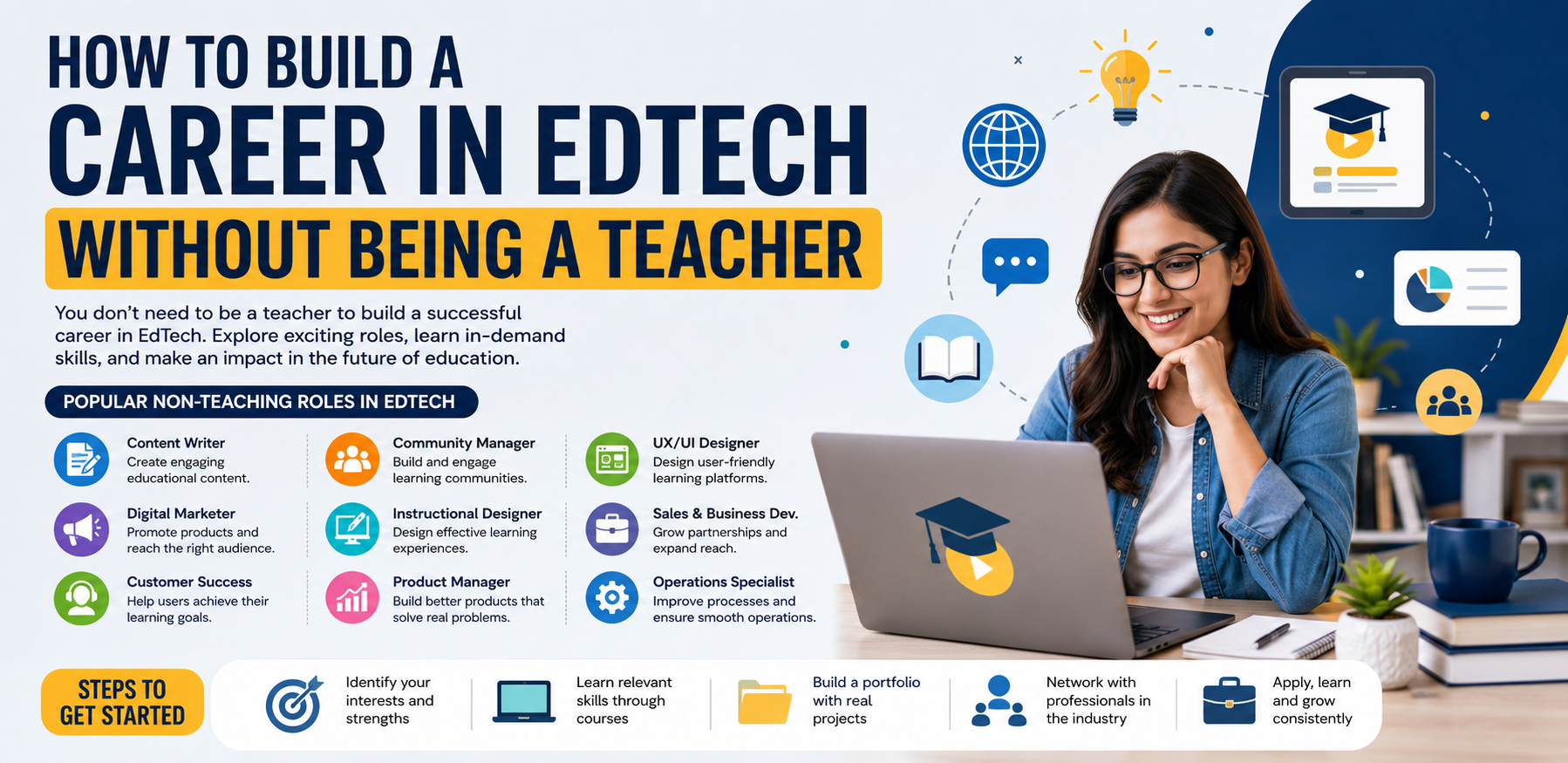
Explore Different Non-Teaching Roles in EdTech
The first step in building a career in EdTech is understanding the roles available.
1. Content Writer
Content writers create educational and marketing content for EdTech companies. Their work may include:
- Blog articles
- Website content
- Course descriptions
- Email newsletters
- Social media posts
- Learning materials
For people who enjoy writing, content writing can be one of the easiest ways to enter the EdTech industry.
2. Content Editor
Editors review content before publication. They improve grammar, structure, readability, and accuracy. They also ensure that educational content meets quality standards.
3. Instructional Designer
Instructional designers organize learning materials and create effective learning experiences. They focus on how information is presented to learners.
Although some instructional designers have teaching backgrounds, many come from writing, communication, or training backgrounds.
4. Community Manager
Many EdTech companies build online communities where learners can connect and support each other. Community managers help engage members, answer questions, organize events, and encourage participation.
This role is ideal for people who enjoy communication and relationship building.
5. Customer Success Specialist
Customer success teams help learners and institutions use educational platforms effectively. They solve problems, answer questions, and guide users through products.
Strong communication and problem-solving skills are important for this role.
6. Digital Marketing Specialist
Marketing professionals help EdTech companies attract learners and grow their businesses.
Their responsibilities may include:
- Search Engine Optimization (SEO)
- Social media marketing
- Email marketing
- Paid advertising
- Content marketing
People with marketing skills can find many opportunities in EdTech.
How to Build a Career in EdTech Without Being a Teacher?
1. Identify Your Transferable Skills
Many people already have skills that can help them enter the EdTech industry.
Examples include:
- Writing
- Research
- Communication
- Customer service
- Social media management
- Graphic design
- Project management
- Data analysis
- Problem-solving
- Leadership
Instead of focusing on what you do not have, focus on how your existing skills can be applied to education and technology.
For example, if you are a content writer, you can create educational articles and learning resources. If you have customer service experience, you can support learners and customers.
2. Learn About Education and Learning
Even if you do not plan to teach, understanding how people learn can help you succeed in EdTech.
You can learn by:
- Reading educational blogs
- Following EdTech companies
- Watching webinars
- Listening to podcasts
- Taking online courses
Learning about education trends will help you understand the needs of learners and educational organizations.
3. Build Relevant Skills to Build a Career in EdTech
After choosing a career path, focus on building skills that employers value.
For Content Writers
Learn:
For Marketing Professionals
Learn:
- Social media marketing
- Google Analytics
- Email marketing
- Advertising platforms
For Community Managers
Learn:
- Community engagement
- Event management
- Communication strategies
- Conflict resolution
For Product Managers
Learn:
- Product development
- User research
- Agile methodologies
- Data analysis
For Customer Success Roles
Learn:
- Customer communication
- Problem-solving
- CRM software
- Relationship management
The good news is that many of these skills can be learned through affordable online courses and practical experience.
4. Create a Strong Portfolio
A portfolio helps employers see your skills and experience.
Depending on your career path, your portfolio may include:
For Writers
- Blog articles
- Educational content
- Case studies
- Website copy
Marketers
- Marketing campaigns
- Social media projects
- SEO examples
- Email campaigns
Designers
- App designs
- Website designs
- Learning platform mockups
Community Managers
- Community growth strategies
- Event plans
- Engagement reports
Employers often care more about practical work than certificates. A strong portfolio can make you stand out from other candidates.
5. Gain Experience Through Volunteering
Volunteering can be a great way to gain industry experience.
You can:
- Help educational organizations create content
- Support online learning communities
- Assist with educational events
- Manage social media for nonprofits
- Contribute to educational projects
Volunteering allows you to build skills, expand your network, and strengthen your resume.
6. Build Your Online Presence to Build a Career in EdTech
A professional online presence can help you attract opportunities.
Optimize Your LinkedIn Profile
Your profile should clearly explain:
- Your skills
- Your experience
- Your career goals
- Your interest in EdTech
Use a professional photo and write a strong headline.
For example:
“Content Writer Helping EdTech Companies Create Engaging Educational Content”
Share Valuable Content
Post regularly about:
- Learning trends
- Educational technology
- Industry news
- Career insights
- Personal projects
Consistent posting can help you build credibility and attract recruiters.
Showcase Your Work
Add portfolio samples, articles, projects, and achievements to your profile.
This helps employers understand your capabilities.
Conclusion: Build a Career in EdTech
Building a career in EdTech without being a teacher is completely possible. The industry needs professionals with diverse skills, including writing, marketing, customer support, operations, community management, design, and product development.
Start by identifying your strengths, learning about the industry, building relevant skills, creating a portfolio, and networking with professionals. Focus on gaining practical experience and showcasing your abilities through projects and online presence.






Comments
Be the first to leave a comment.