

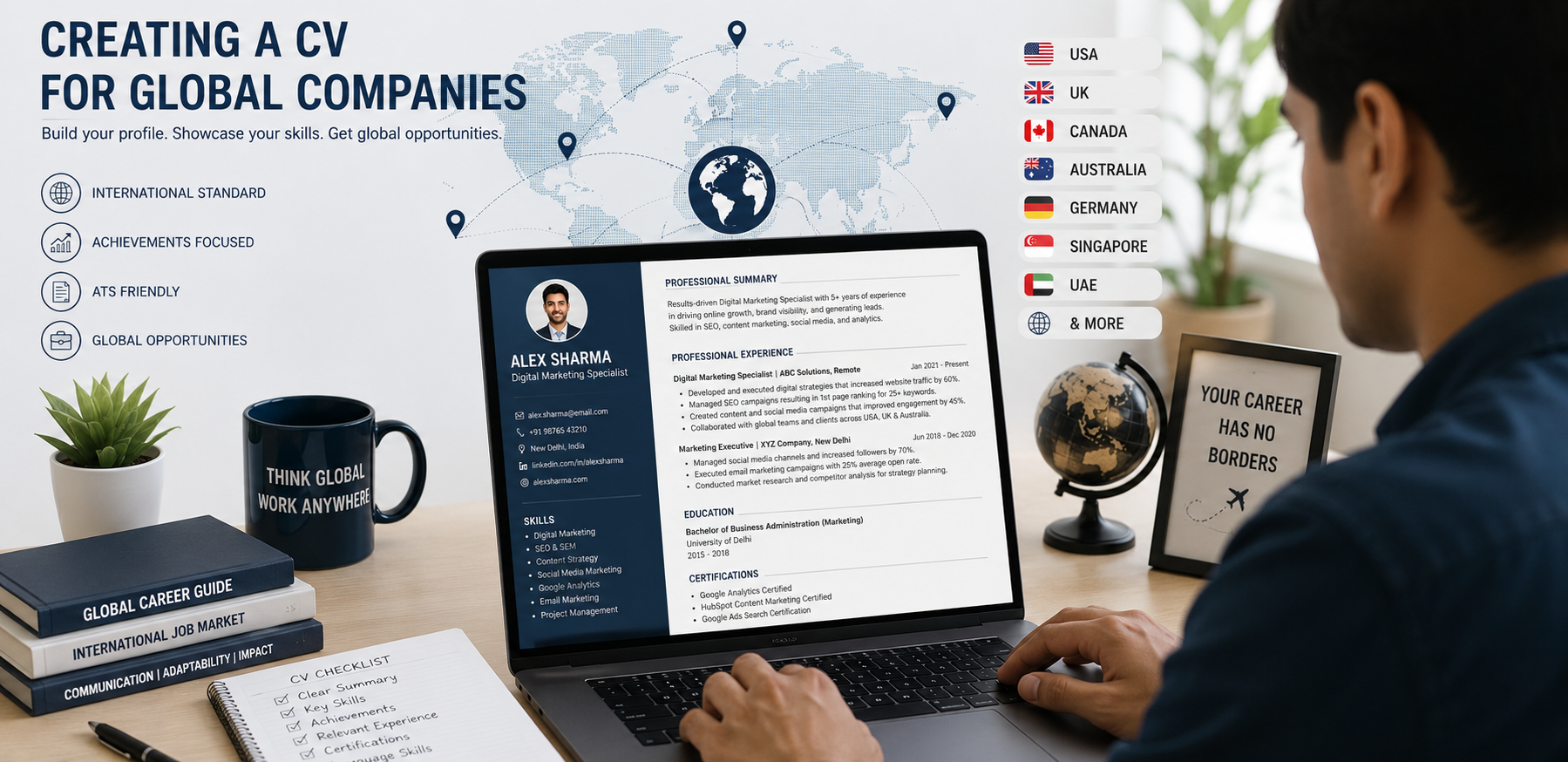
Introduction: Build a Global CV
A CV is very important for getting a job because whenever a candidate applies for a position, the recruiter usually asks for a resume or CV first. A CV helps the recruiter learn many important details about the candidate, making it easier to decide whether the person should be invited for an interview or not.
When you apply for jobs in your own country, you need to create a CV that matches local expectations. But what if you want to apply for jobs in multiple countries? Since different countries have different hiring processes and CV formats, does that mean you need to create a separate CV for every country?
Not necessarily. In most cases, you can create a strong global CV that works across multiple countries with only minor adjustments when needed.
In this article, we are going to explore how you can build a global CV that works in multiple countries.
How to Build a Global CV That Works in Multiple Countries?
1. Start With a Strong Professional Summary
The first thing you should add to your CV is a professional summary. A professional summary is a short introduction about yourself. It explains what you do, what experience you have gained in the past, and what makes you unique.
You should not make your professional summary too long or confusing. Keep it short and clear. However, it should explain who you are, what you do, and the value you can bring to a company. This will help you create a strong professional summary and make a good first impression on recruiters.
2. Use an Internationally Accepted Format
Every country has its own hiring process and recruitment strategy. However, creating a different CV for every country can take a lot of time and may become confusing. Instead, you should create your CV using an international format that is accepted in many countries.
An international CV format includes some important elements. Your CV should have clear headings, a simple and professional font, consistent spacing and formatting, and bullet points instead of long paragraphs. You should also save your CV as a PDF file before sending it.
By following this format, you can use one well-structured CV to apply for jobs in multiple countries.
3. Highlight Achievements Instead of Responsibilities
Many candidates only list their job responsibilities in their resume or CV. Because of this, recruiters may not clearly understand what the candidate has actually accomplished, and it often does not create a strong impression.
Instead of focusing only on responsibilities, you should include your achievements in your CV. When recruiters see achievements, they become more interested in reading your CV because it helps them understand the results you have delivered and the value you have created in your previous roles.

4. Include Skills That Are Relevant Worldwide
If you want to create a global CV that works in multiple countries, you should include skills that are relevant worldwide.
There are many skills that are valuable and in demand in most countries, such as communication, problem-solving, team collaboration, project management, and time management. These skills are useful across different industries and job markets.
Make sure to highlight skills in your CV that are applicable in different countries. This will help employers understand that you can work effectively in a variety of professional environments.
5. Optimize Your CV for ATS Systems
In the past, recruiters used to read resumes and CVs manually. However, with the advancement of AI and technology, many companies now use Applicant Tracking Systems (ATS) to screen applications.
An ATS analyzes CVs and looks for specific keywords related to the job. If the system finds relevant keywords in a CV, it is more likely to move the application forward. If important keywords are missing, the CV may not pass the initial screening.
That is why you should keep ATS requirements in mind when creating your CV. Use relevant keywords, avoid unnecessary graphics and complex designs, and use clear headings. This will help ensure that your CV can be properly read by the system and reach the recruiter.
Conclusion: Build a Global CV
Building a global CV does not have to be complicated. By using an international format, writing a strong professional summary, highlighting your achievements, including globally relevant skills, and optimizing your CV for ATS systems, you can create a CV that works in multiple countries.
A well-structured global CV helps recruiters quickly understand your value and increases your chances of getting interview opportunities around the world.
“A strong global CV helps you compete for opportunities across borders. Build a resume that highlights your skills, achievements, and international readiness with Best Job Tool.”






Comments
Be the first to leave a comment.