

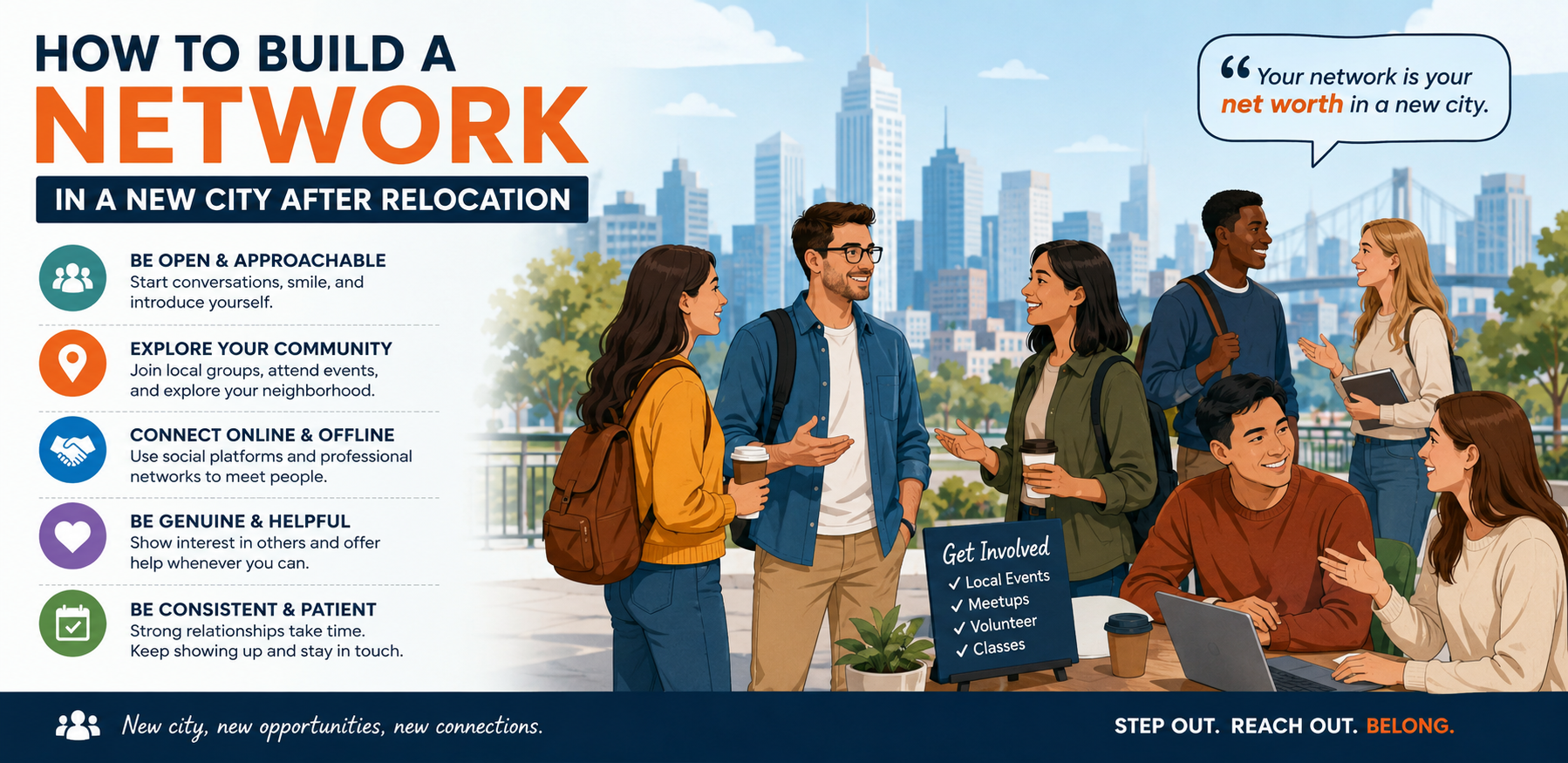
Introduction: Build a Network in a New City After Relocation
Moving to a new city can be exciting. You may have a new job, a new home, and a fresh start. However, relocation can also feel lonely, especially when you do not know many people around you. Building a social and professional network can make the new city feel more comfortable and familiar.
A strong network is not only about meeting many people. It is about creating meaningful relationships with people who share your interests, goals, or values. Your network can include coworkers, neighbors, local professionals, friends, community members, and people you meet through hobbies.
The good news is that you do not need to know anyone before you start. With small and regular efforts, you can build a useful network in your new city.
How to Build a Network in a New City After Relocation?
1. Start With the People You Already Know
Before trying to meet completely new people, look at your existing network. You may already know someone who lives in your new city or nearby.
Check your contacts, LinkedIn connections, college friends, former coworkers, and social media connections. Someone you know may have moved to the same city or may know people there.
You can send a simple message such as:
“I recently moved to the city and I am trying to get familiar with the area. If you know anyone here, I would be happy to connect with them.”
You do not need to ask for a job or a major favor. Your first goal should simply be to reconnect and start conversations.
Your existing network can become the first bridge to your new network.
2. Tell Your Coworkers That You Are New
If you relocated for a job, your workplace can be one of the easiest places to meet people.
Do not limit your conversations to people on your immediate team. Introduce yourself to coworkers from different departments. Ask them about the city, restaurants, parks, public places, events, or activities they enjoy.
You can also join coworkers for lunch or coffee when possible.
For example, instead of eating alone every day, you can ask a coworker, “Do you want to grab lunch together?”
Small conversations can gradually become friendships.
Your coworkers may also introduce you to their friends or invite you to social activities. This can help you meet several people without having to attend events alone.
3. Join Local Groups
Local groups are one of the best ways to meet people with similar interests.
Look for groups based on activities you already enjoy. These could include:
- Book clubs
- Running groups
- Photography groups
- Writing communities
- Fitness classes
- Language-learning groups
- Art classes
- Volunteer groups
- Business communities
- Professional associations
The advantage of joining a group is that you already have a common topic to discuss. You do not have to think of a conversation from nothing.
For example, if you join a book club, you can start by discussing the current book. If you join a running group, you can talk about running routes or upcoming events.
Shared interests make conversations easier and more natural.
4. Attend Local Events
Events can help you meet many people in a short period of time.
Search for workshops, conferences, seminars, exhibitions, cultural events, community gatherings, career events, and networking meetings in your city.
Do not think that every event needs to produce a new friendship or professional opportunity. Your first goal can simply be to have two or three conversations.
Before attending, prepare a simple introduction about yourself.
For example:
“Hi, I am Nagma. I recently moved here and I am getting to know the city. What brought you to this event?”
This type of question gives the other person an opportunity to talk about themselves.
Remember that networking is a conversation, not a competition.
5. Use Professional Networking Platforms
Your online network can be very helpful after relocation.
Update your LinkedIn profile with your new city if you are comfortable doing so. You can then search for professionals, companies, events, and communities in the area.
Instead of sending connection requests to hundreds of people, focus on people who have a genuine reason to connect with you.
You could write:
“Hi, I recently relocated to the city and noticed that we work in similar fields. I would be happy to connect and learn more about the local professional community.”
Keep your message short and polite.
You can also comment on posts from local professionals. Over time, online conversations may become offline connections.
6. Become a Regular Somewhere
One simple way to build relationships is to visit the same places regularly.
Choose a café, library, gym, park, coworking space, or community center that you enjoy. When people see you regularly, familiarity develops.
For example, if you visit the same café every Saturday morning, you may eventually recognize the staff and other regular customers. A simple “hello” can slowly become a conversation.
Relationships often develop through repeated contact.
You do not always need a large networking event. Sometimes, seeing the same people every week is more effective.
Conclusion: Build a Network in a New City After Relocation
Building a network in a new city after relocation does not happen overnight. It requires patience, consistency, and a willingness to start small.
Begin with people you already know, then gradually meet coworkers, neighbors, professionals, community members, and people who share your interests. Attend local events, join groups, volunteer, take classes, and become a regular at places you enjoy.
Most importantly, focus on creating genuine relationships rather than collecting contacts. Listen to people, follow up after conversations, offer help when you can, and give relationships time to develop.
A new city may feel unfamiliar at first, but every conversation, invitation, and shared activity can make it feel more like home. With consistent effort, you can build a network that supports your personal life, career, and sense of belonging in your new community.






Comments
Be the first to leave a comment.