

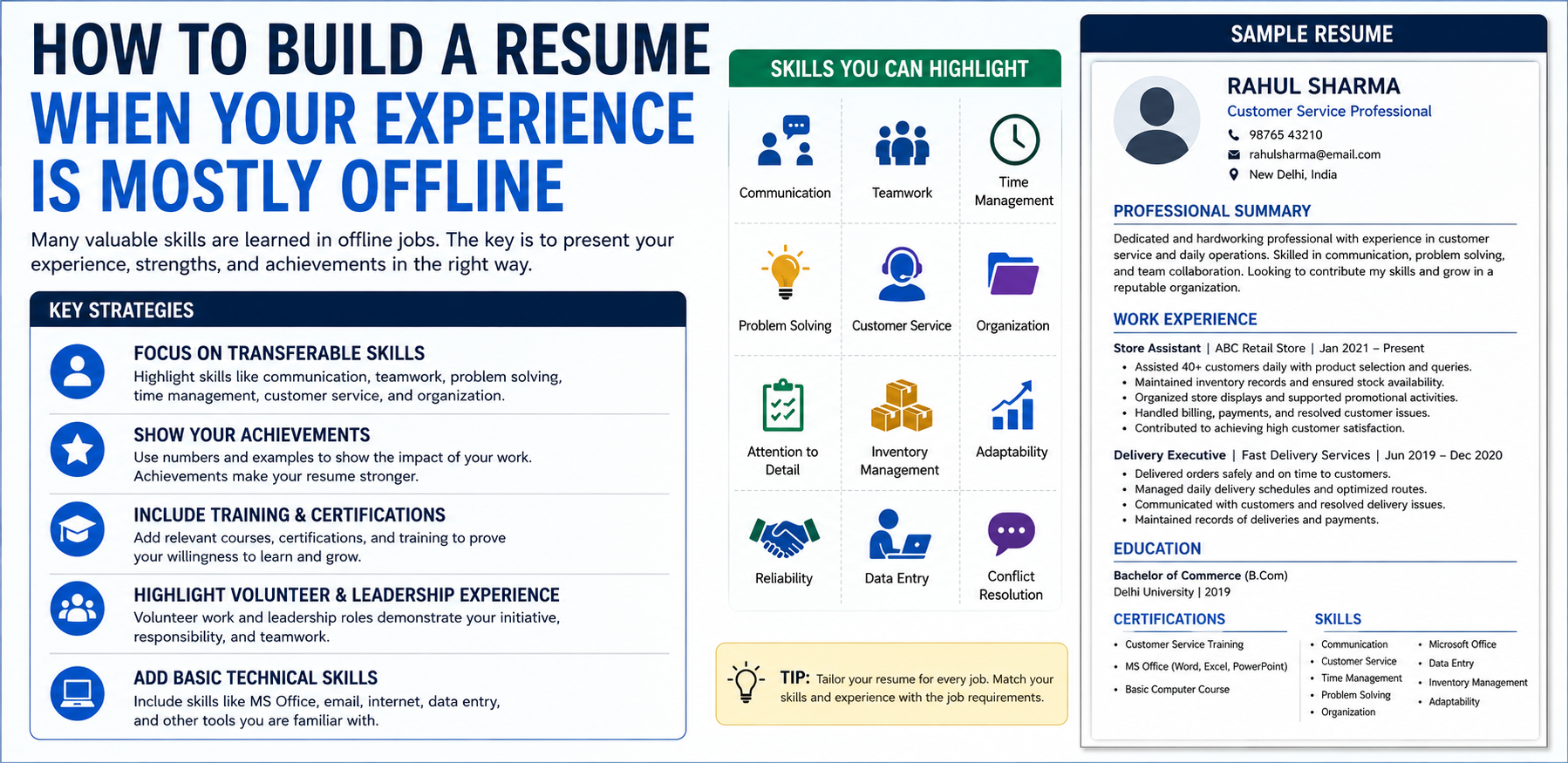
Introduction: Build a Resume
Many people think that they need online work experience, remote jobs, or digital projects to create a strong resume. Because of this belief, people who have worked mostly offline often feel that they do not have enough experience to apply for better jobs.
The truth is that offline experience is also valuable. Many skills learned through offline work can be included in a resume and can help you get interviews. Employers are not only interested in online experience. They also want people who can communicate well, solve problems, work in teams, manage responsibilities, and handle customers.
Whether you have worked in retail stores, restaurants, delivery services, factories, offices, schools, hospitals, or any other offline environment, you can create a professional resume that highlights your strengths.
In this article, we will discuss how to build a resume when most of your experience is offline.
How to Build a Resume When Your Experience Is Mostly Offline?
1. Understand That Experience Is More Than Job Titles
Many job seekers focus only on their job title.
For example:
- Sales Assistant
- Delivery Executive
- Receptionist
- Store Helper
- Cashier
- Customer Service Staff
They think these roles are too simple to impress employers.
However, employers care more about your responsibilities and achievements than your job title.
For example, a cashier may:
- Handle daily transactions
- Manage customer queries
- Maintain records
- Work under pressure
- Solve customer issues
These are valuable skills that can be included in a resume.
Instead of focusing only on your position, focus on what you actually did and what skills you developed.
2. Identify Transferable Skills
Transferable skills are skills that can be used in different jobs and industries.
Most offline jobs help people develop transferable skills.
Some common transferable skills include:
Communication Skills
If you interact with customers, coworkers, suppliers, or managers, you already have communication experience.
Teamwork
Most workplaces require employees to work with others to complete tasks.
Time Management
Meeting deadlines and completing daily responsibilities shows good time management.
Problem Solving
Handling customer complaints or workplace challenges demonstrates problem-solving abilities.
Customer Service
Helping customers and solving their concerns is a valuable skill in many industries.
3. Start With a Strong Professional Summary
The professional summary appears at the top of your resume.
This section gives employers a quick overview of who you are.
Example:
“Dedicated professional with experience in customer service, communication, and daily operations. Skilled at working with teams, managing responsibilities, and providing excellent customer support. Looking to apply my experience and learn new skills in a growing organization.”
A professional summary helps employers understand your value immediately.
Keep it short and focused.
4. Highlight Your Work Experience Properly
Many people simply write their job title and company name.
Instead, explain your responsibilities and achievements.
Example:
Delivery Executive
- Delivered orders safely and on time.
- Maintained communication with customers.
- Managed daily delivery schedules.
- Resolved customer concerns professionally.
- Worked efficiently in a fast-paced environment.
Example:
Store Assistant
- Assisted customers with product selection.
- Maintained inventory records.
- Organized products and store displays.
- Supported daily store operations.
- Helped achieve customer satisfaction goals.
This approach helps employers understand your abilities.
5. Include Volunteer Experience
Volunteer work is also valuable experience.
Many people ignore volunteer activities because they were unpaid.
However, volunteer work can demonstrate:
- Leadership
- Teamwork
- Communication
- Event management
- Community involvement
Examples include:
- Helping at community events
- Supporting local organizations
- Teaching students
- Organizing charity programs
- Managing social activities
You can create a separate section called “Volunteer Experience” and list these activities.
6. Add Training and Certifications
Even if your work experience is offline, training and certifications can strengthen your resume.
Examples include:
- Computer courses
- Microsoft Office training
- Customer service training
- Digital marketing courses
- Communication courses
- Language certifications
- Workplace safety training
Employers like candidates who continue learning and improving their skills.
Include all relevant certifications in a separate section.
Conclusion: Build a Resume
Building a resume when your experience is mostly offline is completely possible. The key is to focus on the skills, responsibilities, and achievements you have gained throughout your work journey. Employers are looking for reliable people who can communicate effectively, solve problems, work with teams, and handle responsibilities professionally.
Instead of worrying about what you do not have, focus on what you have learned through your offline experiences. Highlight transferable skills, include certifications, showcase achievements, and tailor your resume to each job application. When presented properly, offline experience can become a powerful advantage that helps you stand out and move toward better career opportunities.






Comments
Be the first to leave a comment.