

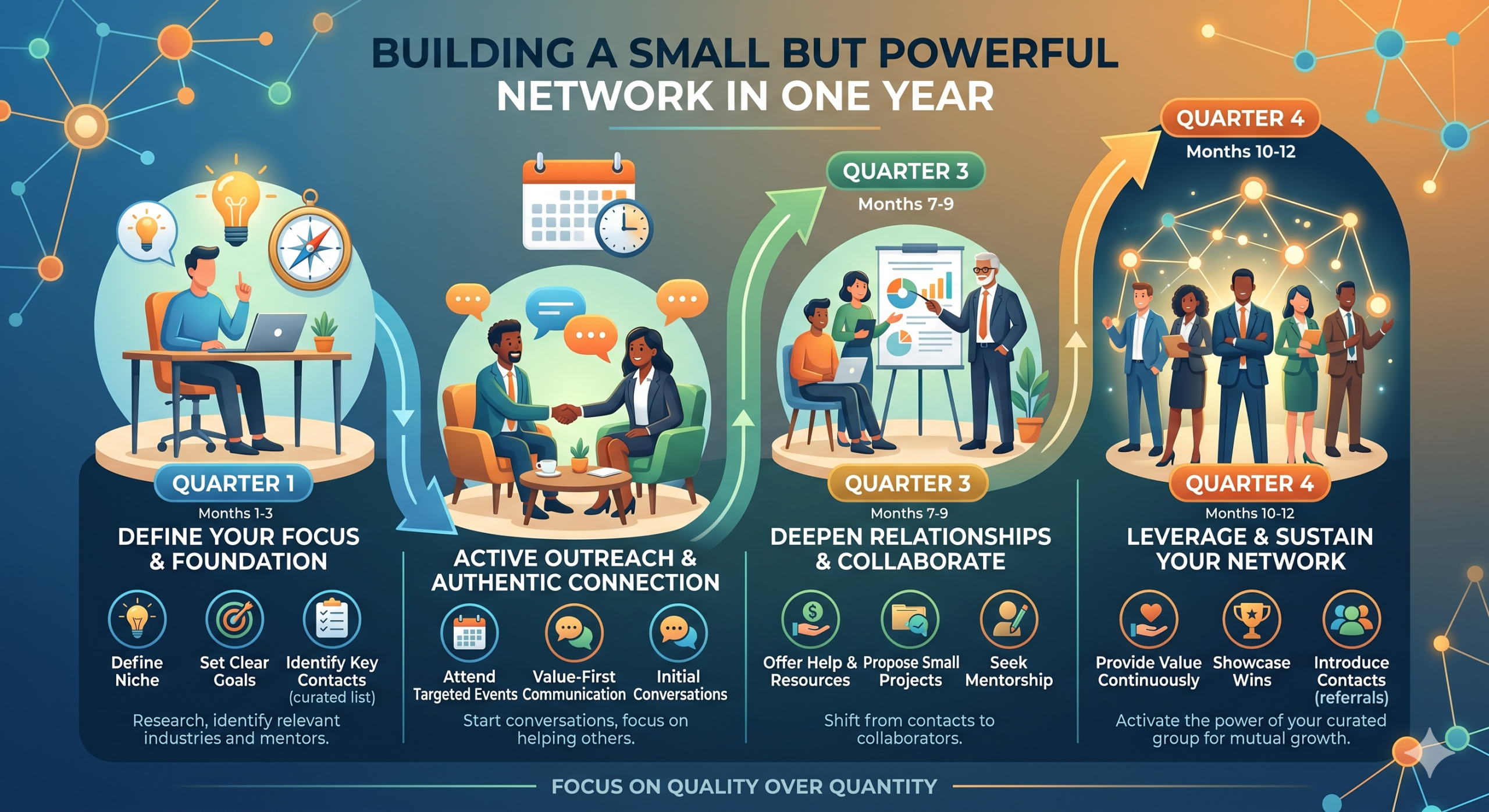
Building a professional network is no longer about collecting hundreds of random contacts or sending connection requests without purpose. In today’s digital and remote-first economy, Powerful meaningful professional relationships create stronger opportunities than large but inactive networks. A focused network can help professionals access better jobs, remote work opportunities, collaborations, mentorship, industry insights, and long-term career stability.
Modern networking is built on consistency, trust, and value. Whether you are a freelancer, job seeker, entrepreneur, remote employee, or digital nomad, building the right circle within one year can completely change your professional growth. Instead of trying to become visible to everyone, successful professionals focus on becoming valuable to the right people.
A strong professional network does not require expensive conferences or constant self-promotion. It requires practical systems, smart communication, and genuine professional engagement. With the right strategy, even a small network can become one of the most powerful assets in your career.
Why Small Networks Create Stronger Career Results
Many professionals assume bigger networks automatically create better opportunities. In reality, smaller and more focused professional circles often generate higher-quality relationships. Trust develops faster when people consistently interact, collaborate, and exchange value.
A powerful network usually includes:
- Industry professionals
- Hiring managers
- Remote workers
- Mentors
- Collaborators
- Freelancers
- Founders and creators
- Skill-based peers
These relationships become useful because they are active and meaningful. Instead of being another forgotten connection, you become someone people remember and trust.
In remote work environments, this becomes even more important. Distributed teams rely heavily on reputation, communication, and reliability. Professionals who maintain strong digital relationships often gain access to opportunities before they become public.
The goal should not be building a network of thousands. The goal should be building 30–50 meaningful professional relationships that continue growing over time.
Define Your Networking Goals Clearly
Networking without direction creates confusion and wasted effort. Before reaching out to people, define exactly why you want to build a professional network.
Your goals may include:
- Finding remote jobs
- Learning from industry experts
- Building freelance opportunities
- Exploring international work
- Transitioning careers
- Growing a personal brand
- Creating business partnerships
- Learning productivity systems
- Expanding travel-work opportunities
When goals are clear, networking becomes intentional rather than random.
For example, a professional interested in remote work should connect with distributed teams, digital creators, recruiters, and remote-first communities instead of trying to network with everyone.
Professionals exploring global opportunities can also use platforms like best job tool to discover remote and international career opportunities while understanding evolving job market trends.
Build a Professional Digital Presence
Your online presence acts as your first impression. Before responding to messages or collaboration requests, professionals usually check profiles, content, and communication style.
A strong professional profile should clearly explain:
- Your expertise
- Your industry
- Your professional goals
- Your key skills
- Your experience
- Your work style
Avoid vague positioning. Specific profiles attract stronger connections.
Instead of writing:
“Motivated professional seeking growth Powerful opportunities”
Use:
- “Remote Content Strategist for SaaS Brands”
- “Freelance UI Designer for Productivity Apps”
- “Digital Recruiter for Global Remote Teams”
Clarity improves professional trust immediately.
Optimize Your LinkedIn Profile
Important profile improvements include:
- Professional headline
- Clear summary section
- Updated portfolio links
- Relevant skills
- Detailed work experience
- Consistent activity
LinkedIn remains one of the strongest networking tools for modern professionals because decision-makers actively use it for hiring and collaboration.
Share Valuable Insights Consistently
Professionals who regularly share useful ideas become more memorable.
Share content related to:
- Remote work experiences
- Productivity systems
- Career lessons
- Travel-testing experiences
- Financial planning habits
- Industry trends
- Skill development
Consistency matters more than perfection. Even one strong post weekly can improve visibility significantly over one year.
Focus on Relationship Quality Instead of Quantity
One of the biggest networking mistakes is trying to connect with too many people too quickly. Strong professional relationships require attention, consistency, and follow-up.
A better strategy is:
- Add a few relevant people weekly
- Start thoughtful conversations
- Stay engaged consistently
- Support others publicly
- Offer value before asking for help
Professional networking should never feel transactional.
Practical Ways to Build Stronger Relationships
Write Meaningful Comments
Instead of generic responses like “Great post,” add insights, examples, or questions.
Send Personalized Messages
Mention common interests, shared goals, or specific work that impressed you.
Share Helpful Resources
Forward useful articles, opportunities, tools, or learning resources.
Celebrate Professional Wins
Support promotions, launches, and achievements genuinely.
These small actions help people remember you positively.
In remote work cultures, digital consistency replaces physical office interaction. Professionals who communicate thoughtfully often build stronger reputations faster.
Join Remote Work and Industry Communities
Professional communities have become one of the most valuable networking environments today. Many opportunities are shared privately inside niche groups before appearing publicly.
Joining the right communities can accelerate both career growth and industry learning.
Useful communities include:
- Slack groups
- LinkedIn groups
- Discord communities
- Industry forums
- Remote work communities
- Professional mastermind groups
However, simply joining groups is not enough. Active contribution creates visibility.
How to Participate Effectively
Do:
- Answer questions
- Share experiences
- Provide solutions
- Participate consistently
- Help other professionals
Avoid:
- Excessive self-promotion
- Spamming messages
- Asking for favors immediately
- Posting without engagement
Professionals who consistently provide value naturally attract stronger opportunities and relationships.
Modern global career platforms like best job tool also support professionals looking for flexible international work opportunities while helping them stay connected to evolving remote industries.
Combine Networking With Travel Testing
Travel testing has become increasingly Powerful popular among remote professionals and digital workers. Instead of relocating permanently, professionals temporarily explore cities and work environments before making long-term lifestyle decisions.
This strategy also improves networking opportunities.
Benefits of Travel-Based Networking
Working temporarily from different locations allows professionals to:
- Meet international professionals
- Explore coworking spaces
- Understand remote work cultures
- Discover regional opportunities
- Build global relationships
- Expand career flexibility
Even short visits to coworking spaces or professional meetups can create long-term career connections.
Smart Networking Strategies While Traveling
Work From Coworking Spaces
Coworking spaces naturally encourage professional interaction and collaboration.
Attend Small Events
Smaller industry gatherings often create deeper conversations than massive conferences.
Document Your Experiences Online
Sharing lessons from remote work and travel improves visibility and attracts conversations.
Maintain Follow-Ups
Most networking value happens after the first interaction. Stay connected through consistent communication.
Travel testing also helps professionals understand living costs, productivity environments, and work-life balance before making large financial or lifestyle commitments.
Build Productivity Systems to Maintain Relationships
Networking becomes ineffective when professionals fail to follow up consistently. Strong relationships require systems.
Busy professionals should create structured networking routines instead of relying on memory alone.
Simple Weekly Networking Routine
Example:
- Monday: Reply to important messages
- Tuesday: Engage with professional content
- Wednesday: Reach out to new connections
- Thursday: Share insights or resources
- Friday: Follow up on conversations
Small consistent actions create stronger long-term results than occasional intense networking efforts.
Use Tracking Systems
Track:
- Important conversations
- Collaboration ideas
- Shared interests
- Career goals
- Follow-up reminders
This keeps networking organized and professional.
Protect Your Productivity
Networking should support career growth, not reduce Powerful focus.
Avoid:
- Endless scrolling
- Constant notifications
- Reactive communication habits
Instead:
- Schedule networking time
- Prioritize valuable conversations
- Focus on meaningful interactions
Professionals who balance networking with productivity maintain better career performance and stronger relationships simultaneously.
Strengthen Financial Stability While Growing Your Network
Financial pressure often weakens networking quality because conversations become overly desperate or transactional. Professionals with stable finances can network more strategically and patiently.
Build Career Security
Financial stability may include:
- Emergency savings
- Freelance income
- Multiple revenue streams
- Remote side projects
- Skill diversification
Financially stable professionals can:
- Explore opportunities calmly
- Attend industry events
- Invest in learning
- Travel for networking
- Take calculated career risks
Invest in Valuable Skills
Your network becomes stronger when your professional value increases.
Focus on developing:
- Communication skills
- Digital collaboration
- Technical expertise
- Problem-solving ability
- Productivity systems
- Remote work efficiency
People consistently recommend professionals who solve problems effectively and communicate clearly.
Platforms like best job tool can also help professionals identify growing industries, remote career paths, and global job opportunities aligned with long-term financial growth.
Measure Your Networking Progress Every Quarter
Most professionals never evaluate whether their networking strategy is actually working. Reviewing progress every few months helps improve results.
Every quarter, review:
- Number of meaningful relationships built
- Career opportunities discovered
- Collaborations created
- Skills learned
- Industry visibility improvements
- Professional trust developed
Signs Your Network Is Becoming Stronger
Positive indicators include:
- More referrals
- Faster responses
- Collaboration invitations
- Private opportunity sharing
- Increased visibility
- Stronger professional trust
Networking success is not measured by follower count. It is measured by relationship quality, trust, and opportunity access.
Even a small network of engaged professionals Powerful can completely transform career growth within one year.
Conclusion
Building a small but powerful professional network in one year is completely achievable when approached strategically. Modern networking is not about chasing attention or collecting endless contacts. It is about creating trusted professional relationships through consistency, value, communication, and long-term engagement.
Professionals who combine networking with remote work adaptability, productivity systems, travel testing, and financial planning create stronger career foundations for the future. A focused network built intentionally can generate opportunities, mentorship, collaborations, and career flexibility for many years.
Instead of trying to become known by everyone, focus on best job tool becoming respected by the right people. Strong professional relationships built patiently over time often become the most valuable investment in long-term career success.






Comments
Be the first to leave a comment.