

Introduction
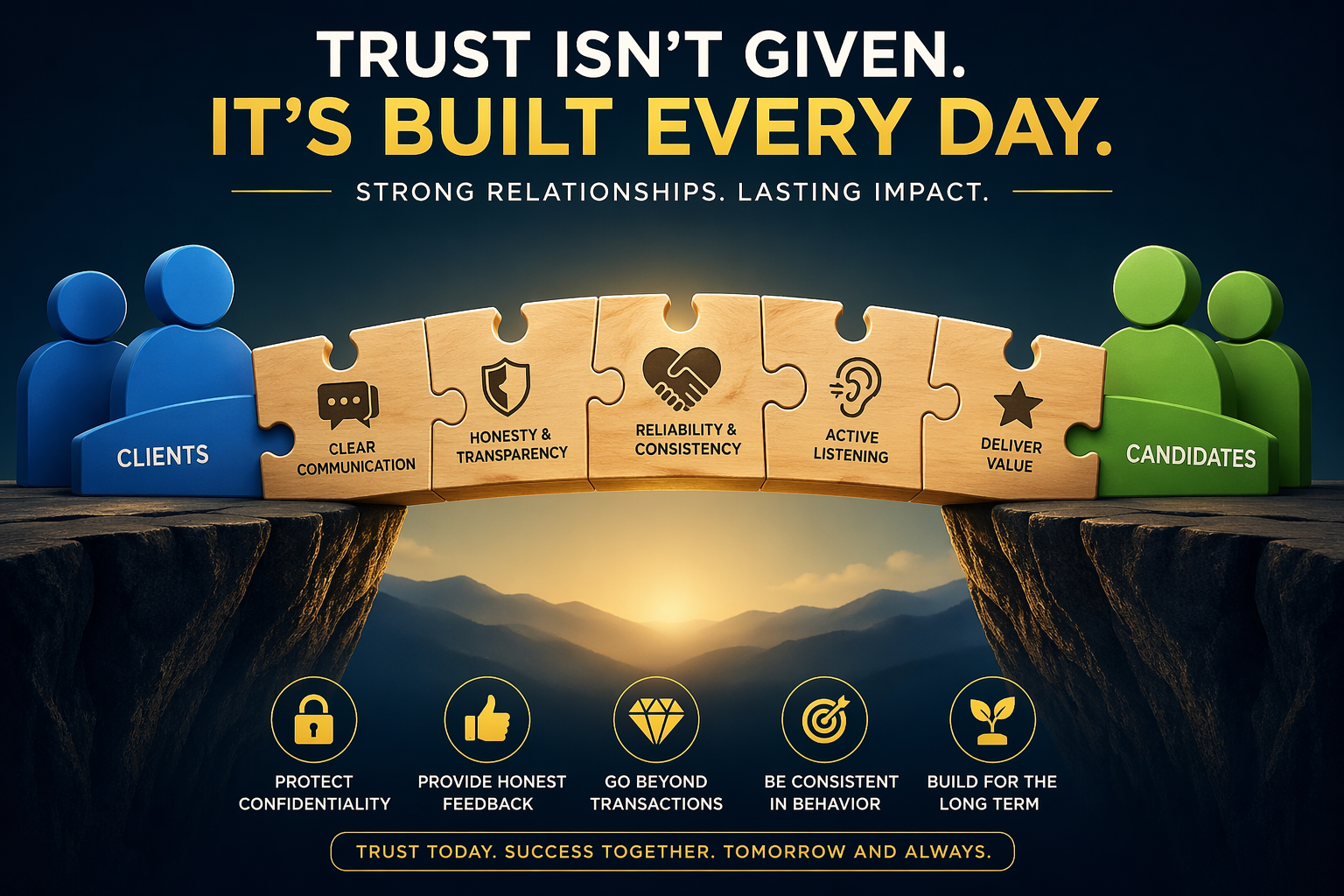
Do you think you need to do big, impressive things to build long-term trust with both clients and candidates? If yes, that’s not correct. Building long-term trust is not about doing big things. It is about being consistent and doing small, reliable actions over time. Whether you are a recruiter, a freelancer, or working in any client-facing role, trust becomes your strongest asset.
In this article, we will explore how you can build long-term trust with both clients and candidates in a way that truly lasts.
How to Build Long-Term Trust With Both Clients and Candidates?
1. Be Transparent From the Start
The fastest and most effective way to build long-term trust is to be transparent from the start.
When you share all the important information from the beginning, both clients and candidates have the same understanding. This keeps things clear and avoids confusion or misunderstandings.
To stay transparent with clients, clearly explain what you can deliver, your timelines, and any limitations.
To stay transparent with candidates, be honest about the role, salary range, growth opportunities, and even possible challenges.
2. Communicate Consistently to Build Long-Term Trust
Being consistent is very important for building trust, whether with clients or candidates. However, many people become annoying while trying to be consistent because they don’t understand the difference between being consistent and being pushy.
If you message someone every day or send random messages just to get noticed, it can annoy them. Because of this, they may lose interest and trust.
So, be consistent in the right way. Give regular updates, check in without any hidden agenda, and share useful insights or opportunities.
Consistency shows reliability, and reliability builds trust.
3. Set Expectations—and Stick to Them
“Set expectations and stick to them” means that whatever expectations you create or promises you make, it is very important to fulfill them to build trust.
Keeping your promises is a key factor that can either build trust or break it. Promises are not just big commitments—even small promises matter.
For example, if you say, “I will get back to you by tomorrow,” then you should definitely do it. Even one broken promise can damage trust.
4. Listen More Than You Speak
A very important step to build trust quickly with clients or candidates is to listen more than you speak.
If you don’t listen properly, the other person may feel that you don’t value their thoughts. Because of this, trust does not build easily. That’s why listening and understanding are more important than speaking.
For clients, try to understand their business goals, not just their immediate needs.
For candidates, try to understand their career goals, not just the job they are applying for.
When people see that you are trying to understand them and value their thoughts, they feel comfortable and start sharing openly—and this is how trust is built.
5. Give Honest Feedback to Build Long-Term Trust
Giving honest feedback is another important factor in building long-term trust. Sugarcoating may feel polite, but honest feedback builds real respect.
Be clear and direct. Tell clients when their expectations are unrealistic, and tell candidates where they need to improve. If you don’t give honest feedback, candidates cannot improve, and clients may continue to have unrealistic expectations.
This can make it difficult or even impossible to deliver good results, which can affect your work quality and break trust.
That’s why it’s important to give feedback honestly—but always in a respectful way.
6. Protect Confidentiality
Protecting confidentiality is one of the most important factors in building trust, and everyone must follow it.
To maintain confidentiality, do not share a candidate’s information without their permission, and do not reveal a client’s strategies or sensitive details, even casually.
Once confidentiality is broken, it becomes very difficult—almost impossible—to rebuild trust.
Conclusion
Long-term trust isn’t built through big promises—it’s built through consistent actions, honest communication, and genuine intent over time. When you focus on being reliable, transparent, and respectful in every interaction, both clients and candidates begin to see you not just as a service provider, but as someone they can truly depend on.
In the end, trust becomes your biggest advantage. It brings repeat opportunities, stronger relationships, and a reputation that speaks for you even when you’re not in the room. And once that level of trust is built, it doesn’t just support your work—it grows it.
“Build lasting trust and create meaningful professional relationships — explore opportunities on Best Job Tool where credibility and consistency drive success.”






Comments
Be the first to leave a comment.