

Introduction: Combine Gut Feeling and Data
A company depends on recruiters to select the best candidates so they can use their skills to help the company grow. That is why it is the recruiter’s responsibility to maintain the company’s trust and choose the right candidate. Because of this, recruiters pay attention to many important things during hiring.
To select the best candidate, recruiters ask many questions to understand whether the candidate is the right fit for the company or not. But hiring decisions cannot be made only on data. Recruiters also need to pay attention to their gut feeling when choosing a good candidate.
A recruiter should not fully depend on data, and they should also not fully depend on gut feeling. Recruiters should combine both for better hiring decisions.
In this article, we will learn how recruiters can combine gut feeling and data in hiring decisions.
How to Combine Gut Feeling and Data in Hiring Decisions?
1. Use Data to Shortlist Candidates
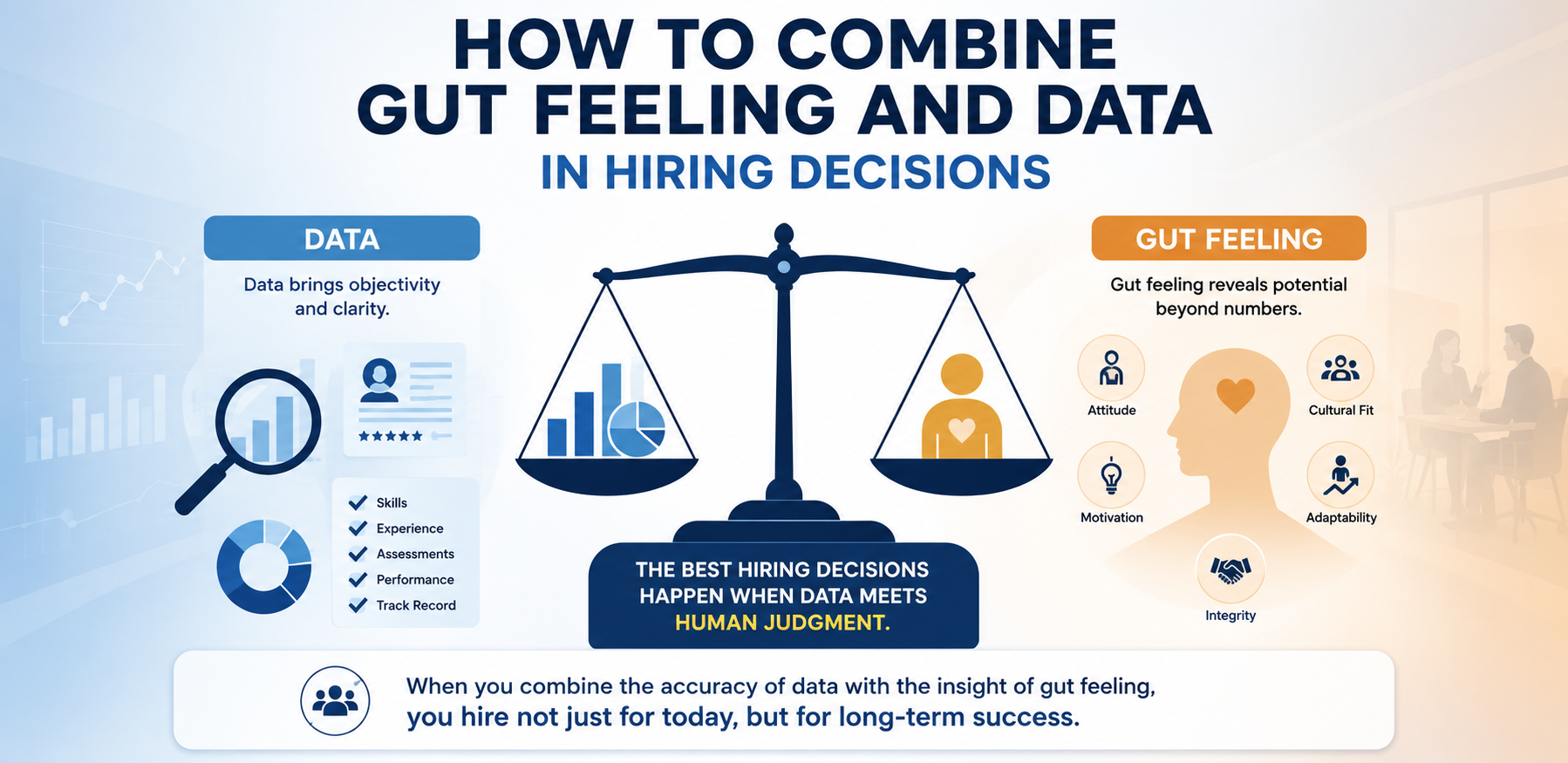
First, recruiters need to shortlist candidates with the help of data. Many candidates apply for the same job role, so recruiters need to select only the eligible candidates. In this stage, gut feeling is not useful. To filter relevant candidates, recruiters should use data.
Recruiters should analyze measurable factors such as required skills, experience level, assessment performance, and relevant achievements.
At this stage, recruiters should not use their gut feeling. They should only use data so that the shortlist remains fair.
2. Use Structured Interviews
Now, after the candidates are shortlisted, the next step is to take a structured interview. Recruiters should ask similar questions to every candidate so they can compare their answers properly.
Recruiters can ask questions like: “How do you handle deadlines?”, “How do you respond to feedback?”, or “How do you handle pressure?”
By asking these questions, recruiters learn more about the candidate. Some answers provide useful data, while some help recruiters understand the candidate’s behavior and attitude.
3. Observe Behavioral Signals Carefully
Now comes the stage where recruiters need to use their gut feeling.
As we discussed in the previous point, recruiters ask the same questions to candidates to understand their behavior.
Now, recruiters should observe the candidate’s communication style, listening skills, way of explaining things, ability to handle problems, handling pressure, and reactions during the interview.
If a candidate’s behavior feels respectful and professional, they may be considered a suitable candidate. But if the candidate’s behavior seems inappropriate or unprofessional, they may be rejected.
4. Validate Your Instinct With Evidence
The next step is also related to gut feeling.
Many candidates apply for the same job role, and recruiters learn many things about them during interviews, such as their behavior, experience, and communication style. Because of this, some candidates leave a positive impression on the recruiter, while some do not.
In such cases, recruiters should ask themselves questions like: “What specific behavior created this feeling?” or “Is there any evidence supporting this impression?”
These questions help prevent emotional hiring decisions.
5. Include Multiple Evaluators
Including multiple evaluators is also a great way to combine gut feeling and data in hiring decisions.
Having multiple evaluators is important because the more recruiters or interviewers involved, the better a candidate can be evaluated. If there is only one interviewer, they may not notice every detail. But with multiple interviewers, one interviewer may focus on technical skills while another may notice the candidate’s communication abilities.
When feedback from multiple interviewers is combined to select a candidate, the hiring decision becomes stronger and more balanced.
Conclusion: Combine Gut Feeling and Data
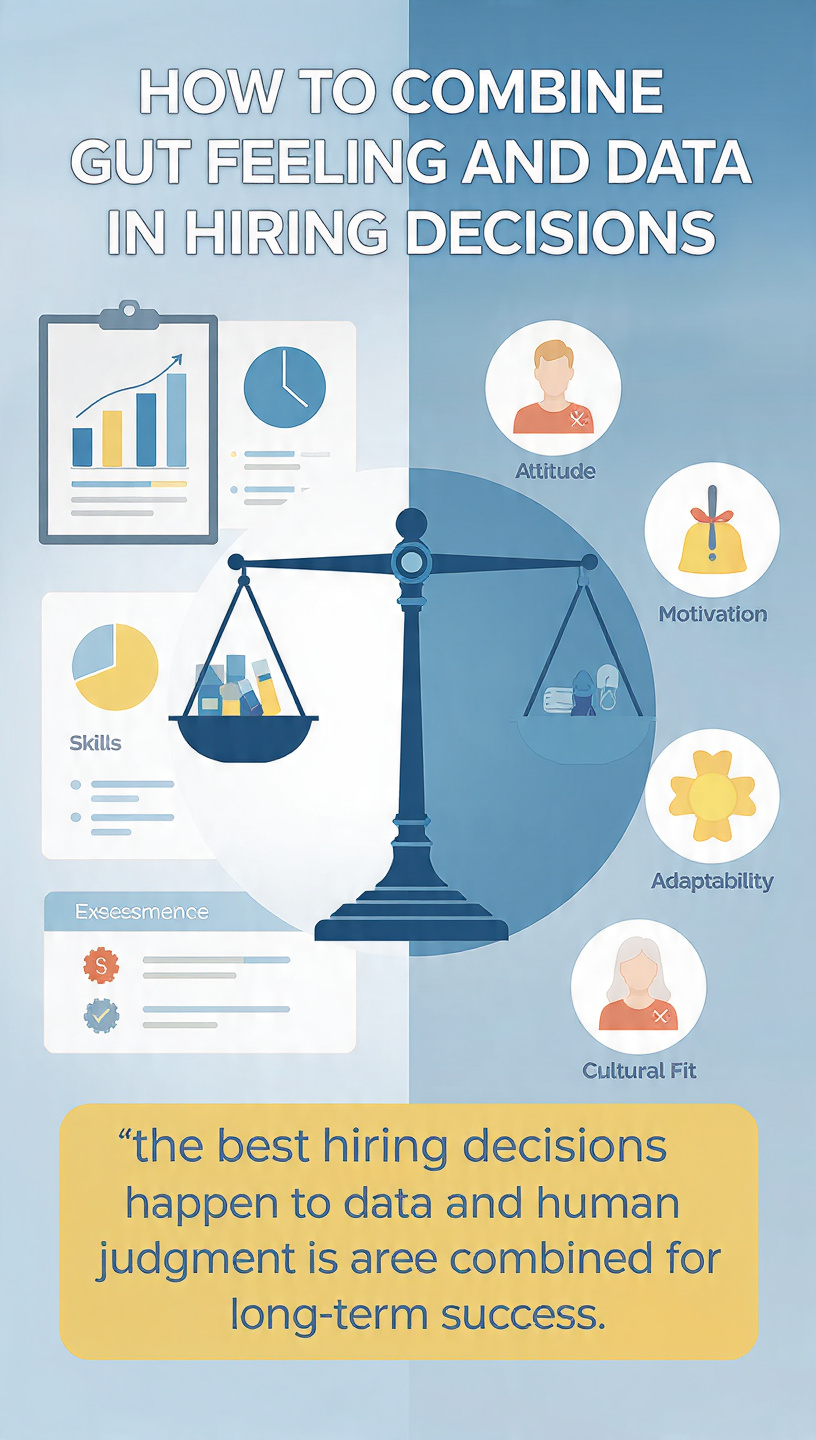
Combining gut feeling with data in hiring is about balance, not choosing one over the other. Data gives structure, fairness, and clear comparison between candidates, while gut feeling helps you understand behavior, attitude, and potential that numbers alone cannot show.
When both are used together in a structured way—data for shortlisting and evaluation, and intuition for observing human qualities—hiring decisions become more accurate and reliable. This balance reduces bias, improves team quality, and increases the chances of long-term employee success.
“Make smarter hiring decisions by balancing data and intuition, and explore better recruitment strategies on Best Job Tool.”






Comments
Be the first to leave a comment.