

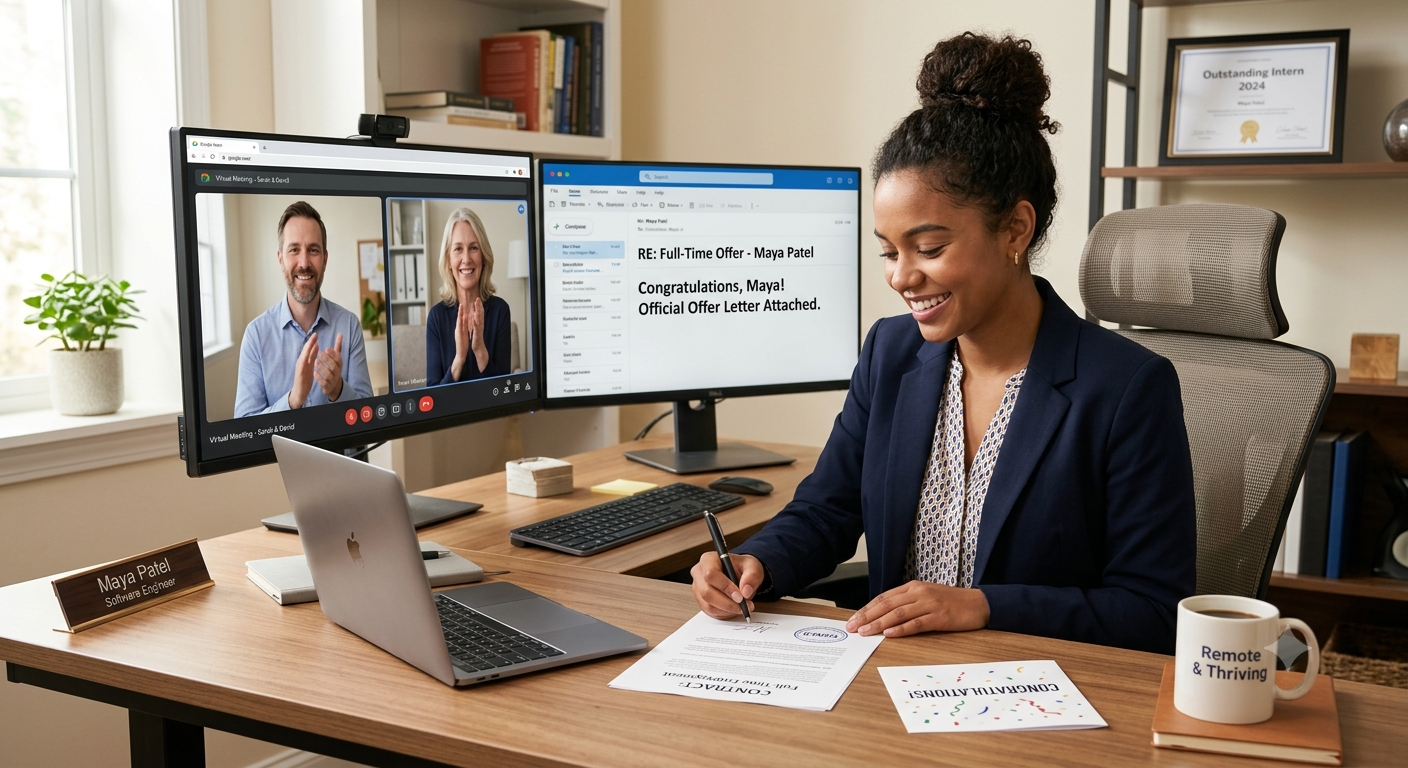
Introdution: Remote Internship
A remote internship is a great chance to gain experience and eventually transition into a company as a full-time employee. The key to successfully doing so lies in the opportunity to demonstrate one’s competencies and work ethic without direct supervision in the office environment
To truly make the most of a remote internship and transition into a full-time job, you should think critically about strategies that can maximize your chances of earning a permanent position. This article will discuss methods by which to achieve this goal.
How to Convert a Remote Internship Into a Full-Time Offer?
1. Treat the Internship as a Full-Time Position
Treat every internship, regardless of location, as a full-time position from day one. As such, it is essential to display strong work ethic and competencies throughout the duration of employment. This does not mean working excessive hours or neglecting personal responsibilities to work extra shifts; it means showing up, completing your assigned tasks, and doing your job reliably and on time.
Managers will not hesitate to promote remote workers who demonstrate dependability, as the ability to work from home requires a high degree of responsibility
To display strong work ethic, create a work schedule and adhere to it. Furthermore, if you complete your work ahead of schedule, ask whether there is anything else you can do to support the company.
2. Communicate Effectively
The nature of remote work is such that direct communication is difficult, meaning that other, indirect methods of communication should be utilized. Remote employees should constantly update their managers on the status of ongoing projects. Furthermore, if one encounters a problem that requires assistance, it is advisable to make reasonable efforts to solve the issue before contacting one’s manager for help.
It is of utmost importance that communication is succinct and clearly worded, as unnecessary chatter will distract both the sender and receiver of a message. For example, if one finds oneself unable to complete a requested task, it is best to say so and describe the extent of one’s and the amount of help required. Strong communication skills demonstrate a level of professionalism and maturity, which leave a lasting impression on recruiters.
3. Exceed Job Expectations
One’s manager will not hesitate to retain an employee who displays initiative and goes above and beyond what is expected of them. While it is important that assigned tasks are completed, it is also necessary to take extra initiative to demonstrate that one has a genuine interest in the company. Some ways to demonstrate this are by identifying ways to improve office practices, assisting other employees, researching relevant information that could be beneficial to the company, or offering advice when needed.
There is no requirement to reinvent the wheel every time one gets the chance to demonstrate initiative; rather, small changes that make the workplace slightly more efficient are viewed favorably by managers.
However, it is important not to complete assigned tasks at the expense of one’s own responsibilities.
4. Develop Professional Relationships
While remote work allows for a considerable amount of independence, it does not eliminate the need for interpersonal skills altogether. Remote employees should still strive to develop strong professional relationships with their colleagues by engaging in friendly small talk, especially if the opportunity presents itself. Moreover, employees should always display a certain level of professionalism with their managers. Understanding a manager’s preferences and requirements is essential for long-term professional success.
5. Ask for Constructive Feedback
Remote employees should utilize their managers as resources for constructive feedback. It is unwise to reach the end of one’s internship only to realize that poor performance has led to disqualification from employment. Instead, new remote workers should ask their supervisors for critical feedback that will allow them to adjust their performance in accordance with the expectations of the management.
When criticized, one should not get defensive, as this will only lead to resentment and frustration among co-workers. Instead, accept the criticism and implement the changes suggested by one’s manager. A worker who is able to effectively apply constructive criticism will find that their supervisor has developed a greater degree of trust in their abilities.
6. Keep Track of Accomplishments
Workers in remote positions should keep a log of achievements and contributions to the company. It is important to document the impact that one has made on the organization. Doing so will allow one to identify the ways in which they have positively contributed to the company, as well as the ways in which they may need to improve. For example, if one helped the marketing department on one occasion, instead of stating that one has “helped with social media,” one can say that one has “developed social media strategies and executed a content calendar.”
This information can be utilized later when requesting consideration for full-time employment, as it demonstrates the value that one brings to the position. Keeping track of accomplishments is also useful when compiling one’s resume, as it allows one to identify areas in which they excel.
7. Show Interest in Full-Time Employment
If one hopes to transition from a remote internship to a full-time position in the same company, it is unwise to assume that the management will recognize this and take appropriate action automatically. One should inform one’s manager of one’s intentions.
A brief request, such as asking if there are any opportunities to continue working with the company, is all that is needed. As one’s internship nears its end, one can send a message saying that one has enjoyed working with the company and would like to explore other opportunities, if any, to continue collaborating.
This will allow one’s manager to address any questions or concerns regarding the transition to full-time employment.
8. Make a Good Impression During the Final Weeks
The final weeks of a remote internship are vital to ensuring continued employment with the company. It is important to do one’s best work and leave the organization in the best condition possible. Making the transition seamless for the management will ensure that remote workers continue to have opportunities for full-time employment.
Employees should always express gratitude to everyone who has assisted them during their internship, even after the completion of the remote position.
Conclustion: Remote Internship
Converting a remote internship into a full-time position requires more than simply completing assigned tasks. To maximize the chances of transitioning from a remote internship to full-time employment, one should treat the position like any other full-time job and put in consistent effort. Additionally, remote workers should seek to build professional relationships and exceed job expectations by demonstrating initiative. Finally, remote employees must remember that their work environment provides an incredible opportunity to make a positive impression. By displaying excellent work ethic and making the manager’s job easier, remote workers can ensure that their positive contributions will be rewarded by being asked to continue working as a full-time employee.
Turn your remote internship experience into a full-time career opportunity. Showcase your skills, highlight your achievements, and find the right opportunities with the Best Job Tool.






Comments
Be the first to leave a comment.