

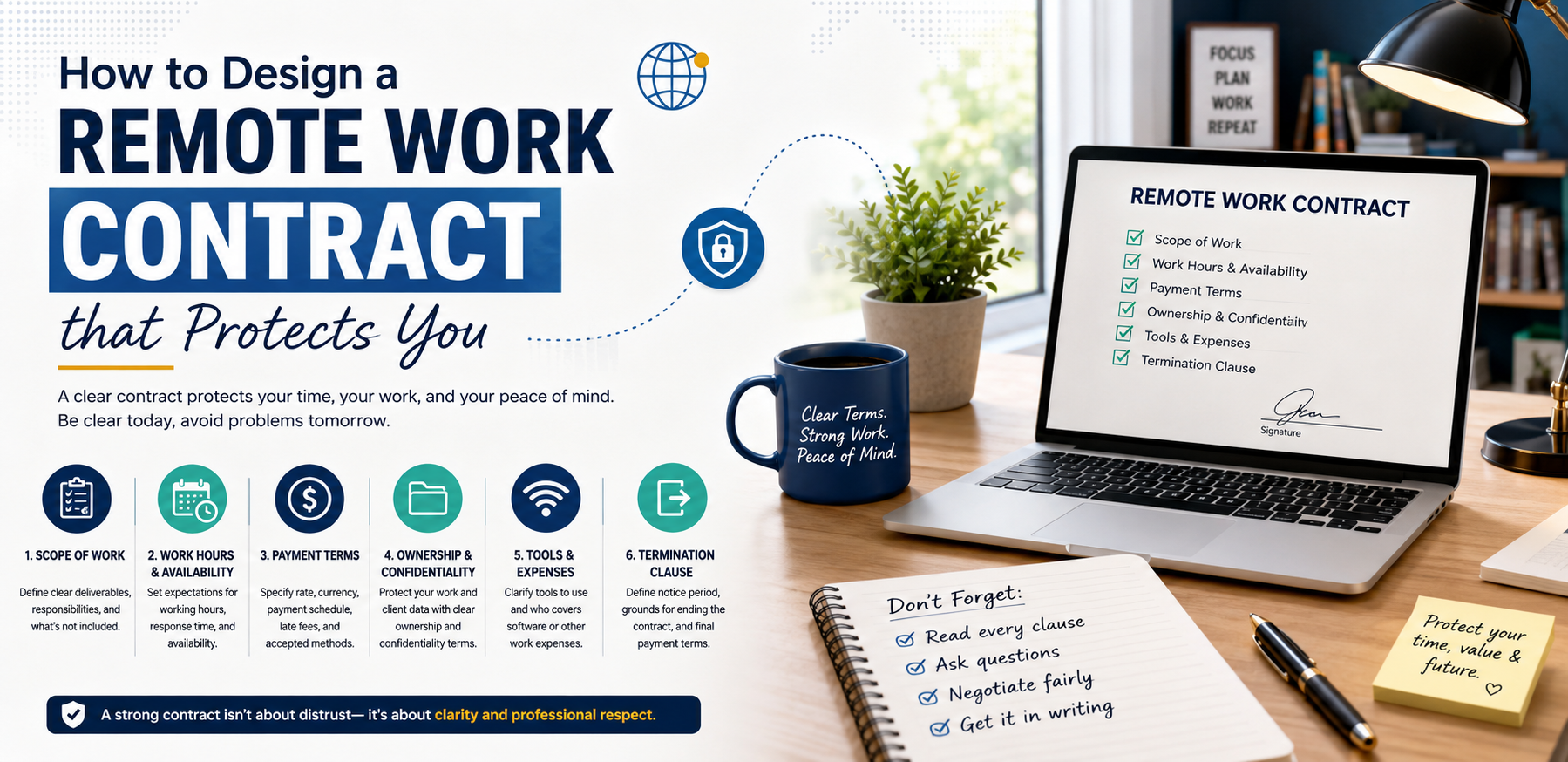
Introduction: Remote Work Contract
The process of defining and implementing a remote employment agreement may be a bit tricky. On the one hand, as a remote employee, you may think that your job involves working from home, taking part in online meetings, completing your tasks, and submitting your work. However, there might be instances when working away from the office can become problematic due to the lack of a written agreement.
This agreement is essential due to the possibility of the employer changing working hours, requiring additional work, expecting one to be available at any time, or raising misunderstandings regarding payment and days off. Therefore, it is crucial to understand How to design a remote work contract that protects you.
How to Design a Remote Work Contract that Protects You?
1. Begin With Your Employment Position
Your position is the first item that should be mentioned in remote work contracts. The positioning should contain the description of your position and the scope of work you are expected to perform.
For instance, it is not acceptable for a contract for a content writer to require him/her to perform sales responsibilities or to provide customer support unless previously discussed.
The job responsibilities should be stated clearly and in simple language to avoid misunderstandings.
2. Note Your Salary
Your salary amount must be accurately written in the contract. Do not rely simply on oral assurances. The contract should state the amount of salary or payment per month, the time of payment, and the way it will be paid. If there are bonuses, commissions, or payments in return for performance, these should also be mentioned.
If you are a freelancer, state whether you will be paid hourly, per job, or monthly. Be sure to check other deductions too. A proper salary section will make your payment clear.
3. Indicate Clearly Your Working Hours
Working at home does not mean you are accessible for 24 hours. Your agreement must mention your standard working hours.
It should also mention your working days and planned break hours. For instance, it might state that you will be working from Monday to Friday, from 10 a.m. to 6 p.m. If the company requires you to have additional working hours, the agreement should clarify how this can take place and whether extra salary will be provided.
This point is really significant because a lot of employees working remotely have to face situations when they get the messages late at night or during the weekend.
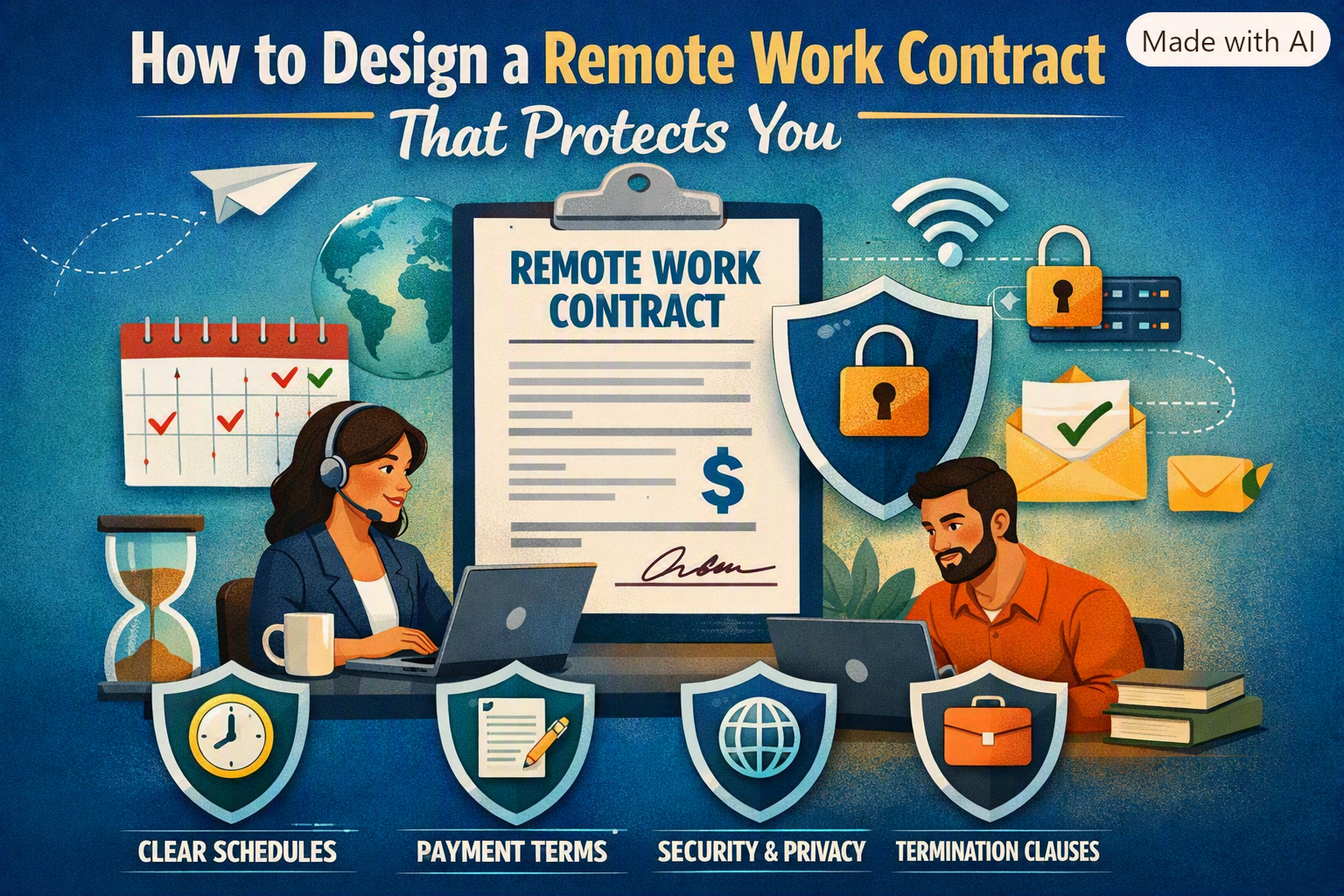
4. Include Overtime and Additional Work
There are times when people working from home are requested to perform additional work since they are home already. This can lead to a situation where it becomes normal for remote employees to be asked to do more.
The contract should state the guidelines on additional work.
It can say whether extra work is compensated, whether the extra hours can be used as vacation days, or whether activity is part of the employee’s salary.
5. Never sign anything that you cannot understand
One of the easiest ways to protect yourself from being harmed is to review the entire document before signing it.
Do not sign if you do not understand or feel any pressure to do so right away. If something is unclear, make sure that you ask questions.
You can also have a legal professional examine and analyze the document for you, especially when certain assets, international work, or complicated legal points are involved.
6. Keep All Proof
Once you have signed the contract, make sure that you have your own copy. It would also be a good idea to keep important emails/message in writing to confirm any changes to your pay, working time, obligations, or any other significant terms. Written proof can help if, after some time, both parties do not agree on their version of a contract.
A good remote work agreement must be precise about every detail related to your job. You should know your rights and responsibilities before starting a remote job, so that you can be more confident in it.
Conclusion: Remote Work Contract
Working from home makes life easier but only in case the work rules are understood. A good contract provides you with the necessary information concerning what you are expected to do and what you can expect from your company. Before you sign it, check your salary, working hours, vacation, overtime, equipment, confidentiality, and notice period.
Also, don’t hesitate to ask questions if there is something unclear about your contract. Spend some time reading the contract and you’ll be safe from various troubles in the future.
“A clear remote work contract can protect your time, responsibilities, pay, and expectations. Review important terms carefully, clarify everything before signing, and make sure your agreement supports a healthy working relationship. Protect your career and work smarter with Best Job Tool.”






Comments
Be the first to leave a comment.