

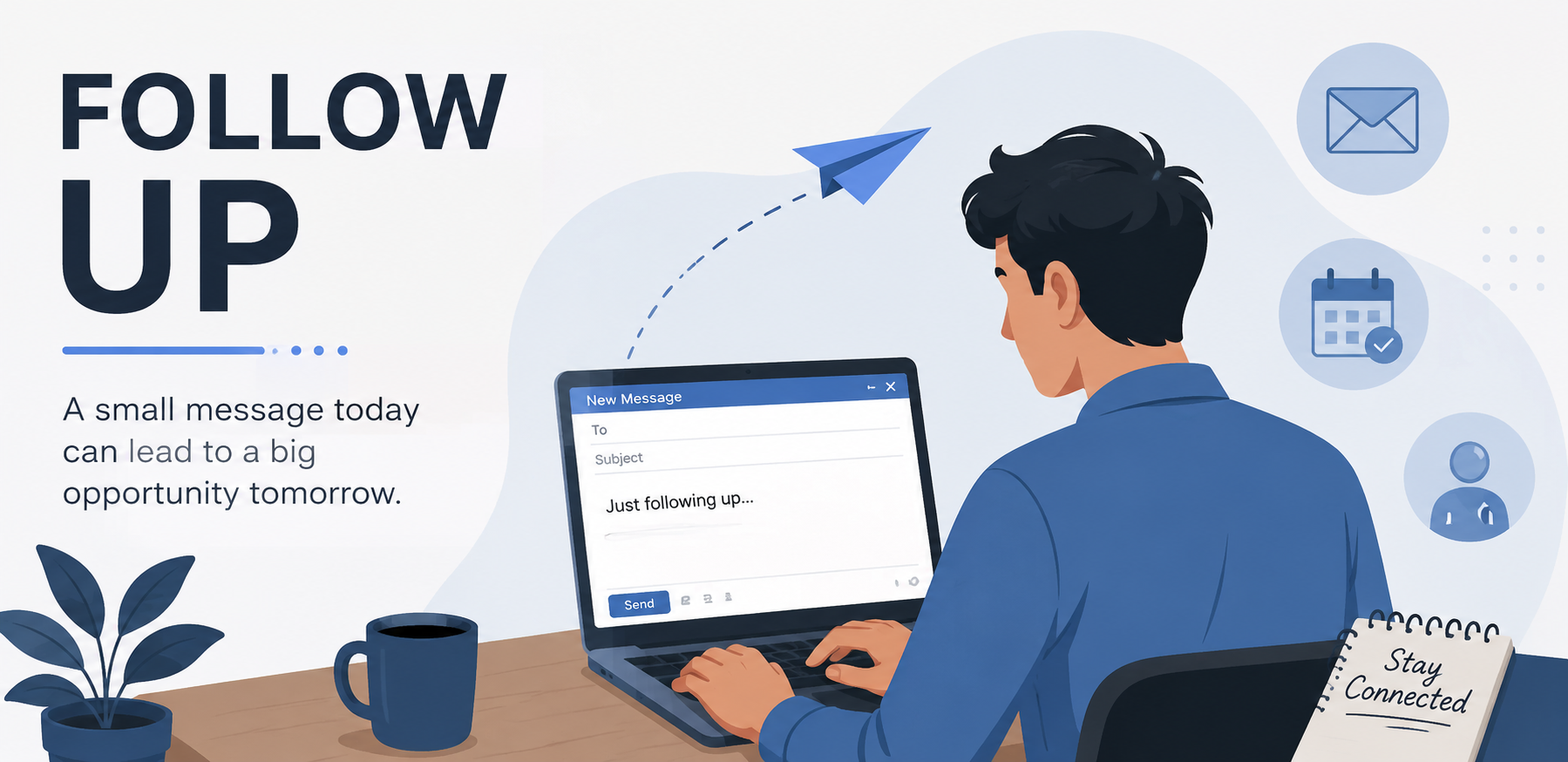
Introduction: Follow Up
A follow-up means contacting someone again after your first conversation, message, interview, meeting, or application to get an update or remind them about you.
It is an important step if you want an update, but there is a right way to follow up. If you follow up properly, you look professional. But if you do not follow up in the right way, you can sound pushy or desperate. Because of this, the other person may think you are unprofessional, and your image can go down.
That is why it is very important to learn how to follow up without sounding pushy or desperate. You can learn this with the help of this article because we are going to share some effective and practical tips for professional follow-ups.
How to Follow Up Without Sounding Pushy or Desperate?
1. Understand the Purpose of a Follow-Up
First, you need to understand why you want to follow up and the reason behind it. Because if you do not know the reason, you will not be able to send the right follow-up message according to the situation.
It does not mean forcing someone to reply to you. You need to follow up with professional communication so that you stay visible, show responsibility, demonstrate genuine interest, and build a professional relationship.
2. Wait for the Right Amount of Time
A follow-up is done to get an update, but that does not mean you can send a follow-up message to someone anytime you want. If you want to look professional and do not want to sound pushy or desperate, then you need to wait for the right amount of time.
Every situation has its own timing for sending a follow-up. For example, after a job interview, you should wait around 5 to 7 business days before following up. After sending a freelance proposal, you should wait about 3 to 5 days before checking in.
In the same way, every situation has a specific time for follow-ups. If you message too early, you can sound pushy or desperate. And if you follow up too late, people may see you as careless.
3. Keep Your Message Short
One of the biggest mistakes many people make during follow-ups is sending very long messages. People think that if they send a detailed and long message, the other person will be impressed and reply faster. But that is not true. If you send unnecessary long messages, you may get ignored because most people do not have enough time to read long messages.
That is why, while following up, you should keep your message short and relevant. This makes your communication look professional.
While writing a follow-up message, keep some important things in mind. You should include a polite greeting, a reminder about the previous conversation, a short reason for following up, and appreciation for their time.
If you keep your message clear and short, the other person sees you as professional. They are more likely to read your message instead of ignoring it, and the chances of getting a reply also become higher.

4. Avoid Emotional Language
Another important way without sounding pushy or desperate is to avoid emotional language. When people add emotional words to follow-up messages, they can look unprofessional, and the message may feel forceful. Because of this, people may ignore the message, and it can also create a negative impression. That is why you should never include emotional wording in your follow-up messages.
To make sure your message does not sound emotional, there are many phrases you should avoid, such as “I really need this job, please reply soon,” “I have been waiting for days,” or “I am very frustrated.”
If you use sentences like these in your message, you may look unprofessional, and it can create pressure on the other person. Because of this, you may sound desperate.
5. Sound Helpful Instead of Demanding
If you want your follow-up message to look professional and get a faster reply, then you should sound helpful instead of demanding.
You should structure your message in a way that makes the other person feel that you are not greedy or selfish. Instead, you genuinely want to stay connected and explore new opportunities or ideas.
When you send a helpful follow-up message, the other person is also more likely to reply quickly. In this way, your conversation looks open and cooperative, which makes the other person more willing to help you.
6. Use Confidence in Your Tone
Just like confidence is important to show in face-to-face communication, it is equally important to show confidence in follow-up messages. Confidence represents professionalism, and people usually prefer to stay connected with professional individuals. That is why your message tone should be confident instead of aggressive.
Keep your message calm and respectful so that people can take you seriously and feel comfortable engaging with you.
Conclusion
It is a professional way to reconnect with someone after a conversation, application, meeting, or message. It helps you stay remembered and shows that you are serious and responsible. A good follow-up should always be polite, calm, and respectful so that the other person feels comfortable continuing the conversation.
“Build professional follow-up skills and explore better opportunities on Best Job Tool where confident communication helps candidates stand out.”






Comments
Be the first to leave a comment.