

Introduction
Workplaces are no longer just about productivity and output. Today, organizations are realizing that employee well-being directly impacts performance and retention. This is exactly why understanding how to help companies design human-centered workplaces has become essential.
A human-centered workplace focuses on people first. It prioritizes employee needs, experiences, and growth while aligning them with business goals. Therefore, companies that adopt this approach create stronger teams and better outcomes.
Professionals who can guide organizations in this direction are becoming increasingly valuable.
Understanding what a human-centered workplace means
A human-centered workplace is built around employee experience rather than rigid structures. It considers how people work, collaborate, and grow within an organization.
This approach focuses on flexibility, inclusion, well-being, and purpose. Instead of forcing employees to adapt to systems, companies design systems around people.
Additionally, human-centered workplaces encourage open communication and trust. This creates a supportive environment where employees can perform at their best.
Therefore, it is not just a concept but a strategic advantage.
Why companies are shifting toward human-centered design
Organizations are facing challenges such as burnout, low engagement, and high attrition. Traditional workplace models are no longer effective.
As a result, companies are shifting toward people-first strategies. They understand that engaged employees are more productive and innovative.
Moreover, younger workforces expect flexibility and meaningful work. Companies must adapt to meet these expectations.
Thus, human-centered design is becoming a necessity rather than an option.
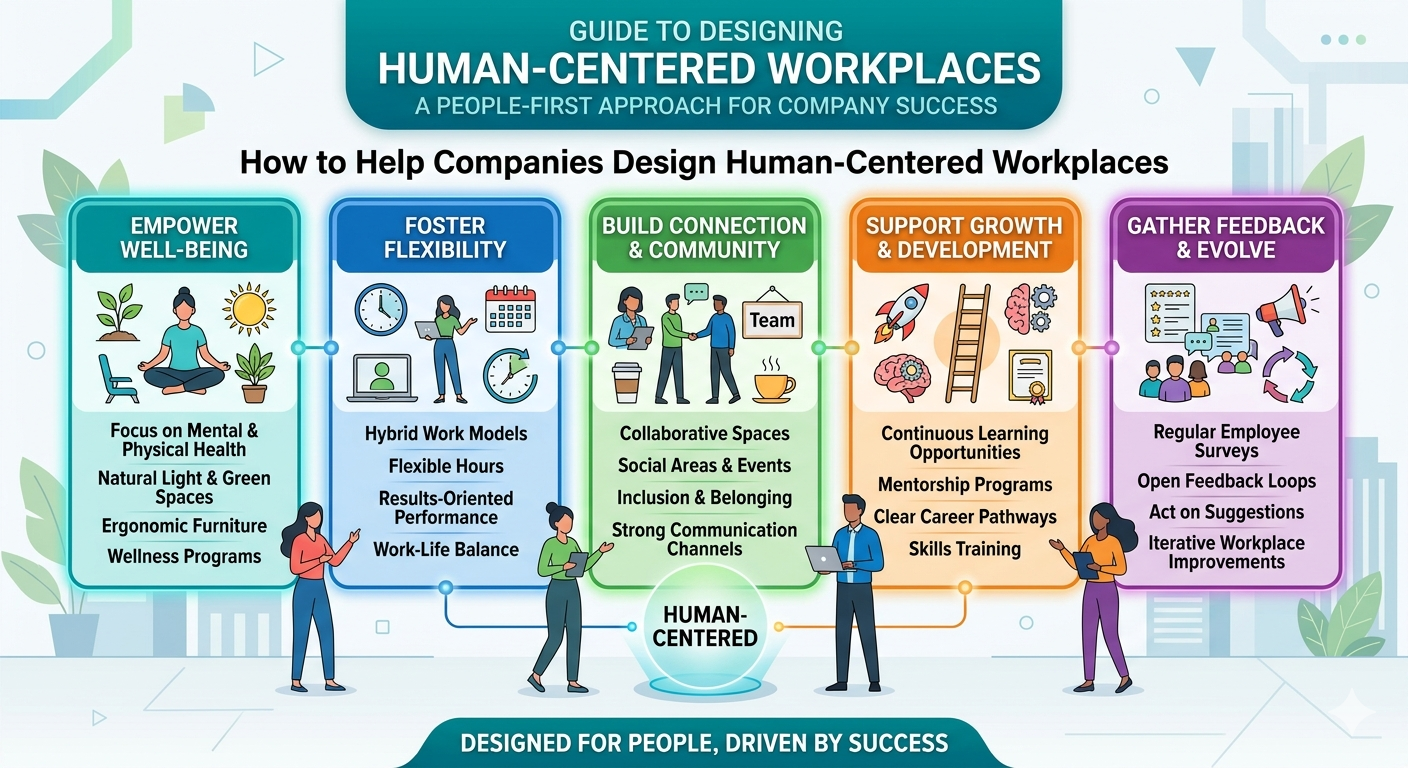
How to help companies design human-centered workplaces effectively
Helping companies requires a structured approach. Start by understanding employee needs through surveys, feedback, and observation.
Identify gaps in current systems. Focus on areas such as workload, communication, and work-life balance.
Additionally, recommend practical solutions. These may include flexible work policies, better communication tools, and improved support systems.
Moreover, align these changes with business goals. This ensures that both employees and organizations benefit.
Therefore, a balanced approach leads to sustainable improvements.
Prioritizing employee well-being and mental health
Well-being is at the core of human-centered workplaces. Employees perform better when they feel supported.
Companies should create policies that promote work-life balance. This includes flexible schedules and manageable workloads.
Additionally, mental health support should be accessible. This may involve counseling services or wellness programs.
Moreover, encouraging breaks and downtime improves productivity.
Thus, prioritizing well-being leads to better outcomes.
Designing flexible and inclusive work environments
Flexibility is a key component of modern workplaces. Employees value the ability to manage their time and work location.
Companies can offer hybrid or remote work options. This increases satisfaction and reduces stress.
Additionally, inclusivity ensures that all employees feel valued. Diverse teams perform better and bring new perspectives.
Moreover, inclusive policies improve collaboration and innovation.
Therefore, flexibility and inclusivity strengthen workplace culture.
Improving communication and collaboration
Effective communication is essential in any organization. Human-centered workplaces focus on clarity and transparency.
Encourage open dialogue between teams and leadership. This builds trust and reduces misunderstandings.
Additionally, use tools that support collaboration. Clear workflows improve efficiency.
Moreover, regular feedback helps employees grow and stay aligned with goals.
Thus, communication plays a critical role in workplace design.
Aligning work with purpose and growth
Employees seek meaning in their work. Human-centered workplaces connect roles with purpose.
Companies should clearly communicate how individual contributions impact the organization.
Additionally, provide opportunities for learning and development. This supports career growth.
Moreover, recognizing achievements boosts motivation.
Therefore, aligning work with purpose improves engagement.
Measuring the impact of human-centered workplaces
To ensure success, companies must measure outcomes. This includes tracking employee satisfaction, productivity, and retention.
Regular feedback helps identify areas for improvement. Data-driven insights support better decision-making.
Additionally, continuous evaluation ensures that strategies remain effective.
Thus, measurement is essential for long-term success.
The role of leadership in creating human-centered workplaces
Leadership plays a crucial role in workplace design. Leaders set the tone for culture and behavior.
They must prioritize empathy, transparency, and support. This creates a positive environment.
Additionally, leaders should actively listen to employees. Understanding concerns leads to better solutions.
Moreover, leading by example reinforces workplace values.
Therefore, strong leadership drives successful implementation.
Conclusion
Understanding how to help companies design human-centered workplaces is essential in today’s evolving work environment. Organizations that prioritize people create stronger, more productive teams.
By focusing on well-being, flexibility, communication, and purpose, companies can build sustainable and engaging workplaces.
This approach not only improves employee satisfaction but also drives business success. Professionals who can guide organizations in this direction will continue to be in high demand.
To explore opportunities in this growing space, use the best job tool and discover roles that align with people-first workplace strategies.
Find Your Dream Job Today – Explore Endless Career Opportunities and Secure Your Next Role with Best Job Tool.






Comments
Be the first to leave a comment.