

Introduction
There’s a silent mistake most ambitious people make.
They keep learning — but they don’t start doing.
They buy courses, watch tutorials, take notes, and highlight books.
And yet, months later, they still feel unprepared.
Why?
Because skills are not built in theory.
Skills are built in motion.
The real classroom is not YouTube.
It’s not a PDF.
It’s not even a certification.
The real classroom is real work.
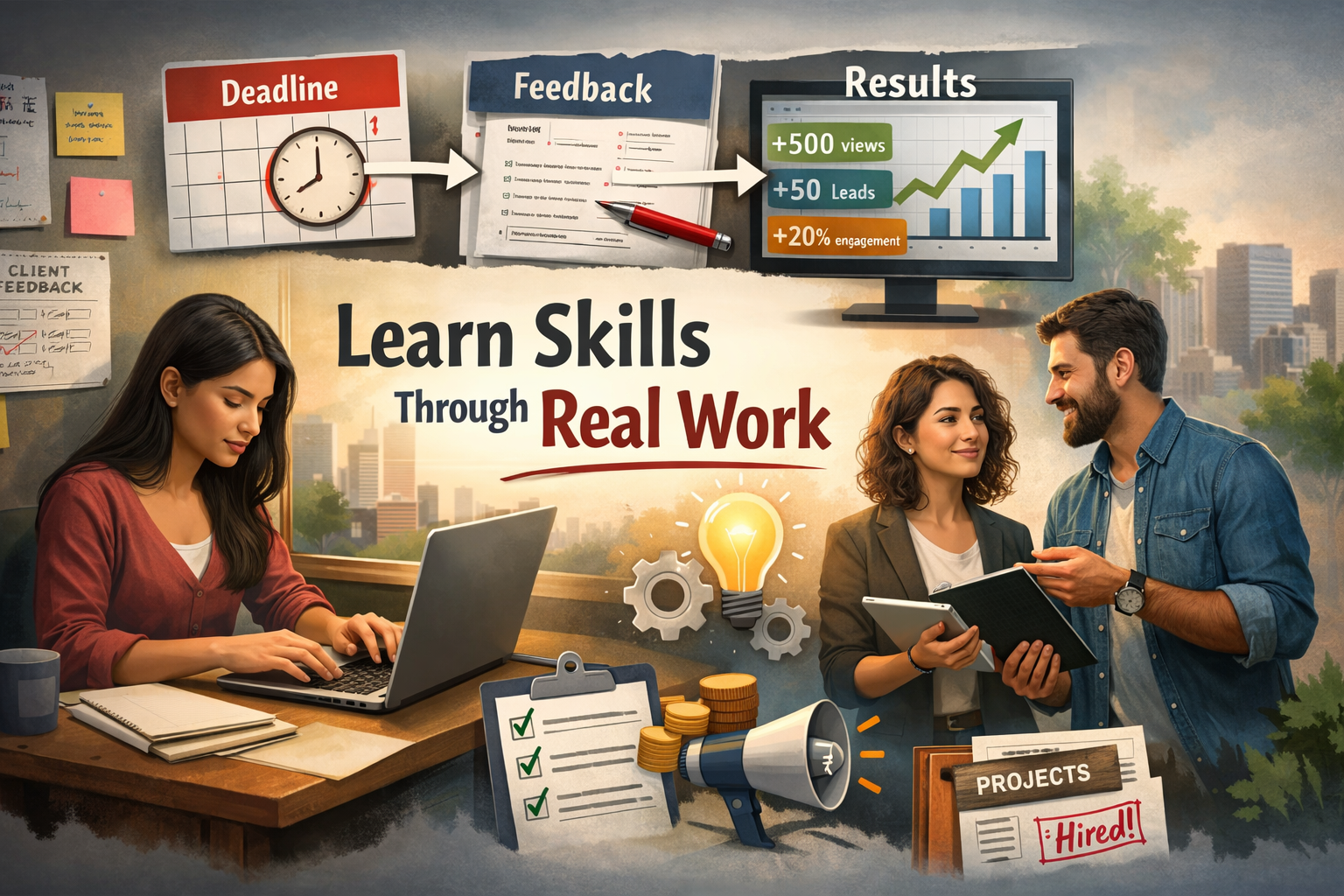
If you truly want to master a skill — whether it’s content writing, coding, design, marketing, leadership, or freelancing — you have to step into real situations where outcomes matter.
This article will show you how to learn skills through real work, even if you’re a beginner.
Why Real Work Teaches Faster Than Courses?
Courses teach information.
Real work teaches:
- Decision-making
- Problem-solving
- Communication
- Responsibility
- Adaptability
- Confidence
When you work on something real:
- There is pressure.
- There are consequences.
- There are expectations.
- There are deadlines.
That combination forces growth.
For example:
You can watch 20 videos about writing persuasive headlines.
But the day a client says, “This headline isn’t converting,” your brain works differently.
Now you care, you think harder, and you test variations.
That emotional engagement accelerates learning.
Real work activates survival mode — and survival mode builds competence.
How to Learn Skills Using Real Work?
Step 1: Stop Waiting to Feel Ready
The biggest barrier to learning through real work is fear.
You think:
- “I’m not good enough yet.”
- “I need one more course.”
- “What if I fail?”
- “What if people judge me?”
Here’s the truth:
You will never feel 100% ready.
Skill comes from action, not preparation.
Instead of asking:
“Am I ready?”
Ask:
“Can I learn while doing this?”
Shift your mindset from perfection to progress.
Step 2: Start With Small Real Projects
You don’t need a big client to start learning through work.
Start small.
If you’re a writer:
- Write LinkedIn posts daily.
- Start a Medium blog.
- Offer to write for a small business for free.
- Rewrite bad ads as practice.
Or you’re learning design:
- Redesign existing websites.
- Create Instagram posts for imaginary brands.
- Offer designs to local shops.
If you’re learning marketing:
- Run a small ₹500 ad campaign.
- Help a friend grow their page.
- Track engagement data.
The key is this:
Work must feel real.
There should be an audience, a result, or a measurable outcome.
When work has stakes, learning multiplies.
Step 3: Attach Outcomes to Everything
Learning becomes powerful when you measure results.
Instead of saying:
“I wrote an article.”
Say:
“I wrote an article that got 500 views.”
Instead of:
“I created content.”
Say:
“I created content that generated 20 inquiries.”
Outcomes reveal:
- What works
- What doesn’t
- What needs improvement
When you focus on results, you stop working blindly.
This is how professionals grow — not by effort alone, but by analyzing outcomes.
Step 4: Seek Feedback — Even When It Hurts
Real work exposes your weaknesses.
And that’s a gift.
When someone edits your writing heavily,
When a client rejects your design,
When engagement drops,
It’s easy to feel defensive.
But feedback is data.
The faster you detach ego from output, the faster you grow.
Instead of reacting emotionally, ask:
- What specifically didn’t work?
- What pattern am I missing?
- What skill gap is showing up repeatedly?
Feedback turns mistakes into structured improvement.
Without feedback, you repeat the same level forever.
Step 5: Work Under Constraints
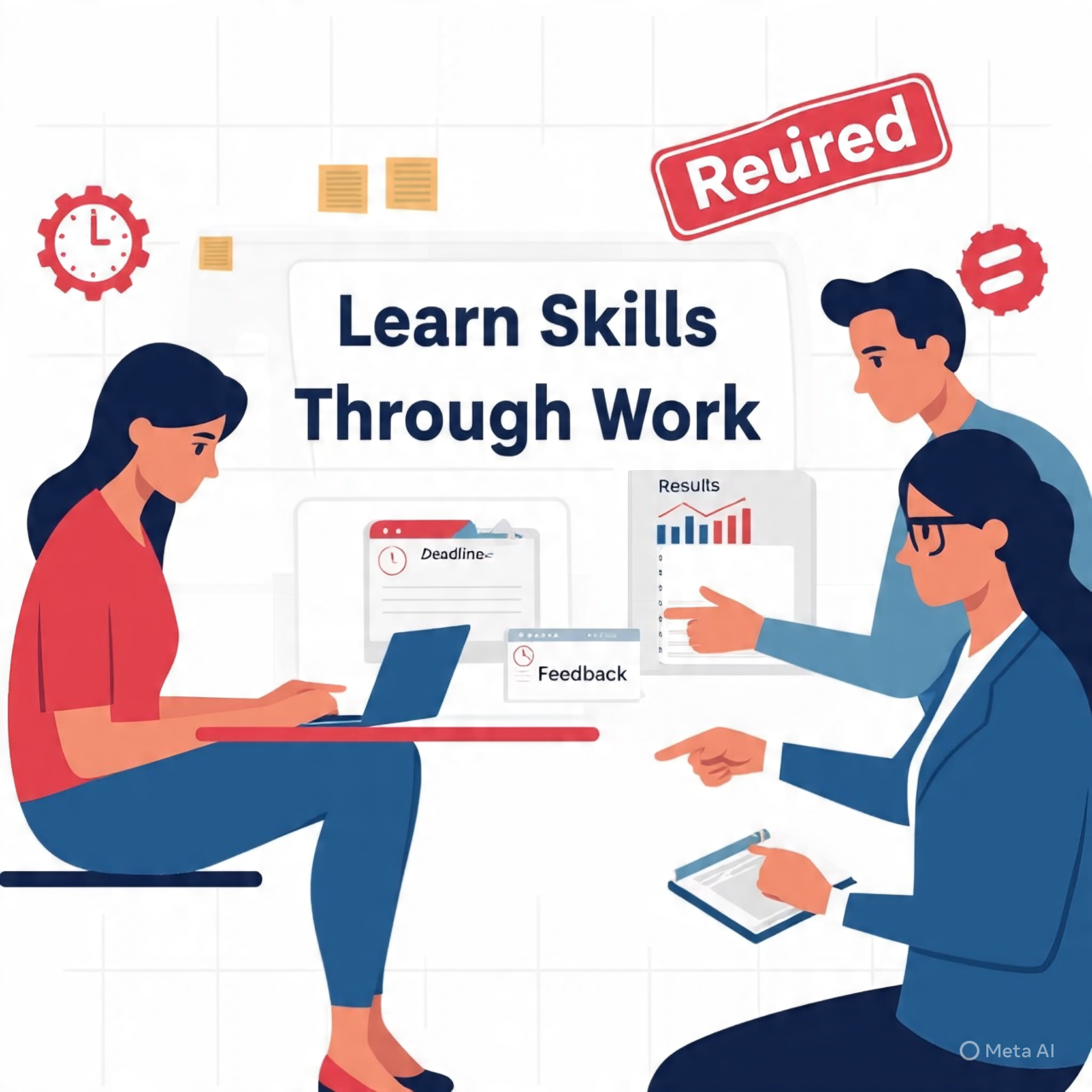
Constraints sharpen skill.
Deadlines.
Word limits.
Budget limits.
Client requirements.
When you create without constraints, you stay comfortable.
When you create within limits, your brain becomes creative.
For example:
If a client says:
“Write a 100-word product description that increases conversions.”
That constraint forces:
- Clarity
- Precision
- Persuasion
- Efficiency
Constraints simulate real-world conditions — and real-world conditions build professionals.
Step 6: Reflect After Every Project
Most people complete work and move on.
High performers review.
After every real task, ask:
- What did I struggle with?
- What went well?
- What would I do differently next time?
- What skill did this expose?
Reflection converts experience into wisdom.
Without reflection, experience becomes repetition.
With reflection, experience becomes expertise.
Step 7: Increase Difficulty Gradually
Growth happens at the edge of discomfort.
If you only take easy tasks, you plateau.
Once you feel comfortable:
- Raise your rates.
- Take bigger clients.
- Handle complex briefs.
- Manage multiple projects.
- Try a new format.
Skill expands when responsibility expands.
Just like muscles grow with progressive overload, skills grow with progressive challenge.
Step 8: Turn Problems Into Practice with Real Work
Real work gives you real problems.
Instead of avoiding them, use them.
Client not responding?
Practice follow-up communication.
Low engagement?
Practice headline optimization.
Time management issues?
Practice productivity systems.
Every problem is hidden training.
Professionals don’t wait for perfect situations.
They grow through imperfect ones.
Step 9: Use Real Work by Building in Public
One of the most underrated ways to learn through real work is building in public.
Share:
- Your process.
- Your mistakes.
- Your lessons.
- Your experiments.
When you build publicly:
- You become accountable.
- You receive feedback.
- You attract opportunities.
- You build credibility.
Most importantly, you treat your learning seriously.
When others are watching, you show up differently.
Step 10: Teach What You’re Learning
The fastest way to master a skill is to teach it.
When you explain something:
- You clarify your understanding.
- You identify gaps.
- You organize knowledge.
- You strengthen retention.
If you’re learning writing:
Write about writing.
If you’re learning freelancing:
Share your freelancing journey.
Teaching forces deeper thinking.
And deeper thinking builds mastery.
Conclusion
If you truly want to learn a skill deeply:
Stop consuming endlessly.
Start producing consistently.
Stop preparing forever.
Start participating now.
The market doesn’t reward knowledge.
It rewards applied ability.
The fastest way to grow is simple:
Do real things.
For real people.
With real stakes.
That is how amateurs become professionals.
And that is how skills turn into careers.
You can read more such blogs with the Best Job Tool.






Comments
Be the first to leave a comment.