

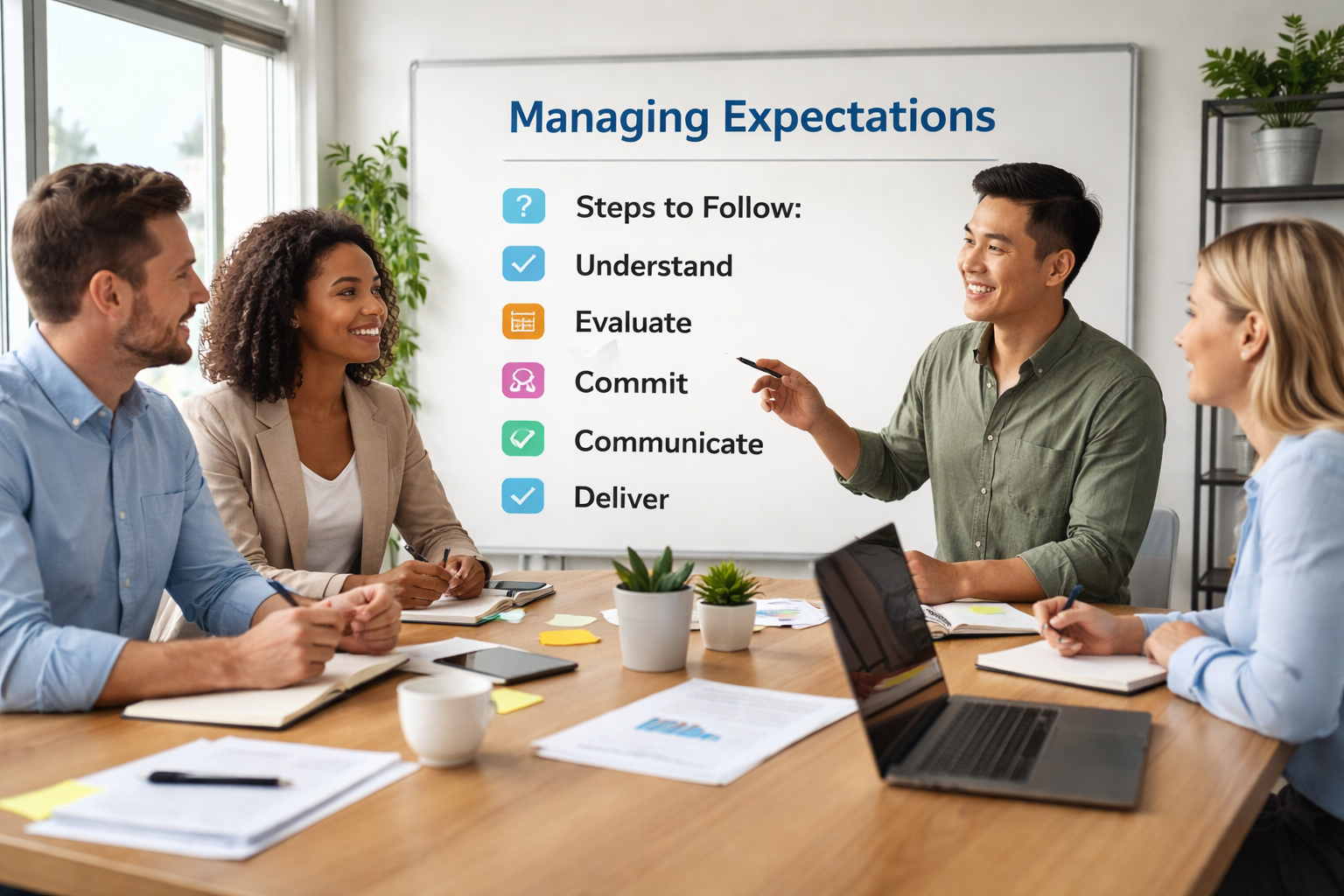
Introduction
Managing expectations is one of the most underrated skills in professional life. Whether you are working a full-time job, freelancing, or building your own career path, your success often depends not just on what you do—but on how clearly you communicate what others should expect from you.
Many workplace misunderstandings, missed deadlines, and even damaged relationships come from one simple issue: unclear expectations. When people assume instead of confirming, things start to fall apart.
In this article, we’ll break down how to manage expectations professionally in a simple, practical, and human way—so you can build trust, reduce stress, and grow in your career.
What Does Managing Expectations Mean?
Managing expectations means clearly communicating what can be done, how it will be done, and when it will be completed—without overpromising or under-delivering.
It involves:
- Setting realistic goals
- Being honest about limitations
- Keeping others informed
- Delivering what you commit
In simple words, it’s about aligning what people expect from you with what you can actually deliver.
Why Managing Expectations Is Important?
1. Managing Expectations Builds Trust
When you consistently deliver what you promise, people start trusting you. Trust is one of the most valuable assets in any professional environment.
2. Managing Expectations Reduces Pressure
Unrealistic expectations create stress. When you set clear boundaries, you avoid unnecessary pressure.
3. Managing Expectations Improves Communication
Clear expectations reduce confusion and unnecessary back-and-forth.
4. Managing Expectations Protects Your Reputation
Overpromising and under-delivering can harm your credibility. Managing expectations helps you stay reliable.
Step-by-Step Guide to Managing Expectations
1. Understand the Requirement Clearly
Before committing to any task, make sure you fully understand what is expected.
Ask questions like:
- What exactly needs to be done?
- What is the deadline?
- What is the priority level?
- What does success look like?
Clarity at the beginning saves time later.
2. Be Honest About Your Capacity
You don’t have to say yes to everything.
If you already have a heavy workload, communicate it clearly:
- “I can do this, but I will need extra time.”
- “I can take this up after completing my current task.”
Being honest shows professionalism, not weakness.
3. Set Realistic Deadlines
Avoid giving deadlines just to impress.
Instead:
- Estimate how much time the task actually needs
- Add buffer time for unexpected issues
- Communicate a realistic timeline
It’s always better to deliver early than to miss a deadline.
4. Break Work Into Smaller Milestones
Instead of committing to one final deadline, break the work into smaller parts.
For example:
- Draft submission
- Review stage
- Final delivery
This helps others track progress and reduces pressure on you.
5. Communicate Regularly
Don’t wait until the deadline to update progress.
Share updates like:
- “Work is in progress, I will share the draft by tomorrow.”
- “I have completed 60% of the task.”
Regular communication builds confidence.
6. Be Transparent About Challenges
If something goes wrong, inform early.
For example:
- “There is a delay due to X reason, I will need one extra day.”
People are usually understanding if you communicate in advance.
Silence creates confusion. Transparency builds trust.
7. Avoid Overpromising
It might feel good to say:
- “I will finish this today.”
But if you are not sure, avoid committing.
Instead say:
- “I will try to complete it today, but realistically it may take until tomorrow.”
Underpromise and overdeliver—that’s the key.
8. Learn to Say No Professionally
Saying no is not rude if done correctly.
You can say:
- “I won’t be able to take this right now due to existing commitments.”
- “Can we prioritize which task should be done first?”
This shows that you respect both your time and the quality of work.
9. Document Important Agreements
For important tasks, always confirm expectations in written form (email or message).
This avoids confusion later and keeps everyone aligned.
10. Deliver What You Commit
This is the most important part.
Managing expectations is not just about communication—it’s about execution.
If you commit to something, make sure you deliver it.
Conclusion
Managing expectations professionally is not about being perfect. It’s about being clear, honest, and consistent.
You don’t need to impress people with big promises. You need to build trust with reliable actions.
Remember:
- Clarity is better than assumption
- Honesty is better than overpromising
- Consistency is better than perfection
When you manage expectations well, you don’t just improve your work—you improve your relationships, your reputation, and your career growth.
Start small. Practice daily. And over time, this simple skill will become one of your strongest professional advantages.






Comments
Be the first to leave a comment.