

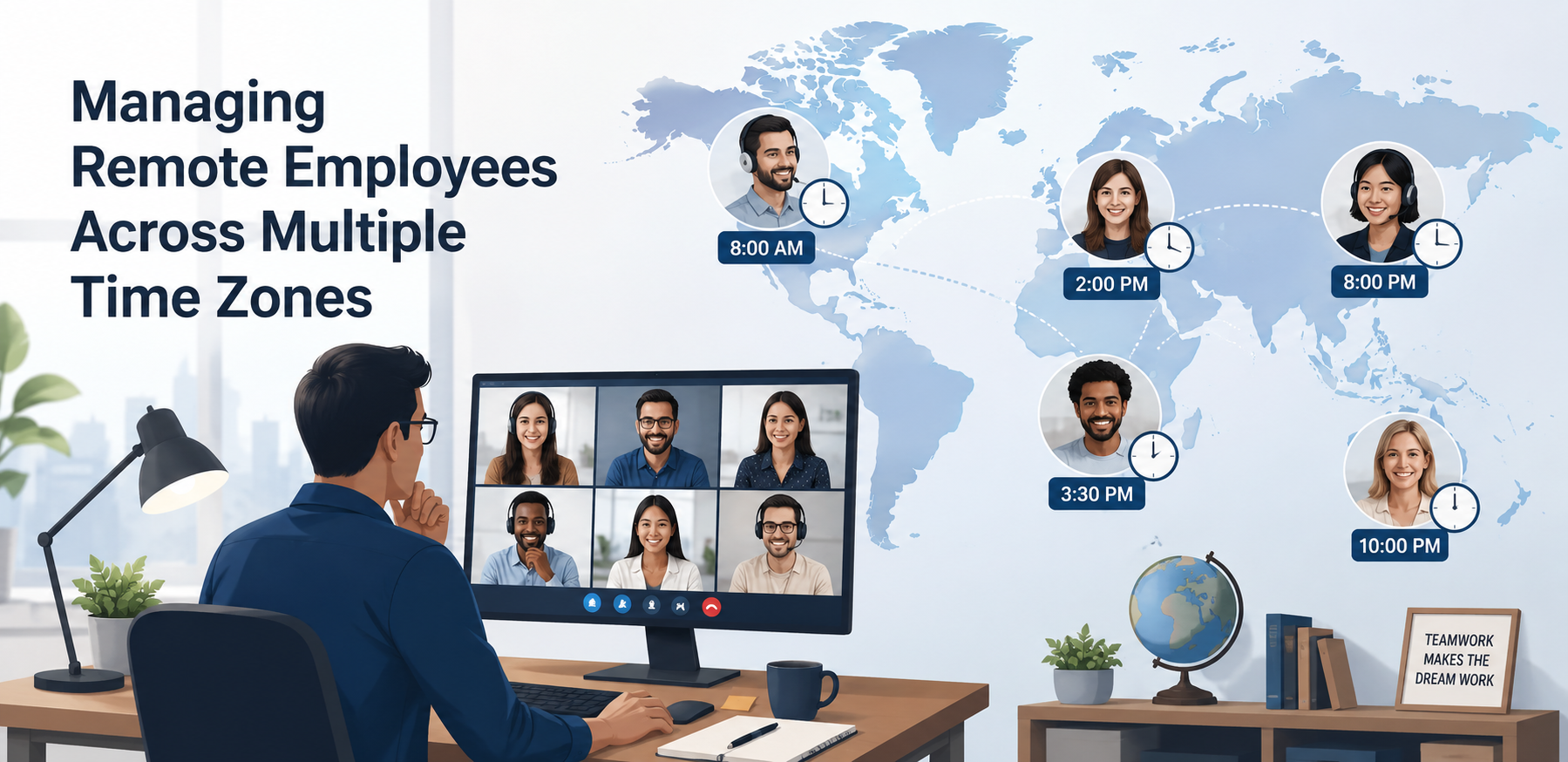
Introduction: Manage Remote Employees
Remote work has become normal for millions of people, but online etiquette has not evolved as fast as the work itself. Many misunderstandings, delays, and workplace conflicts today don’t come from skill gaps—they come from poor digital communication habits.
If you work remotely, these rules will help you build stronger relationships, avoid unnecessary friction, and create a professional reputation that people trust—even if they’ve never met you in person.
In remote jobs, team members, clients, and managers are often in different time zones. If you do not manage employees properly, communication, productivity, and work-life balance can be affected.
In this article, we will discuss how to manage remote employees across multiple time zones.
How to Manage Remote Employees Across Multiple Time Zones?
1. Understand the Time Zones Employees Work With
First, you need to understand every employee time zones. You should know where the company headquarters is located, where your employees are based, where your clients are located. This will help you manage time more effectively. To make this easier, you can use a world clock or a scheduling tool. These tools help you track different time zones and plan day properly.
2. Identify Core Working Hours
Identify core working hours. This is the time when most employees, clients, and team members are online and available to work. For example, if you are working from India and employees are working from Europe, there will usually be a few hours during the day when everyone is available at the same time. You can use this time for team meetings, client calls, and collaboration with your team.
3. Plan Deep Work Around Meetings
Prioritize deep work first. Deep work means the main tasks you are responsible for, such as writing, designing, research, or coding. Focus on these important tasks first and try to complete them before anything else. Meetings and group discussions should be scheduled during the time when all team members are available. This helps everyone communicate better and work together more effectively.

4. Be Clear, Not Overly Long
Good communication in the workplace is very important. It is not necessary to use long paragraphs to look professional. You can also use short sentences to be clear. Clarity is more important than long writing. That is why you should avoid long, unclear paragraphs, mixed messages, and hidden expectations. Instead, use short sentences, clearly mention action points, and be direct but polite.
5. Respect Time Zones and Working Hours
Remote teams often work across different cities and countries. Sending messages at random hours can create pressure. This can also reduce your professionalism and make your work less valued. That is why it is very important to use scheduled messages if possible. Avoid expecting instant replies outside working hours. When something is urgent, mention it clearly. This increases respect for you because when the other person feels that you respect their time and give space to their personal life, they will also respect you more.
Conclusion: Manage Remote Employees
Managing remote employees across multiple time zones can be challenging, but it becomes much easier when you have the right systems in place. By understanding different time zones, identifying core working hours, protecting employees’ deep work time, communicating clearly, and respecting working hours, managers can create a more productive and collaborative work environment.
“Managing teams across time zones requires more than scheduling meetings—it requires trust, communication, and clear systems. Build stronger remote teams with Best Job Tool.”






Comments
Be the first to leave a comment.