

Introduction: Network in a New Industry
Starting a career in a new industry can feel difficult, especially when you do not know anyone. You may look at people on LinkedIn and see professionals who already have years of experience, strong networks, and many connections. You may wonder how you can enter the industry when you have no contacts.
The good news is that you do not need a large network to get started. You can build professional relationships slowly by being curious, helpful, respectful, and consistent.
Networking is not about collecting hundreds of contacts. It is about meeting the right people, learning from them, and creating relationships that can grow over time.
If you are entering a new industry with no contacts, here are practical steps you can follow.
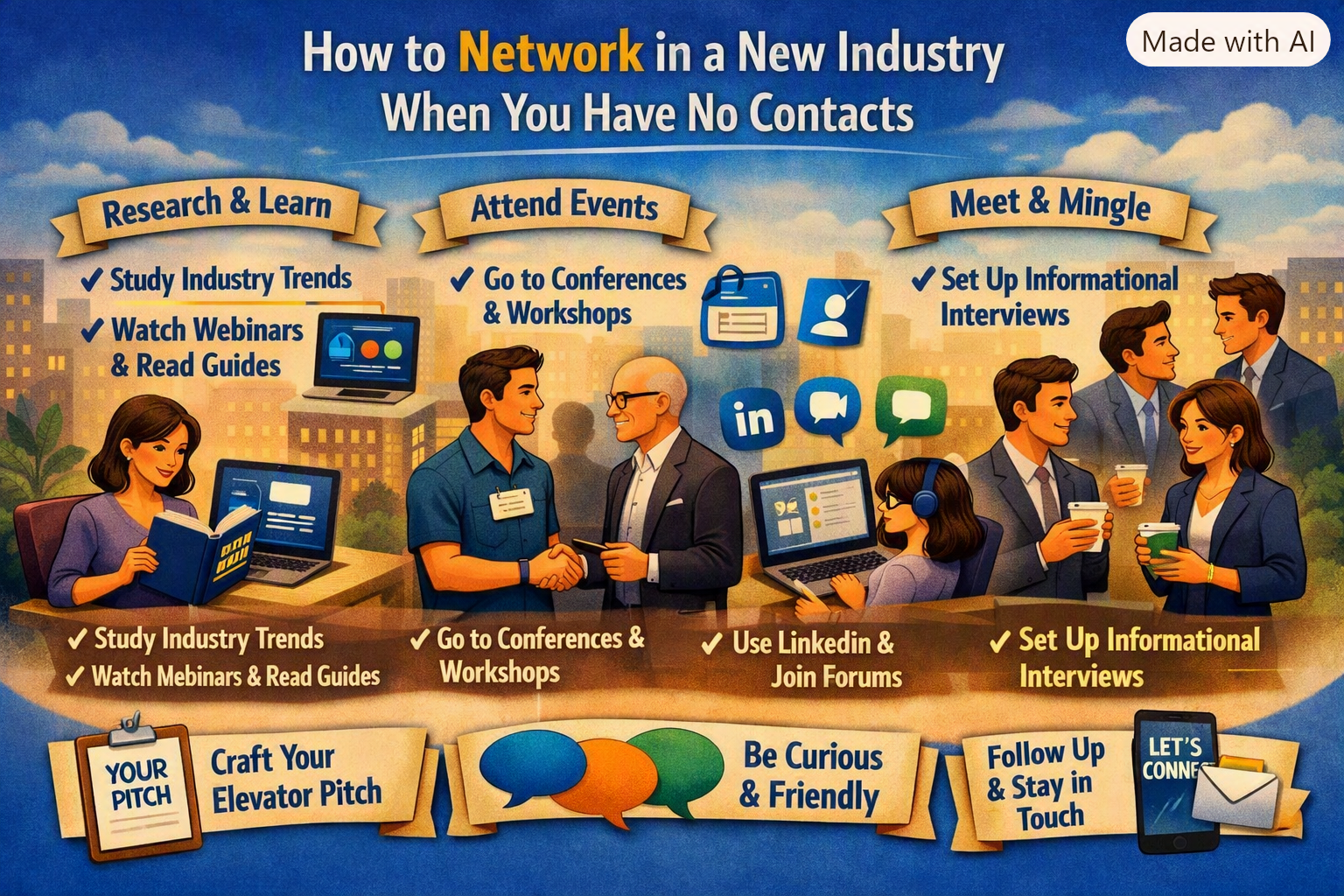
How to Network in a New Industry When You Have No Contacts?
1. Learn About the New Industry First
Before you start networking, spend some time learning about the industry.
You do not need to become an expert. You simply need to understand the basic language, roles, companies, trends, and challenges in the industry.
For example, if you are moving from education into technology, learn about common technology roles such as product management, software development, UX design, data analysis, marketing, and customer success.
Read industry articles, watch interviews, listen to podcasts, and follow professionals online.
Make a simple list of:
- Important companies
- Common job titles
- Industry leaders
- Popular skills
- Professional organizations
- Important events
- Current industry trends
- Common problems in the industry
This knowledge will make networking easier because you will have better questions to ask.
You will also feel more confident when talking to people who already work in the industry.
2. Start With LinkedIn
LinkedIn can be a useful place to start when you have no professional contacts.
You do not need to send connection requests to hundreds of people every day. Instead, search for people who work in the industry you want to enter.
Look for professionals with different levels of experience.
For example, you can connect with:
- People who recently entered the industry
- Mid-level professionals
- Experienced professionals
- Recruiters
- Hiring managers
- Industry writers
- Founders
- Career coaches
- Community organizers
Read their profiles before sending a connection request.
Try to understand their career path. You may find that someone started in a completely different industry before moving into their current role.
That can give you confidence because it shows that career changes are possible.
When sending a connection request, keep your message simple.
Instead of writing a long message asking for a job, introduce yourself and explain why you are interested in connecting.
A simple message can be:
“Hi, I am currently exploring a career in the technology industry. I came across your profile and found your career journey interesting. I would be happy to connect and learn from your experience.”
Your first goal should be building a relationship, not asking for a job.
3. Join Industry Communities
One of the easiest ways to meet people is to join communities related to your new industry.
These communities can exist on LinkedIn, Facebook, Reddit, Discord, Slack, professional websites, or other online platforms.
Look for communities where professionals discuss:
- Industry trends
- Career opportunities
- Skills
- Events
- Projects
- Problems
- Learning resources
Do not join a community only to promote yourself.
Spend time observing how people communicate.
Read discussions and understand what topics are important to members.
Then slowly participate.
You can answer a question, share a useful resource, or ask a thoughtful question.
You do not need to make a big impression.
Small interactions can help people recognize your name.
Over time, someone who sees your comments regularly may become more comfortable connecting with you.
4. Attend Online Events
You do not always need to travel to network.
Many industries organize online webinars, workshops, panel discussions, conferences, and networking sessions.
Search for events related to your target industry.
Before attending an event, research the speakers and organizers.
Write down two or three questions you may want to ask.
During the event, pay attention to the discussion.
If there is a question-and-answer session, ask a useful question.
After the event, connect with speakers or participants on LinkedIn.
Mention the event when you send the request.
For example:
“Hi, I attended today’s discussion on digital marketing. I found your points about changing customer behavior very useful. I would be happy to connect.”
This is much better than sending a random connection request because you already have a reason for contacting the person.
5. Look for Local Events
Online networking is helpful, but face-to-face events can also be valuable.
Look for industry meetups, conferences, workshops, seminars, career fairs, and professional gatherings in your city.
You do not need to attend expensive conferences.
Free or low-cost events can also provide networking opportunities.
When you attend an event, do not feel pressured to talk to everyone.
Try to have two or three meaningful conversations.
You can start with a simple introduction:
“Hi, I’m exploring a career in this industry. What area do you work in?”
Most people are comfortable answering questions about their work.
Listen carefully to their answers and ask a follow-up question.
Good networking is often more about listening than talking.
6. Ask for Informational Interviews
An informational interview is a conversation where you talk to someone to learn about their career, industry, or experience.
You are not directly asking them for a job.
This can be especially useful when you are entering a new industry.
Find someone whose career interests you and politely ask if they would be willing to have a short conversation.
For example:
“Hi, I am currently exploring a career transition into the healthcare industry. I noticed that you moved into this field after working in another area. If you have 15–20 minutes sometime, I would really appreciate hearing about your experience.”
Keep the request short.
If they agree, prepare questions before the conversation.
You can ask:
- How did you enter this industry?
- What skills helped you get your first role?
- What mistakes should beginners avoid?
- What skills are currently valuable?
- What resources would you recommend?
- What does a typical day look like in your role?
Avoid turning the entire conversation into a request for a job.
Your goal is to learn.
Sometimes these conversations can lead to introductions later, but do not expect that immediately.
Conclusion: Network in a New Industry
Entering a new industry without contacts can feel intimidating, but it does not mean you are starting with nothing.
You can begin by learning about the industry, using LinkedIn, joining communities, attending events, connecting with alumni, asking for informational interviews, and talking to people through your existing network.
Do not focus on getting a job from every person you meet.
Focus on learning, building trust.
Focus on becoming someone who is genuinely interested in the industry.
Your first connection may not lead to an opportunity. Your second may not either. But every conversation can teach you something and introduce you to another part of the professional world.
Network in a new industry is not a one-day activity. It is a long-term process.
Start with one person, one conversation, and one useful interaction.
Over time, those small efforts can turn an empty contact list into a meaningful professional network.






Comments
Be the first to leave a comment.