

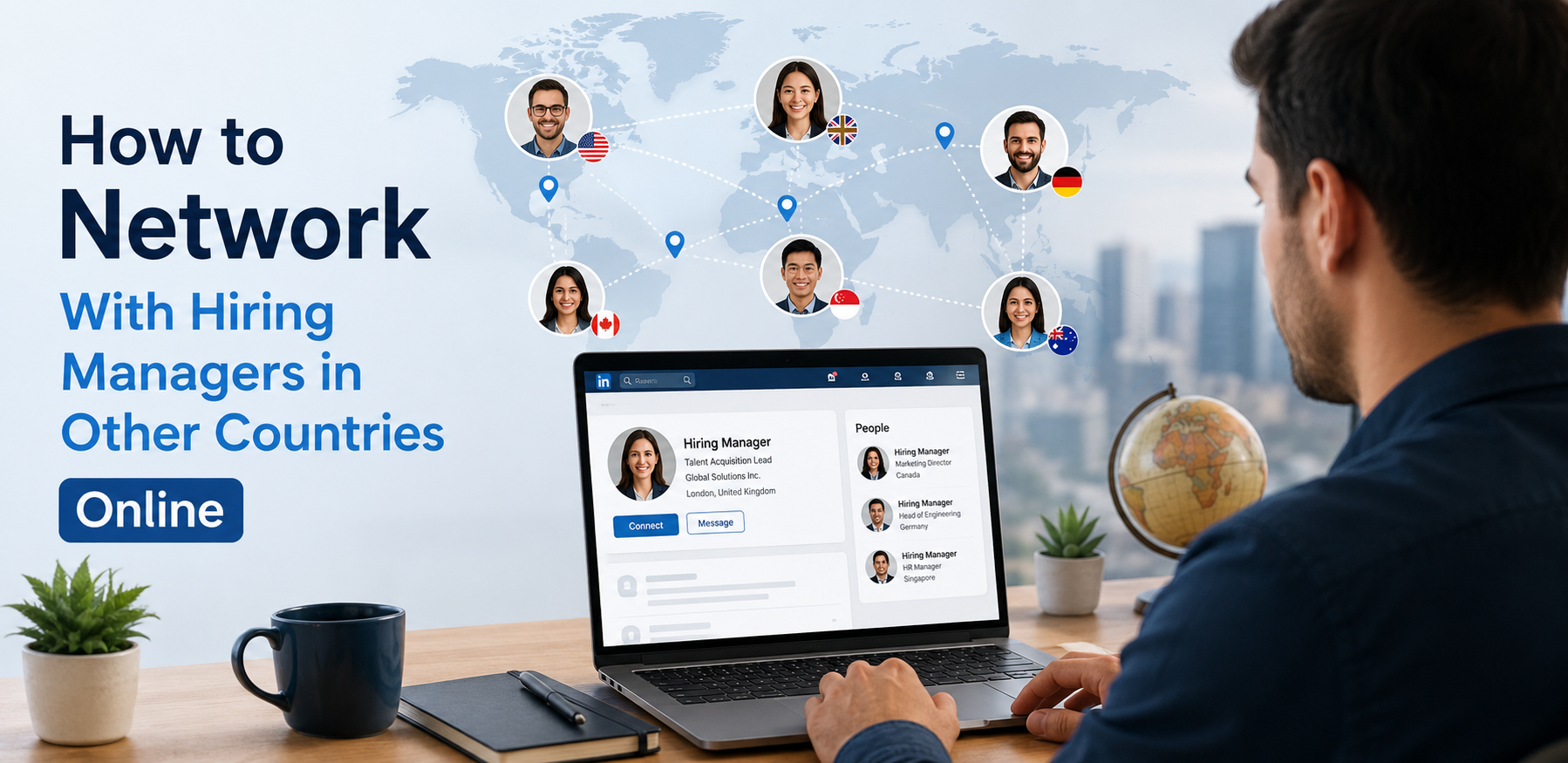
Introduction: Network With Hiring Managers
Do you want to network with hiring managers in other countries?
Networking is very important for job seekers because, with the help of networking, you can reach those opportunities that are sometimes unavailable on job portals. Many companies hire candidates internally or through referrals, which means that if you have a strong network, you will be aware of those jobs. You get real industry insight from networking, like which skills are in demand, what the company’s culture is, or what the expectations of a specific role are.
When you interact with hiring managers, it also boosts your confidence and improves your communication skills. Which helps in your interview. Networking is not limited to jobs only – it can also be one way for your long-term career growth. If today you are having a small conversation with a professional person, no one knows, maybe the next day that person will be the reason for your big opportunity.
How to Network With Hiring Managers in Other Countries Online?
1. Optimize Your Online Profile
Your online profile is your digital first impression — it’s often the first place recruiters and potential employers check before contacting you. To make it effective, start with a professional profile picture and a clear, keyword-rich headline that reflects your role or target position (e.g., “Aspiring Digital Marketer | Content Creator | SEO Enthusiast”).
Let’s see in detail;
1. Professional Profile Picture
Your profile photo is the first thing people notice. Make sure it’s:
- High quality (clear, not pixelated)
- Professionally dressed.
- Friendly and approachable expression.
- Clean background.
Tip: Avoid selfies or party photos — go for a simple headshot with good lighting.
2. Catchy & Clear Headline
Your headline doesn’t have to be just your job title. Use it to show your value, skills, and target role.
Examples:
“Unemployed | Looking for work”
“Content Writer | SEO Specialist | Helping Brands Grow with Engaging Content”
A good headline grabs attention and helps you appear in searches.
3. Strong About Section (Summary)
This is where you tell your professional story. Use simple language to cover:
- Who you are?
- Your top skills and experience.
- Your goals or what you’re looking for?
- A call to action (e.g., “Open to new opportunities” or “Let’s connect!”)
- Use short paragraphs or bullet points to make it easy to read.
4. Experience & Roles
Don’t just list job titles — explain what you actually did. For each role:
- Mention your key responsibilities
- Highlight accomplishments
- Add numbers or results when possible.
- “Increased blog traffic by 60% in 6 months through SEO strategy and content updates.”
This helps recruiters understand your impact.
5. Skills & Endorsements
Add relevant skills to your profile — LinkedIn allows up to 50, but focus on your top 10–15. Ask colleagues or past clients to endorse your top skills to build credibility.
Pro Tip: Match your skills to the jobs you’re targeting.
2. Build a Strong Personal Brand
Personal brand is presenting ourselves in a unique professional identity. It is a combination of our skills, achievements, and experience that separates you from other candidates. Basically, whenever anyone hears your name, in their minds, your image should be clear and positive. This is the goal of personal branding.
Personal branding is important for career growth because;
- It helps you to get job opportunities quickly.
- Recruiters and employers can easily recognize your skills and expertise.
- It benefits you in networking.
- You can become a thought leader in your field Personal branding increases the chance of getting the best opportunities.
You can write blogs on your related industry field. You can create LinkedIn posts, and you can also create short videos. Sharing insights means sharing your perspective. Example – five tips for bett
3. Connect With the Right People
Networking could be overwhelming for a job seeker, but if you follow a step-by-step approach, then it will become easy and effective. First, you need to set your career goal, like – in which industry do you want a job, which role do you prefer, and which company is your priority. Then, accordingly, you have to use your network, like a school or college benchmate, a colleague, a teacher, or family friends.
The next step is to update your profile on a professional platform like LinkedIn. Then start connecting with people and start commenting on industry-related posts. You can also share someone’s valuable post on your profile to show your visibility. When you connect with someone, send a short and polite message to introduce yourself and your purpose to connect with them. The most important part of networking is follow-up. Maintaining connection is important, that’s why check regularly, engage with their updates, and express gratitude. Slowly you’ll see progress in your network.

4. Engage With Their Content
Creating a strong network on LinkedIn is a valuable step in today’s world. But only connecting with people will not help to get a better job, you have to make sure that you are connecting with the right people. Whenever you send a request to anyone, write a short personalized message for sure. After connecting, start commenting on posts, sharing valuable content, and engaging regularly to be visible.
Join a LinkedIn group, follow industry leaders, and be part of relevant discussions. The most important thing is to always give valuable thought. Slowly, you will see that your efforts are building a strong and trustworthy connection, which can open doors to job opportunities and long-term growth for you.
5. Attend Virtual Events and Webinars
If you are seriously looking for a job, then only applying online is not enough. Networking events like job fairs, industry meetups, webinars, seminars, or LinkedIn live sessions give you opportunities to meet real professionals. It is very helpful for your career.
Here are some practical tips that every job seeker must follow to gain maximum benefits from these events.
Research Before You Attend :
Find out who is attending – speakers, companies, and other professionals. Make a list of people or companies you want to connect with. Prepare a few questions or topics in advance.
Prepare Your Elevator Pitch :
Have a 30-second self-introduction ready where you confidently say who you are, what you do, and what you’re looking for.
Example:
“Hi, I’m Priya, a freelance content writer focusing on lifestyle and motivation. I’m currently exploring full-time roles where I can use my skills to create engaging digital content.”
Dress Professionally :
First impressions matter! Whether the event is in-person or online, dress neatly and professionally.
Be Confident but Respectful :
Don’t hesitate to start a conversation. Ask about their work, share your interests, and try to find common ground. But avoid being pushy or asking for a job right away.
Collect Contacts and Follow Up :
Exchange LinkedIn profiles or emails. After the event, send a short thank-you message and stay in touch with the people you met.
Attend Events Regularly :
The more events you attend, the better you get at networking. Over time, you’ll build a strong professional circle.
Conclusion: Network With Hiring Managers
To build a strong network with hiring managers is not difficult when you take small and consistent steps. You don’t need hundreds of connections in the beginning — you only need the right people who can guide you, support you, and share opportunities with you. Start with what you already have, create a clean and professional presence on LinkedIn, and connect genuinely with others.
You can also read one of our guide to build a strong network here.
“Start building global connections and explore international opportunities on Best Job Tool where networking opens real career doors.”






Comments
Be the first to leave a comment.