

Introduction
Resume is very important for everyone who are searching job, but there is one more thing which is also an important thing, and that is understanding how to present experience in your resume. Recruiters do not have much time to read resume in detail, and in most of the cases, they decide in some seconds whether candidate should be shortlisted or not. That’s why, it is very important to prioritize resume content strategically.
In this article, we are going to understand which content should be highlighted first, which details should be secondary, and how you can customize your resume according to job description. Whether you are a fresher or experienced professional, correct prioritization can change average resume to outstanding.
Understanding Resume Prioritization
The meaning of resume prioritization is arranging information according to importance and relevance in resume. Every detail in resume is not at the same level important. The thing which is more valuable to recruiters should be at first. If you write your most relevant skills and achievements at the below of your resume, then maybe recruiter miss it. In today’s time, recruiters do not read resume line by line, instead they scan.
They first see the top section such as summary, key skills and recent experience. That’s why the goal of resume prioritization is to show recruiter immediately that you are a good fit for this job. In simple word, resume prioritization means keeping right information at right place and in right order. When you prioritize your resume strategically, then you also save the recruiter time and increase your selection chances.
How to Prioritize Resume Content Strategically?
1. Start With the Job Description
The first step of resume prioritization is understanding job description clearly. Many people create resume first and then send same resume for every job, which is a common mistake. It is clearly mentioned in the job description which type of skills, experience and qualities are asked by company. You need to identify the important keywords required as skills, tools, experience level and responsibilities from job description.
Then arrange that content in your resume according to job. The skills and experience which directly match with job description, place them in the top sections of resume. Through this, recruiter get immediate signal that you understand their requirement and are relevant for the role. This approach also make resume as ATS friendly and increases the shortlisting chances.
2. Prioritize Resume by Deciding What Goes on Top
The top section of a resume is most important because it is the first thing which recruiters see. That’s why deciding what information should come first in resume is very important. Mostly, resume summary, key skills or recent experience come at the top of resume but this choice completely depends on your career level. If you are an experienced professional then writing resume summary and recent work experience at the top of your resume is more effective.
If you are a fresher or switching career then placing skills, projects or internships at top is better. The simple rule is keep the thing on top through which recruiter can quickly understand your value.
3. Resume Summary vs Objective: What to Prioritize
Many people get confused between resume summary and objective, but both have different purposes. Resume summary is more suitable for experienced professionals. In this, you highlight your experience, key skills, and major achievements in short. It gives a quick overview to the recruiter.
Resume objective is mostly useful for freshers or career changers. In this, you explain your career goal that how you would be valuable for company. The priority should be not just telling your expectations. Instead, you should write and focus on the benefit of company as well. If you are experienced, then skip objective and focus more on summary. And if you are a fresher, then write concise and role-focused objective.
4. Prioritize Resume by Work Experience Strategically
Work experience is the most powerful section of a resume, especially for experienced candidates. But here also it is very important to give equal importance to every role. You need to highlight your most relevant and recent experience in more detail and mention your old or less relevant roles in short. Focus more on your achievements and results instead of just writing about job responsibilities.
Use numbers or percentages and outcomes so that recruiter gets a clear impact such as “increased the social media engagement by 40% in six months”. These type of contents make resume more strong and convincing. The meaning of strategic prioritization is presenting your experience in a way so that recruiter immediately understand that you are a problem solver.
5. Using Numbers and Results to Increase Priority
writing only responsibilities in resume can make your profile average, but when you add numbers and results, then resume become more credible and impactful. Recruiters have interest to know what you have did and what was the result. That’s why using metrics at possible places is a smart strategy. For example, write “exceed monthly sales target to 25%” instead of writing “sales team part”. Because through this recruiter gets a clear picture. Numbers like percentages, revenue, growth, time saving, client count or project completion give a strong evidence to resume.
6. Skills Section: What to Highlight First
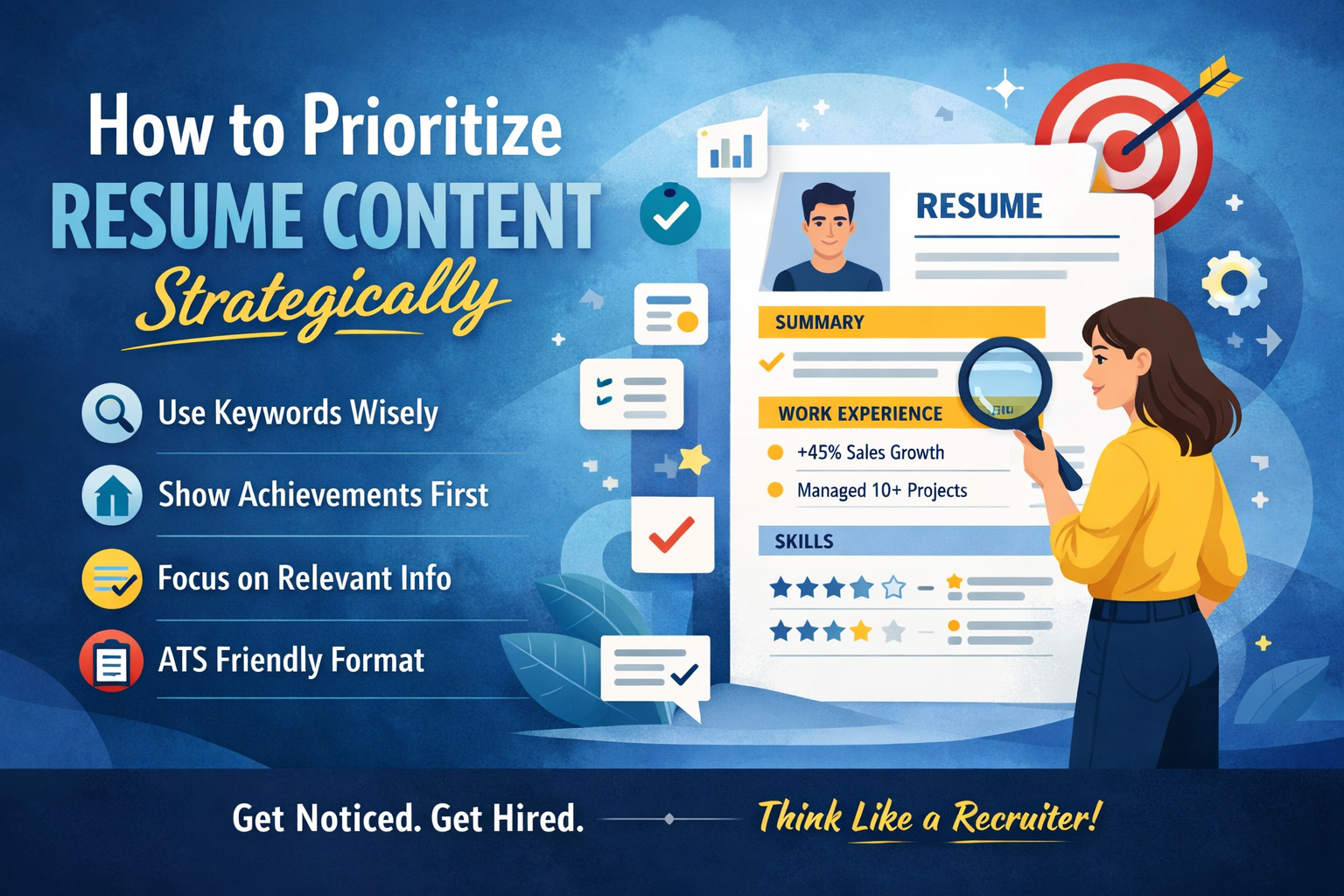
Prioritizing skill section strategically is very important because this section works like a quick filter for ATS as well as recruiters. Firstly, you need to identify job-relevant skills which is mentioned in job description. Put them on the top of a skill list so that recruiter instantly notice the match.
You need to highlight your hard skills such as tools, software, technical expertise before highlighting soft skills, especially for technical or professional roles. Soft skills are also important, but include them only when you can support it with experience or results. Arrange skills in a priority-wise which is very critical for job.
7. Projects, Certifications & Internships
The role of projects, certifications and internships depends on your career stage. This section is very important for freshers and career switchers because it shows the practical exposure. That’s why if you have limited work experience then prioritizing this section in the upper half of your resume is a smart move. At the time of listing projects, only writing title is not enough.
Also mention the purpose of project, your role and final outcome. In short, certifications add value only when it is role relevant and updated. Treat internships as an experience as well and highlight achievements. Here also, quality is most important than quantity. Only include those projects and certifications which genuinely makes your profile strong.
Know “Resume Formatting Mistakes That Reduce Credibility”.
Conclusion
Strategic resume prioritization is not about adding more information, but about presenting the right information in the right order. When your resume highlights the most relevant skills, experiences, and results upfront, it becomes easier for recruiters to quickly understand your value. Starting with the job description, using numbers to show impact, and carefully organizing sections like skills, experience, and projects can significantly improve your chances of getting noticed.
In today’s competitive hiring landscape, a well-prioritized resume reflects clarity, professionalism, and intent. By tailoring your content for each role and focusing on relevance over volume, you turn your resume into a strong personal marketing tool—one that not only passes screening systems but also leaves a lasting impression on recruiters.
Want to explore more career related blogs? Visit here.






Comments
Be the first to leave a comment.