

Introduction
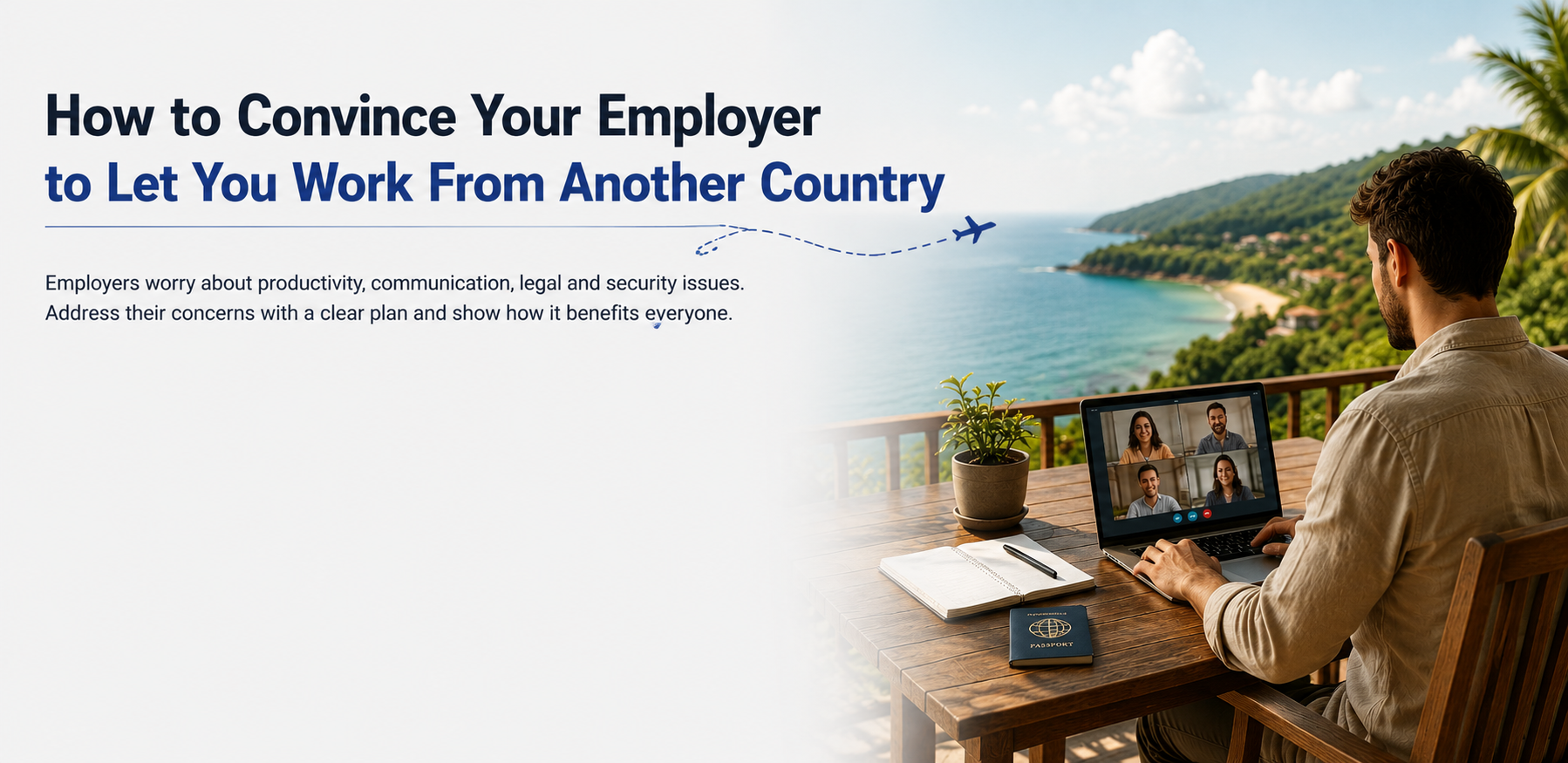
Do you also want to work from another country but don’t know how to convince your employer?
There are many employees who want to work from home or work from another country for different reasons. But their employers do not allow them to work from another country because they think it may affect productivity, communication, and the company’s work, even if the employee is ready to give their best effort.
However, convincing your employer to let you work from another country is not impossible. It is completely possible if you use the right approach while talking to your employer. In this article, we are going to explore some effective ways through which you can convince your employer to let you work from another country.
How to Convince Your Employer to Let You Work From Another Country?
1. Focus on Benefits for the Company
Every company focuses more on its own benefit than the employee’s benefit. A company hires employees so that it can make good profits. But if the company feels that allowing you to work from another country may cause problems or losses for them, they may reject your request. That is why, while trying to convince your employer, you should focus on the company’s benefits instead of only thinking about your own benefit.
This means you should not talk only about your personal comfort. Instead, connect your request with the company’s benefit. For example, you can say that you may become more productive in a quieter environment, or that a different time zone may help support clients for longer hours.
This increases the chances of convincing your employer because you are talking about the company’s benefit instead of only your personal wishes.
2. Prove That You Can Work From Another Country Independently
When you work from another country or work from home, you usually have to work independently because no one is directly supervising you. Because of this, many employers reject requests to work from home or work from another country.
That is why you need to show your employer that you can work independently while maintaining full productivity. To prove this, you should focus on a few important things before making your request. For example, regularly meet deadlines, communicate clearly with your team, show responsibility, and maintain a strong performance record.
This will give your employer proof that you are capable of working independently.
3. Present a Clear Plan to Work From Another Country
One of the most effective ways to convince your employer to let you work from another country is to present a clear plan. Until you explain everything with a proper plan, your employer may not have clarity about the situation. They may become confused, which can lead to your request being rejected. That is why, before making your request, you should prepare a clear plan.
Think about every important detail, such as which country you want to work from, how long you plan to stay there, your working hours, how you will attend meetings, and your emergency contact details.
This shows professionalism and increases the chances of convincing your employer.
4. Address Time Zone Concerns Early
Most employers reject requests to work from another country because they worry about collaboration problems when employees move abroad. That is why you should think carefully about this in advance and explain everything clearly to your employer before they even ask questions.
You should explain things like which working hours will overlap with the team, how quickly you will respond to messages, and whether you can adjust your schedule when needed.
This helps your employer understand your maturity, independence, and flexibility.
5. Reassure Them About Productivity
Another effective way to convince your employer to let you work from another country is to reduce their concerns about productivity. Many employers believe that when employees work from home, they are not able to focus properly. Because of this, they think work quality and productivity may decrease. They believe employees work with more focus and discipline in the office, which is why they reject such requests.
However, you can reduce this fear by sharing your productivity strategy, planning your daily routine clearly, and offering regular progress updates. This helps your employer feel more confident that you will continue to work productively even from another country.
6. Start With a Trial Period
Starting with a trial period is a smart way to convince your employer to let you work from another country.
Instead of asking for permanent approval immediately, suggest a short trial period, such as two weeks, one month, or three months.
This will help your employer see that you can work independently while maintaining the same level of productivity, and that the company will not face any problems because of your remote work arrangement.
Conclusion
Working from another country can be a great opportunity, but employers usually need reassurance before approving it. Instead of focusing only on personal reasons, show how you can continue delivering strong results, communicating effectively, and staying responsible while working remotely.
A clear plan, consistent performance, and professional communication can help build trust and reduce your employer’s concerns. When you present remote work as a well-organized and beneficial arrangement rather than just a personal request, your chances of getting approval become much higher.
“Build a location-flexible career and explore remote-friendly opportunities on Best Job Tool designed for global professionals.”






Comments (1)
What surprises me most about Buildcalchub is how many specialized calculators it offers, you can find tools for almost every construction task you can think of all in one convenient place online.