

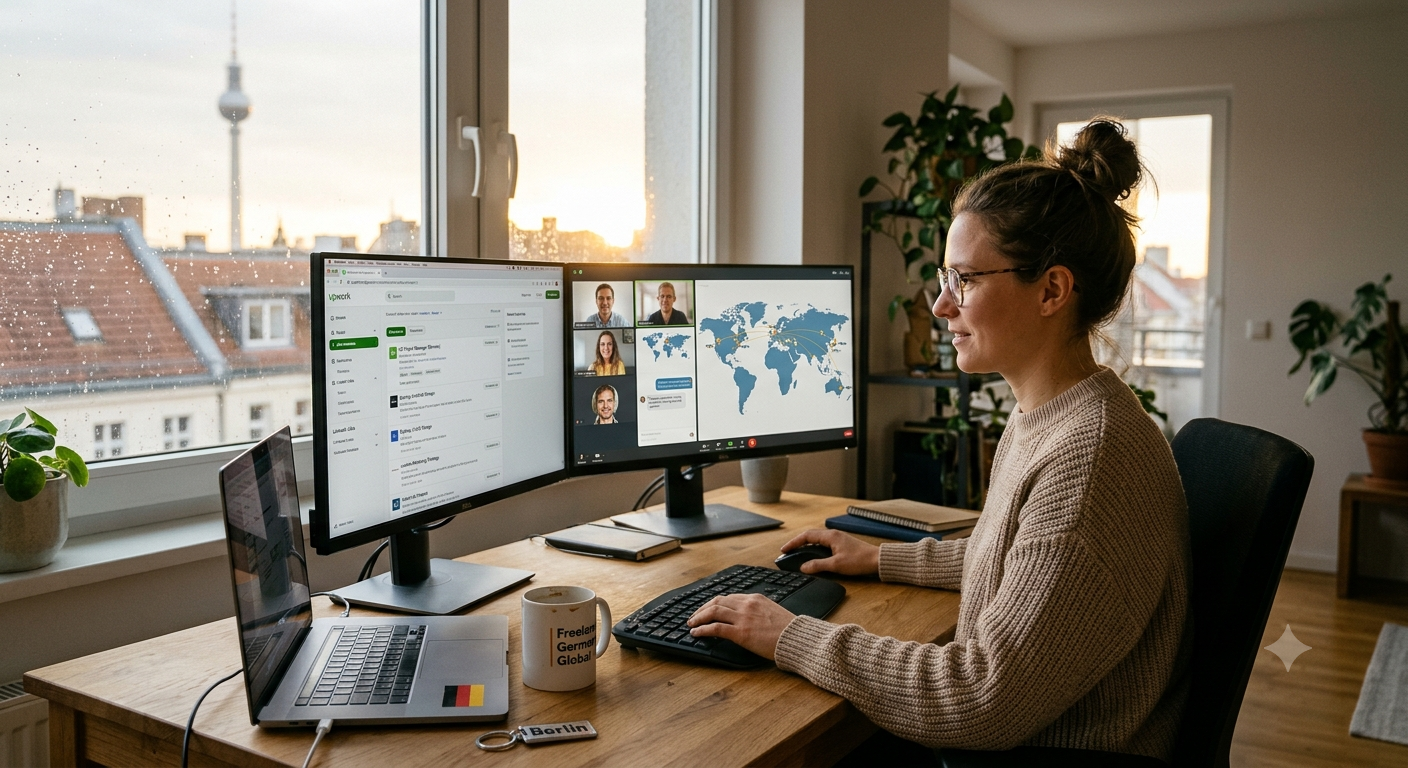
Introduction: Freelancing From Germany
More people are choosing to move into a freelancing career. With Germany offering many opportunities for skilled professionals due to the strong economy, up-to-date technology and access to international markets, a freelancing career can be a great option. You can connect to companies from abroad to create an independent career.
Whatever your freelancing skill is, whether it be content writing, graphic design, web development, digital marketing or being a virtual assistant, you’ll be able to provide your services to international businesses. However, you’ll need the correct skills, a professional portfolio and marketing strategy to connect with customers from other countries. Knowing how to connect with global clients will help you build your freelancing career. Below are some simple and effective ways to connect with international businesses as a freelancer in Germany.
Freelancing From Germany: How to Find Global Clients?
1. Create a Professional Freelance Portfolio
Creating a professional portfolio is an essential tool for any freelancer. Having a strong portfolio will help you showcase your skills and experience to potential clients. When beginning your freelancing career in Germany, having a strong portfolio will help you appear professional to international businesses.
Content writers can show their work by adding blogs, website content, product descriptions and articles. Graphic designers can add logos, social media designs and other creative work. Web developers can also add links to their created websites. You can create your portfolio using sites like WordPress, Behance or your own website. Ensure that your introduction, services, examples of work and contact details are included. Having a well organised portfolio will help you gain credibility.
2. Use Freelance Sites
Using freelance sites can help you connect to international companies. Freelancing sites allow you to create your profile, search for projects, submit bids and connect to clients. If you’re interested in freelancing in Germany, you can begin using sites like Upwork, Fiverr, Freelancer and PeoplePerHour.
These offer many opportunities depending on your skills, whether it be writing, design, programming, marketing or customer support. Ensure that you create a professional profile, clearly stating what services you offer. Include your skills, examples of your work and any relevant experience. Create personalised bids for each project to help you gain international clients.
3. Build Your Network On LinkedIn
LinkedIn is a great site to build your network and find new business opportunities. This allows you to connect to business owners, recruiters, marketing managers and professionals in different industries. If you’re interested in freelancing in Germany, LinkedIn can be a great tool to connect to international businesses. Create an appealing profile including a professional photo, clear title and detailed services.
Post content related to your industry, talk about your recent projects and connect to professionals from other countries. Join groups relating to your industry and get involved in conversations. By building genuine connections you’ll be able to find freelance opportunities and build lasting business relationships.
4. Create Your Own Freelance Website
Creating your own website will help give your business a more professional feel. This will allow potential clients to learn more about you, your skills, services and examples of work. When freelancing in Germany, you can connect to businesses in other countries using your website.
Ensure your website is simple, mobile friendly and easy to navigate. Including English content will help international visitors understand your services. Include an introduction, about me page, services page, examples of work and contact details. You can create a website using sites like WordPress, Wix or Squarespace. Include keywords relevant to your industry to help potential customers find your services.
5. Improve Your English Communication Skills
Having good communication skills will help you when connecting with international clients. You may need to communicate via email or online meetings to discuss project requirements, your ideas, updates and answer any questions. If you’re looking to freelance in Germany, improving your English communication skills will help you connect to businesses in countries like the United States, Canada, Australia and United Kingdom.
Ensure you’re creating professional emails, project bids and clear communication during meetings. Learn how to politely discuss deadlines, costs and expectations. Having good communication skills will help reduce misunderstandings and build credibility.
6. Promote Your Services On Social Media
Social media is a great way to promote your services. Sites like Instagram, Facebook and X can help you showcase your work, connect to businesses and gain new customers. Whilst freelancing in Germany, you can showcase your skills by using social media. Content writers can post tips and graphic designers can post their newest designs.
Use hashtags relevant to your industry, follow businesses in your industry and join professional communities. Try to post helpful and informative content. Rather than just promoting your services, try to showcase how your skills can help businesses.
7. Email Potential Clients
Another effective way to find freelance projects is to directly email businesses. Research companies which match your skills and find out how you can help. Whilst freelancing in Germany, you can email businesses in other countries. Keep your email short, clear and personal.
Use a relevant subject line and introduce yourself. Mention your skills and how you can help the company. Add a link to your portfolio. Don’t send the same email to every company. Personalise your emails to show that you understand the company.
8. Provide Quality Work And Build Lasting Relationships
Whilst finding clients is important, building professional relationships will also be valuable. Always ensure you understand the project requirements, complete tasks on time and keep regular communication. To be a successful freelancer in Germany you’ll need to not only find new projects but also keep your current clients happy.
If they’re happy with your work they may hire you again or recommend your services. Ask for feedback after completing projects to help improve your skills. Having positive reviews and recommendations will help build your credibility and attract more international opportunities.
9. Know The Rules And Taxes For Freelancing In Germany
Before starting your freelancing business you’ll need to know the rules in Germany. Depending on your profession you may need to register as a freelancer (Freiberufler) or trade business (Gewerbe).
You’ll also need to know about taxes, invoices and other financial responsibilities. If you’re unsure, speak to a qualified tax adviser or contact the relevant authorities in Germany. Non EU citizens should also check if they’re allowed to work as freelancers with their residence permits. Knowing the rules will help you run your business properly and avoid any legal issues.
Conclusion: Freelancing From Germany
Freelancing in Germany can be a great option for skilled professionals looking to work independently. However, to build a successful freelancing career you’ll need to be patient, consistent and have professional skills.
Begin by creating a strong portfolio, use freelance sites, build your LinkedIn network and promote your services. Focus on having good communication and providing quality work. By doing so you’ll be able to connect to global clients, explore international opportunities and build your freelancing business.
Are you ready to grow your freelance career? Discover the Best Job Tools, professional networking sites and career resources to help find new opportunities, connect with businesses and take your next step towards professional success.






Comments
Be the first to leave a comment.